このページに掲載されている作品は著作権法によって保護されており、当社の許可なく同一の複製物を制作または販売することは法律で禁じられています。この保護は、以下のような国際条約に基づき執行されます。 ベルヌ条約 および、以下の条項に定められたものを含む各国の法律により、 米国著作権法 第17編。
この手法は、著作権で保護された作品の複製や複写を伴わないため、著作権法に完全に準拠しています。これは単なる模倣ではなく、創造的な再解釈です。元の作品からインスピレーションを受けつつも、それとは異なる、全く新しい絵画を生み出すものです。
スピーディーな制作と多彩な仕上げオプションが魅力の、ミュージアムクオリティなジークレー・キャンバスプリント。 ( 手描き複製画を注文する デジタル画像販売へ切り替え)





























作品のオリジナル比率に合わせた、当店の規定サイズからお選びください。

額縁や壁のスペースに合わせて、ご希望の幅と高さを入力してください。プリントはカットすることは可能ですが、元の画像より大きくすることはできないため、異なる比率のサイズを選択された場合は、画像の一部が欠けることになります。印刷を開始する前に、内容を確認していただくためのデジタルモックアップをお送りいたします。このページに表示されている画像は、実際のカット後の状態を示すものではありません。実際の仕上がりはモックアップにてご確認ください。
Sphinx
複製画サイズ一覧
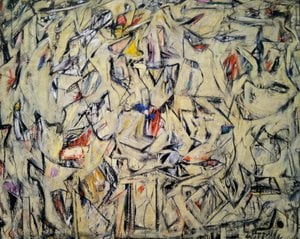
Willem de Kooning's 1964 oil painting, ‘Sphinx’, is not merely a visual experience; it’s an immersion into the turbulent currents of Abstract Expressionism and a profound exploration of the human psyche. Measuring 61 x 47 cm, this work pulsates with raw energy, its surface alive with swirling brushstrokes and intense hues of orange and yellow. To stand before ‘Sphinx’ is to confront a fragmented reality, a world where form dissolves into emotion and suggestion replaces definition. It's a painting that doesn’t offer answers but instead invites contemplation on the elusive nature of identity and the complexities of feminine representation—themes central to de Kooning’s artistic journey.
At the heart of ‘Sphinx’ lies an ambiguous depiction of a female figure, though “depiction” feels inadequate given its radical abstraction. De Kooning doesn't present a portrait in the traditional sense; rather, he offers fleeting glimpses—hints of eyes, a suggestion of a mouth, perhaps the curve of a nose—all dissolving into a dynamic interplay of color and texture. This deliberate ambiguity is key to understanding the painting’s power. It isn’t about portraying a specific woman but evoking the *essence* of femininity, vulnerability, and the societal pressures often imposed upon women. This echoes throughout his famous ‘Woman’ series, where he similarly wrestled with representation and its inherent limitations. The title itself, 'Sphinx', is laden with symbolism; sphinxes are mythical guardians known for their enigmatic nature and challenging riddles. De Kooning seems to present us with a similar puzzle, an invitation to confront our own perceptions and emotions in the face of ambiguity.
De Kooning’s technique is integral to the emotional impact of ‘Sphinx’. As a pivotal figure in Abstract Expressionism—a movement born from the anxieties and uncertainties of post-World War II America—he rejected traditional artistic conventions, prioritizing subjective experience over representational accuracy. The painting embodies this ethos through its energetic brushwork, lack of defined form, and emphasis on the physical act of painting itself. He employed a wet-on-wet application of paint, allowing colors to bleed and blend, creating a hazy, atmospheric quality that amplifies the sense of emotional turmoil. The impasto technique—the thick layering of oil paint—adds a tactile dimension, with pronounced brushstrokes and drips contributing to the work’s raw immediacy. The dominance of warm tones – oranges and yellows – isn't merely aesthetic; it contributes to an overall feeling of intensity, perhaps even anxiety, drawing the viewer into the painting’s emotional core.
Born in Rotterdam in 1904 and later immigrating to the United States, Willem de Kooning became a defining voice of American art. His journey from commercial artist to Abstract Expressionist pioneer was marked by constant experimentation and a relentless pursuit of authentic expression. ‘Sphinx’, created during a period of significant social and political change, reflects this spirit of innovation and rebellion. The painting stands as a testament to de Kooning’s ability to translate complex emotions into a visual language that continues to resonate with audiences today. It's a work that demands attention, sparks conversation, and adds depth and complexity to any environment—a powerful reminder of art’s capacity to tap into our deepest feelings and challenge our perceptions.
ヴィレム・デ・クーニング作「Sphinx」は、パステルカラーなカラーパレットを使用しています。この配色は、作品全体の色彩的特徴を象徴しています。
「Sphinx」は、拡張現実(AR)でのプレビューが可能です。対応デバイスで作品のARで見るページを表示すると、ご自身の空間に作品を配置してご確認いただけます。
ヴィレム・デ・クーニング作「Sphinx」は、全体的なドラマチックななムードの中に、哀愁を帯びたな感情を伝えています。


1904 - 1997 , オランダ

Explore the profound emotional depth of Abstract Expressionism. From Pollock's dynamic drips to de Kooning's gestural mastery, our expert guide offers art collectors a sophisticated analysis of this transformative movement and its enduring legacy in modern fine art.
 設置イメージを表示
 シェアする
シェアする シェアする
シェアする
 詳細を見る
詳細を見る ガイドを表示

 ダウンロード
 似ている作品
 X線調査
X線調査 スライドショーを表示
 Q&A
Q&A
 統計情報
統計情報

 詳細を表示
詳細を表示









 ガラスオプションは、110cm未満のサイズでのみご利用いただけます。