
x


 Traditional Chinese Art
 95.0 x 70.0 cm
迅速な制作と多彩な仕上げオプションを備えた、ミュージアムクオリティのジークレーまたはキャンバスプリント。 ( 手描きの絵画を購入 画像を購入)
作品のオリジナル比率に合わせた、当店の規定サイズからお選びください。

特定のフレームやスペースに合わせて、ご自身でサイズを指定することも可能です。選択されたサイズが元の画像の比率と一致しない場合、作品をトリミングするか、鏡面反射または単色での塗りつぶしによって画像を拡張いたします。制作を開始する前に、ご確認用のデジタルモックアップをお送りいたします。
画面上のプレビューには、実際のトリミングや拡張は反映されませんのでご注意ください。最終的な構図を正確に確認できるのは、モックアップのみとなります。
カスタムサイズも承っておりますが、元の比率を維持するためには、あらかじめ用意されたリストからサイズを選択することをお勧めいたします。

CALLIGRAPHY IN RUNNING SCRIPT
複製画のサイズ

Born in Beijing’s Daxing District in 1733, Weng Fanggang (翁方綱) emerged as a pivotal figure during the late Qing Dynasty – a time of profound intellectual ferment and artistic refinement. More than simply a calligrapher, he was a philosopher, literary critic, and collector deeply invested in shaping the aesthetic landscape of his era. His life’s work reveals a complex interplay between formal tradition and innovative thought, culminating in a unique approach to calligraphy and a significant contribution to the burgeoning “School of Musculature” (Jili Pai). His story is inextricably linked to the influence of Su Shi – a poet whose legacy he meticulously cultivated, transforming his admiration into a vibrant cultural phenomenon.
Weng’s early life was marked by diligent study and a keen awareness of literary trends. He secured the prestigious Jinshi degree in 1752, an accomplishment that opened doors to service within the Qing court. Initially employed as a junior compiler, he steadily ascended through the ranks, eventually becoming a member of the Grand Secretariat – a position reflecting his considerable intellect and administrative abilities. However, Weng’s true passion lay not in bureaucratic affairs but in the pursuit of artistic excellence, particularly in calligraphy and poetry. His translation of Tao Yuanming's “Peach Blossom Spring” (桃花源) into Manchu for the Qianlong Emperor was a watershed moment, securing his royal patronage and establishing him as a respected scholar within the imperial court.
Weng Fanggang’s most enduring legacy rests on his development of the “School of Musculature” (Jili Pai), a critical approach to poetry rooted in the concept of ‘muscles’ – referring not to physical strength, but to the rigorous intellectual discipline required to understand and appreciate classical Chinese literature. He vehemently opposed the prevailing trend of “Han Studies,” which prioritized textual analysis over the deeper philosophical underpinnings of Confucianism. Weng argued that true scholarship demanded a holistic understanding of universal principles, embodied in the teachings of Zhu Xi – emphasizing contemplation and the pursuit of ‘righteousness’ (yili) as the foundation for all knowledge. His critique of Dai Zhen's approach, which he deemed overly focused on superficial details, highlighted his commitment to a more profound engagement with literary tradition.
Perhaps the most fascinating aspect of Weng Fanggang’s career was his deliberate cultivation of the legacy of Su Shi (蘇軾). Recognizing Su Shi's profound influence on Chinese poetry, Weng initiated an annual birthday celebration in his honor – a ritual that quickly gained momentum and became deeply ingrained within Qing cultural life. This wasn’t merely a sentimental homage; it represented a strategic effort to preserve and promote Su Shi’s artistic ideals. Weng amassed a substantial collection of Su Shi's works, including the highly prized Songyang Manuscript (宋陽帖), acquired for an extraordinary sum of 60 Jin – a testament to his dedication. He even established a room in his personal library dedicated solely to Su Shi’s poetry, further solidifying his commitment to this particular literary figure. This “cult” wasn't confined to Weng himself; it involved collaborations with Chosŏn scholars from Korea, creating a vibrant transnational community united by their shared admiration for Su Shi.
Beyond his philosophical pursuits, Weng Fanggang was a highly accomplished calligrapher. He meticulously studied the techniques of ancient masters like Ouyang Xun and Yu Shinan, specializing in Lishu script – a bold, angular style that conveyed both power and elegance. His calligraphy is characterized by its precision, balance, and profound understanding of brushwork. Weng’s work continues to be admired for its technical mastery and its embodiment of the aesthetic principles he espoused in his literary criticism. Weng Fanggang died in 1818, leaving behind a complex and influential legacy – one that bridges the realms of philosophy, literature, and art, shaping the intellectual and artistic landscape of late Qing China.

1733 - 1818
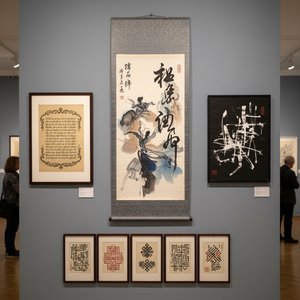
Explore the profound beauty of calligraphy art. From the fluid running script of Chinese masters to historical ink masterpieces, discover how the elegance of line transforms spaces with timeless grace and scholarly sophistication.

Embark on a profound journey through the soul of Chinese calligraphy. Explore the historical mastery of ink, brush, and script, from ancient Zhuanshu to elegant running script, and discover how this timeless art form reflects the enduring spirit of classical East Asian aesthetics.
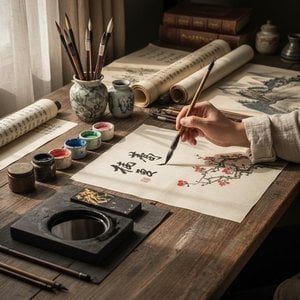
Embark on a sophisticated exploration of ink wash painting and Sumi-e. Uncover the profound historical lineages, Zen philosophies, and technical mastery behind this timeless medium in our authoritative guide for fine art enthusiasts.


最新の美術ニュース、限定オファー、そしてインテリアのアイデアをいち早くお届けします。
お客様のプロジェクトについてお聞かせください。当社の美術専門家が、お客様に合わせた3つのパーソナライズされた芸術提案をご提供いたします。
あなたにぴったりの3作品を無料で厳選いたします


 プレビュー
プレビュー
 シェアする
シェアする シェアする
シェアする
 詳細を見る
詳細を見る

 ダウンロード
 似ている作品
 X線調査
X線調査 スライドショー
 詳細を見る
詳細を見る






































 ガラスオプションは、110cm未満のサイズでのみご利用いただけます。


