オンラインプレビューをはるかに凌ぐ、高解像度で鮮明なデジタル画像をご購入いただけます。
各ファイルは、社内の専門家が高度なツールと熟練した手作業によるレタッチを駆使し、細心の注意を払って仕上げています。すべての画像において、卓越した鮮明度、正確な色彩再現性、そして繊細なディテールをお約束いたします。
最終ファイルは、プロフェッショナルな編集・印刷環境ですぐにご利用いただけるよう最適化された状態で、72時間以内にメールにてお届けいたします。これは、一流のデザインスタジオ、出版社、ギャラリーから信頼されているものと同等の品質です。
個人での鑑賞、印刷、クリエイティブなプロジェクトにご利用いただける高解像度ファイルをダウンロードできます。 ( プリント版に切り替え 手描きの複製画を注文する)
WahooArt.com を選ぶことは、単に画像を手に入れることではありません。プロの手によって精密に仕上げられ、満足保証が付いた高品質なデジタルアートワークを受け取ることを意味します。ご注文いただいた際に自動的に付随する内容は、以下の通りです:

ご注文から72時間以内に、高解像度のデジタル画像ファイルをメールでお送りいたします。お手元に届き次第、すぐにご利用いただけます。

お客様の作品は、高度なAI技術と専門家による手作業を組み合わせてプロフェッショナルに最適化されており、細部のディテール、鮮明さ、そして正確な色再現性を最大限に引き出しています。

ファイルを誤って削除したり、紛失してしまったりしましたか?ご安心ください。いつでも無料で再送いたします。

関税や手数料、配送料を気にすることなく、お気に入りのアートワークをすぐにお楽しみいただけます。デジタルダウンロードは常に免税です。

プロ仕様のツールとカラーマネジメント技術を用いることで、デジタル画像が元の色を最大限に忠実に再現することを保証いたします。

ご購入いただいたデジタル画像にご満足いただけない場合は、100日以内であれば、理由を問わず修正または100%の返金対応をさせていただきます。

ご満足いただけない場合は、デジタルファイルを受け取ってから100日以内であれば、理由を問わず全額返金いたします。

3枚購入で10%OFF、5枚購入で15%OFF、10枚以上のご購入で20%OFF。クリエイティブなプロジェクトやギャラリー、エージェンシーに最適です。
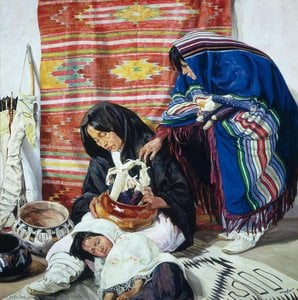
In the quietude of the American Southwest, where the rugged peaks of the Taos Mountains meet the vast, sun-drenched plains, lies a moment captured forever in Walter Ufer’s 1926 masterpiece, “At Rest.” This painting is far more than a mere depiction of rural life; it is a profound meditation on tranquility and the harmonious coexistence of man, animal, and nature. As one gazes upon the canvas, the viewer is immediately transported to a bygone era of the Old West, where time seems to slow to the rhythmic breathing of resting horses. The central figure, a rider clad in a striking, vibrant pink shirt, serves as a brilliant focal point, his presence injecting a pulse of life into the serene landscape. Beside him, a woman stands in quiet companionship, her presence suggesting the shared journeys and communal bonds that defined the Taocultural fabric of New Mexico during this period.
The composition is masterfully balanced, utilizing a sense of pastoral stillness to draw the eye through a narrative of peaceful coexistence. Two additional horses stand in patient repose, their forms echoing the strength and stability of the earth itself, while two dogs—one positioned near the heart of the scene and another toward the periphery—act as silent sentinels of this domestic peace. Ufer’s ability to weave these disparate elements into a singular, cohesive tableau creates an atmosphere that is both adventurous and deeply comforting. For the collector or interior designer, this piece offers a window into a legendary landscape, providing a sense of expansive freedom and grounded serenity that can anchor any sophisticated space.
Walter Ufer, a pivotal figure in American Impressionism, brings his rigorous European training to the high deserts of New Mexico with unparalleled skill. Having studied the precision of lithography and refined his brushwork in the prestigious academies of Hamburg and Dresden, Ufer possessed a unique ability to marry technical mastery with an emotive, light-filled palette. In “At Rest,” we see the hallmarks of his evolved style: a high-keyed color palette that captures the intense, direct sunlight of the Southwest. The way the light catches the pink of the rider's shirt and illuminates the textures of the horses' coats demonstrates a sophisticated understanding of luminosity.
His technique avoids the rigid lines of traditional realism, opting instead for a more fluid, impressionistic approach that allows the atmosphere to breathe. The brushstrokes are purposeful yet soft, creating a sense of movement within the stillness—a subtle vibration of life that prevents the scene from feeling static. This mastery of light and shadow does not merely describe a scene; it evokes the very heat and air of the Taos landscape. For those seeking a high-quality reproduction, the depth of color and the nuanced interplay of light in this work provide an enduring visual richness that remains captivating under any lighting condition.
To understand “At Rest” is to understand the soul of the Taos Society of Artists. Ufer was not merely an observer of the landscape; he was a chronicler of a way of life. His deep connection to the Native American communities of Taos Pueblo infused his work with an authenticity that transcends mere scenery. While this particular painting focuses on a pastoral, almost cinematic moment of rest, it carries the weight of Ufer’s devotion to capturing the dignity and daily rhythms of the Southwest. The painting serves as a bridge between the European traditions of his youth and the rugged, spiritual landscape of his adopted home.
For the discerning art lover, acquiring a piece that reflects such historical and cultural significance is an opportunity to possess a fragment of American heritage. “At Rest” offers more than aesthetic beauty; it offers a narrative of exploration, companionship, and the enduring peace found in nature's embrace. Whether placed in a sunlit gallery or as a centerpiece in a curated home collection, this work continues to inspire awe, inviting all who behold it to pause, breathe, and find their own moment of rest.
ウォルター・ユーファー作「At Rest」の視覚的な明るさはbrilliantです。設置する空間の光の加減に合わせて調整することが可能です。
「At Rest」を手がけたアーティストはウォルター・ユーファーです。この作品はウォルター・ユーファーの名でカタログに登録されています。
Squareの形状を活かした「At Rest」の複製画は、Living Roomに飾るのがおすすめです。
ウォルター・ユーファー作「At Rest」はNatureのパレットを使用しており、Gray (#7d969d)が基調となっています。
「At Rest」はリネンキャンバスに手描きされた油彩複製画としてご購入いただけます。サイズをお選びの上、このページよりご注文いただけます。
「At Rest」はコットンキャンバスまたはアーカイブ品質のキャンバスペーパーに施されたファインアートプリントとしてご購入いただけます。ご注文はこのページにて、お好みのサイズでお受けしております。
ウォルター・ユーファー作「At Rest」に関する統計情報は、作品の統計情報ページでご確認いただけます。こちらでは、作品の月間訪問数、アーティストの作品への訪問数、および最近の訪問者の国別・言語別の内訳をご覧いただけます。

ウォルター・ユーファーは、アメリカ印象派における極めて重要な人物であり、その筆致は単に光を捉えるにとどまらず、ある文化の鼓動そのものを描き出しました。1876年にドイツのヒュッケスヴァーゲンで生まれたユーファーが、ニューメキシコの乾燥した高地へと辿り着くまでの道のりは、厳格なヨーロッパでの修行と、人間存在に対する深い好奇心によって築かれました。ケンタッキー州ルイビルのドイツ系アメリカ人コミュニティで過ごした幼少期、彼は自らのルーツが持つ豊かな質感に触れ始めました。リトグラフや版画制作の研鑽を積んだこの基礎的な時期は、彼に卓越した技術的精密さを授け、後の作品において光と影の複雑な交錯を見事に操る礎となったのです。
芸術的な高みを目指す彼の探求心は、ヨーロッパ全土を巡る変革的なオデッセイへと彼を駆り立てました。渡り職人として、ユーファーは大陸の多様な芸術的伝統に身を投じ、ハンブルクやドレスデンの名高いアカデミーでその技法を磨き上げました。知性と創造性が激しく拡張されたこの時期は、ミュンヘンでの集中的なスタジオ制作において頂点に達します。1911年にアメリカへと帰国したとき、彼は洗練されたヨーロッパ的な感性を携えていました。それは、アメリカ西部の荒々しく陽光降り注ぐ風景と出会う準備が整った、極めて成熟したものでした。
1914年は、ユーファーの人生、そしてアメリカ美術の軌跡における決定的な転換点となりました。ニューメキシコ州のタオス・プエブロへと足を踏み入れた彼は、自らが類まれな芸術革命の一部であることを悟りました。影響力のあるグループ、いわゆる「タオス・テン」の一員となったユーファーは、単なる風景画を超え、ネイティブ・アメリカンの生活をより真正かつ本能的な姿で描き出そうとする集団の中核を担いました。南西部をロマン主義的、あるいは植民地主義的な視点で捉えていた当時の多くの同時代人とは異なり、ユーファーは深い敬意を持ち、日々の営みに宿る尊厳を見つめる眼差しで主題に迫ったのです。
彼の作品は、ヨーロッパ印象派の技法と、プエブロの人々が持つ生々しく精神的なエネルギーを結びつける架け橋となりました。彼は単なる観察者ではなく、儀式や風景、そして共同体生活の静かなリズムを記録する年代記作家でもありました。この創造的進化の中心には、ユーファーのミューズであり共同制作者でもあったタオスの先住民、ジム・ミラバルとの関係がありました。この絆を通じて、ユーファーはこの地域を定義づける文化的な機微を深く理解し、ニューメキシコの境界を越えて共鳴するような、生きた真実をキャンバスに吹き込むことができたのです。
ユーファーの作品群は、色彩への卓越した支配力と、大胆で表現豊かな絵具の塗布によって特徴づけられます。そのスタイルはアメリカ印象派の原則に根ざしながらも、砂漠の太陽の熱量や大地の重みを捉えるような、より力強く質感豊かなアプローチへと向かうことがしばらありました。彼は光を単に形態を照らすためだけではなく、感情を呼び起こすために用いました。それによって、歴史と伝統の重みが漂うような、情緒豊かな情景を生み出したのです。
ウォルター・ユーファーの歴史的な意義は、風俗画を深遠な社会的・文化的声明へと昇華させた点にあります。彼の成し遂げた功績には以下のようなものがあります:
今日においても、ユーファーの絵画は、激しい文化的交差が起こった時代の不朽の証として存在し続けています。ヨーロッパでの教育による技術的な厳格さと、プエブロ文化の精神的な深みを織りなす彼の能力は、現代の鑑賞者を魅了し続け、その情緒豊かで熟練した眼差しを通じて、タオス・バレーの時代を超越した精神を目の当たりにするよう誘っているのです。

1876 - 1936 , ドイツ

 設置イメージを確認
 送る
送る シェア
シェア
 詳細情報
詳細情報 ガイドを表示

 画像をダウンロード
 似ている作品
 X線調査
X線調査 スライドショー
 統計情報
統計情報


 続きを読む
続きを読む