
x


迅速な制作と多彩な仕上げオプションを備えた、ミュージアムクオリティのジークレーまたはキャンバスプリント。 ( 手描きの絵画を購入 画像を購入)





























作品のオリジナル比率に合わせた、当店の規定サイズからお選びください。

特定のフレームやスペースに合わせて、ご自身でサイズを指定することも可能です。選択されたサイズが元の画像の比率と一致しない場合、作品をトリミングするか、鏡面反射または単色での塗りつぶしによって画像を拡張いたします。制作を開始する前に、ご確認用のデジタルモックアップをお送りいたします。
画面上のプレビューには、実際のトリミングや拡張は反映されませんのでご注意ください。最終的な構図を正確に確認できるのは、モックアップのみとなります。
カスタムサイズも承っておりますが、元の比率を維持するためには、あらかじめ用意されたリストからサイズを選択することをお勧めいたします。

Springtime
複製画のサイズ

Born in Fontenay-aux-Roses, a charming suburb just outside Paris, on October 3rd, 1867, Pierre Bonnard was not initially destined for the artistic life. His father, Eugène Bonnard, held a position within the French Ministry of War, and young Pierre was steered towards a legal career – he even earned his law degree! However, a deep-seated passion for drawing and watercolor, nurtured during childhood excursions to his family’s country estate, ultimately led him down a different path. His early influences were diverse, ranging from the meticulous realism of Jean-Auguste-Dominique Ingres, whose influence can be seen in Bonnard's initial attempts at academic precision, to the vibrant color palettes and expressive distortions of Paul Gauguin, a connection that would profoundly shape his artistic vision.
Bonnard’s early career was marked by a struggle for recognition. He initially worked as an illustrator, producing posters and advertisements – a pragmatic step while he honed his skills. It wasn't until the late 1880s, through connections with artists like Paul Sérusier and Claude Terrasse, that he became involved with *Les Nabis*, a group of avant-garde painters who sought to move beyond Impressionism’s focus on capturing fleeting moments of light and instead explore subjective experience and emotional resonance. This movement emphasized decorative qualities and the use of color as a primary expressive tool – a philosophy Bonnard embraced wholeheartedly.
Bonnard's artistic style is instantly recognizable, characterized by its luminous palette, flattened perspective, and a deliberate avoidance of sharp outlines. He wasn’t interested in replicating reality; rather, he aimed to capture the *feeling* of a scene – the atmosphere, the mood, the subtle interplay of light and shadow. His compositions often feature domestic interiors, portraits of family members, and landscapes bathed in soft, diffused light. Unlike many of his contemporaries who sought to represent objects with photographic accuracy, Bonnard employed a technique of layering colors and applying paint in loose, gestural strokes, creating an effect that is both dreamlike and intensely personal.
A key element of Bonnard’s approach was his fascination with the way light transforms surfaces. He meticulously observed how color shifts depending on the angle of illumination, often using complementary colors to create a sense of vibrancy and depth. His paintings are filled with subtle gradations of hue and tone, inviting the viewer to linger and lose themselves in the play of light and shadow. He frequently depicted objects bathed in an almost ethereal glow, as if viewed through a veil of mist or memory.
Bonnard’s artistic journey was shaped by a diverse range of influences beyond Impressionism and *Les Nabis*. He drew inspiration from Japanese prints, particularly the bold compositions and flattened perspectives of Hokusai. The influence of Käthe Kollwitz, a German Expressionist painter known for her poignant depictions of poverty and suffering, is also evident in Bonnard’s later work, as he began to explore themes of human vulnerability and emotional distress. His exploration of these darker subjects marked a significant departure from his earlier, more decorative style.
Throughout his career, Bonnard continued to experiment with color and form, refining his technique and developing a unique visual language. He never fully abandoned the principles of *Les Nabis*, but he gradually moved away from their emphasis on decorative patterns and towards a more introspective and emotionally charged approach. His later works are characterized by a heightened sense of melancholy and a profound awareness of the passage of time.
Pierre Bonnard died in La Route de Serra Capeou, near Antibes, France, on January 23rd, 1947, at the age of 79. Despite facing initial rejection from the Parisian art establishment, he eventually achieved widespread recognition for his distinctive style and profound emotional depth. Today, Bonnard is considered one of the most important figures in modern French painting, celebrated for his innovative use of color, his evocative depictions of domestic life, and his ability to capture the essence of human experience.
His work continues to resonate with viewers today, offering a glimpse into the intimate world of a sensitive and perceptive artist. Bonnard’s legacy lies not only in his individual achievements but also in his pioneering role in shaping the course of 20th-century art – a painter who transformed the way we perceive light, color, and the beauty of everyday life.

1867 - 1944 , United States of America
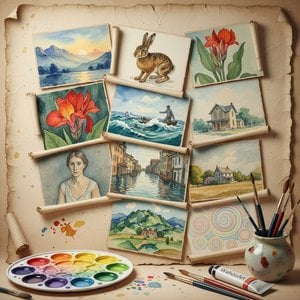
Journey through 10 legendary watercolor masterpieces by Sargent, Turner & Homer! Explore iconic landscapes, portraits & floral art that redefined history. Find museum-quality reproductions and curated decor ideas at WahooArt.com.

Explore the captivating world of watercolor painting! Discover its rich history, essential techniques, influential artists & collecting tips. A comprehensive guide for art enthusiasts from WahooArt.
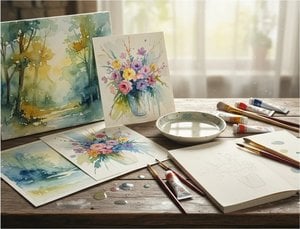
Explore the captivating world of watercolor painting! Discover its rich history, essential techniques, influential artists & collecting tips from art experts. A comprehensive guide for enthusiasts.
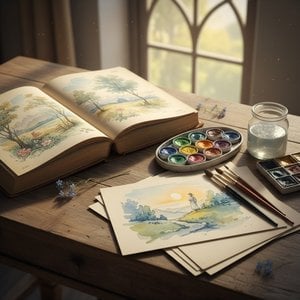
Explore the captivating history of watercolor painting, from ancient techniques to modern masters like Kandinsky & Blake. Discover essential artists, collecting tips & the emotional power of this luminous medium. Expert insights for art enthusiasts.

Explore the rich history of landscape art with WahooArt. Discover renowned artists, movements like Impressionism & Romanticism, and expert guidance for collecting timeless pieces. Find your perfect serene escape today!


最新の美術ニュース、限定オファー、そしてインテリアのアイデアをいち早くお届けします。
お客様のプロジェクトについてお聞かせください。当社の美術専門家が、お客様に合わせた3つのパーソナライズされた芸術提案をご提供いたします。
あなたにぴったりの3作品を無料で厳選いたします


 プレビュー
プレビュー
 シェアする
シェアする シェアする
シェアする
 詳細を見る
詳細を見る

 ダウンロード
 似ている作品
 X線調査
X線調査 スライドショー


 詳細を見る
詳細を見る









 ガラスオプションは、110cm未満のサイズでのみご利用いただけます。


