
迅速な制作と多彩な仕上げオプションを備えた、ミュージアムクオリティのジークレーまたはキャンバスプリント。 ( 手描きの絵画を購入 デジタル画像販売へ切り替え)





























作品のオリジナル比率に合わせた、当店の規定サイズからお選びください。

特定のフレームやスペースに合わせて、ご自身でサイズを指定することも可能です。選択されたサイズが元の画像の比率と一致しない場合、作品をトリミングするか、鏡面反射または単色での塗りつぶしによって画像を拡張いたします。制作を開始する前に、ご確認用のデジタルモックアップをお送りいたします。
画面上のプレビューには、実際のトリミングや拡張は反映されませんのでご注意ください。最終的な構図を正確に確認できるのは、モックアップのみとなります。
カスタムサイズも承っておりますが、元の比率を維持するためには、あらかじめ用意されたリストからサイズを選択することをお勧めいたします。

Red Vineyard, The
複製画のサイズ
Vincent van Gogh's *Red Vineyard*, painted in November 1888, isn’t merely a depiction of a Provençal landscape; it’s an intensely personal expression of the artist’s observations, emotions, and his evolving artistic vision. This oil on canvas, currently residing within the hallowed halls of the Pushkin State Museum of Fine Arts in Moscow, offers a captivating glimpse into a pivotal moment in Van Gogh's career – a period marked by experimentation, burgeoning confidence, and a profound connection to the natural world. The painting’s immediate impact lies in its audacious use of color; a vibrant tapestry of reds, yellows, and blues that pulsates with an almost palpable energy. It’s a far cry from the muted tones often associated with his earlier works, reflecting a newfound boldness and willingness to push the boundaries of artistic representation.
The scene itself is deceptively simple: a vineyard bathed in the golden light of late afternoon. Workers are diligently harvesting grapes, their figures rendered with a sense of quiet dignity amidst the swirling colors. However, beneath this apparent tranquility lies a complex layering of observation and imagination. Van Gogh wasn’t simply painting what he saw; he was translating his experience – the warmth of the sun, the scent of ripe fruit, the rhythmic movements of the laborers – into a visual language that resonated with his inner world. The composition is carefully constructed to draw the viewer's eye through the scene, guiding them along the rows of vines and towards the distant horizon.
Initially exhibited at the annual exhibition of Les XX in Brussels in 1890, *Red Vineyard* garnered immediate attention – though not necessarily commercial success. It was purchased by Anna Boch, a member of the influential avant-garde group Les XX, for a modest sum of 400 francs. This sale marked a significant step for Van Gogh, representing his first painting to be sold during his lifetime. The painting’s journey then continued through the collection of Russian collector Sergei Shchukin before eventually finding its home in Moscow. The story of *Red Vineyard*'s provenance is as fascinating as the artwork itself, reflecting the shifting political and cultural landscapes of Europe.
Recent research conducted by experts at the Pushkin Museum has shed new light on the painting’s creation and evolution. Utilizing advanced scientific techniques – including infrared reflectography and X-ray imaging – they discovered traces of paint applied directly from the tube, a technique Van Gogh frequently employed to achieve rapid color saturation. Furthermore, analysis revealed that the sky was initially painted with a brighter, more intense yellow hue, which has since faded over time due to exposure to light. This process highlights not only Van Gogh’s innovative approach but also the vulnerability of his work to environmental factors.
Beyond its technical brilliance, *Red Vineyard* is rich in symbolic meaning. The act of harvesting grapes represents hard labor, a central theme in Van Gogh’s art – particularly his early depictions of peasant life. The figures working in the vineyard are portrayed with a sense of dignity and strength, emphasizing the importance of human connection to nature and the rhythms of the agricultural year. The vibrant red color itself is often associated with passion, energy, and even sacrifice—a potent symbol within Van Gogh’s oeuvre.
The inclusion of the distant abbey of Montmajour, rendered in a delicate shade of blue, adds another layer of complexity to the composition. Montmajour was a significant landmark in Van Gogh's life, having spent time there as a lay brother before becoming an artist. The inclusion of this location may be a subtle nod to his past and a reflection on his evolving spiritual beliefs. Moreover, the presence of the road leading towards the abbey suggests a journey—both literal and metaphorical—a path toward self-discovery and artistic fulfillment.
*Red Vineyard* remains one of Van Gogh’s most celebrated works, captivating viewers with its raw emotion, vibrant colors, and profound insights into the human condition. Its influence can be seen in countless subsequent artists, from Expressionists to contemporary painters. Today, reproductions of this iconic painting are highly sought after by art lovers, collectors, and interior designers alike—a testament to its enduring beauty and artistic significance. Whether adorning a gallery wall or gracing a living room, *Red Vineyard* continues to evoke a sense of wonder, passion, and the timeless allure of the natural world.


1853 - 1890 , オランダ

Explore the profound emotional depth of Van Gogh's impasto technique. Discover how his sculptural brushstrokes and textured oil layers define Post-Impressionism through an expert art-historical lens, perfect for discerning collectors and fine art enthusiasts.

Master the nuances of Impressionism vs. Post-Impressionism with our expert guide. Explore the revolutionary shift from Monet’s fleeting light to Van Gogh’s emotional depth. Discover how these iconic movements continue to inspire fine art collectors and modern interiors today.
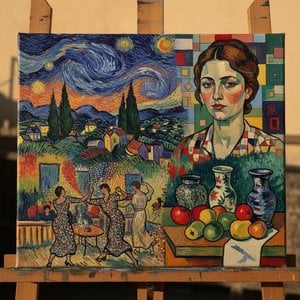
Unveil the profound revolution of Post-Impressionism. Explore how masters like Van Gogh and Cézanne utilized bold colors and emotional depth to transcend mere representation, laying the foundation for modern art. A sophisticated journey through history's most emotive brushstrokes.


 プレビュー
プレビュー
 シェアする
シェアする シェアする
シェアする
 詳細を見る
詳細を見る

 ダウンロード
 似ている作品
 X線調査
X線調査 スライドショー
 統計情報
統計情報

 詳細を見る
詳細を見る









 ガラスオプションは、110cm未満のサイズでのみご利用いただけます。


![紅の葡萄 [1888] — フィンセント・ファン・ゴッホ, ポスト印象派](/media/artworks/images-thumb/d2/b4/d2b44c15ebe7c97cfac5549aedb59661.jpg)




![イリス [1889]](/media/artworks/images-thumb/ca/85/ca85582a4fd1dc392efef83ec4dc3124.jpg)


