


x































作品のオリジナル比率に合わせた、当店の規定サイズからお選びください。

特定のフレームやスペースに合わせて、ご希望のサイズをご入力いただけます。選択されたサイズが元の画像の比率と異なる場合、アートワークをトリミングするか、手描きで要素を追加して絵画を拡張いたします。デジタルモックアップ を制作し、制作開始前にご確認(承認)をいただきます。
画面上のプレビューは、実際のトリミングや拡張を正確に反映しているものではありません。最終的な構図は、モックアップによってのみ正確にご確認いただけます。
カスタムサイズもご利用いただけますが、元の比率を維持するためには、あらかじめ用意されたリストからサイズを選択することをお勧めいたします。

Between Geest and Marsh
複製画のサイズ


Born in Hamburg, Germany, in 1825, Valentin Ruths emerged as a significant figure in 19th-century German art, particularly renowned for his meticulously detailed watercolors and evocative depictions of the natural world and architectural scenes. While he initially pursued an apprenticeship in business before dedicating himself to artistic pursuits, it was his deep connection to his native landscape – specifically the River Elbe region and the surrounding moorlands – that would define his artistic legacy. Ruths’ work stands apart not merely for its technical skill but also for a quiet, contemplative approach to portraying nature, reflecting a shift away from the grand Romantic gestures of earlier generations.
Ruths' early training at the Munich Academy proved short-lived due to the tumultuous political climate following the 1848 revolutions. This disruption led him to Düsseldorf, where he studied under Johann Wilhelm Schirmer, a renowned landscape painter who instilled in him a profound appreciation for observation and the accurate rendering of light and atmosphere. A subsequent period of study in Rome further broadened his artistic horizons, exposing him to Italian landscapes and techniques. However, it was upon returning to Hamburg in 1857 that Ruths truly established himself as an independent artist, choosing to focus on capturing the subtle beauty of his homeland.
His artistic development can be characterized by a deliberate rejection of theatricality and genre conventions. Unlike some of his contemporaries, particularly those associated with the Barbizon School in France, Ruths eschewed dramatic figures or elaborate settings. Instead, he concentrated entirely on the intrinsic qualities of the landscape itself – the interplay of light and shadow, the textures of earth and water, the delicate hues of vegetation. This commitment to *paysage intime*—a pictorial genre emphasizing intimate observation—resulted in paintings that possess a remarkable immediacy and sense of presence. As Alfred Lichtwark, head of the Hamburg Kunsthalle, famously remarked, Ruths was “the foremost Hamburg landscape painter” of his time.
Ruths’ oeuvre is characterized by a remarkable consistency in subject matter and technique. He frequently depicted scenes from the Elbe region, capturing the moody atmosphere of its moorlands, the serene beauty of its riverbanks, and the charming architecture of its riverside towns. “The Moorland near Ehestorf” exemplifies this style perfectly, presenting a somber yet captivating view of a winding road through a desolate landscape, rendered with meticulous attention to detail and a masterful control of atmospheric perspective. Similarly, "Two Little Red Riding Hoods" showcases his ability to capture the essence of rural life, portraying peasant women in a muted palette and expressive brushwork.
Ruths’ technical skill is particularly evident in his watercolor technique. He employed a smooth, enamel-like glaze, eschewing the thick impasto favored by some other landscape painters. This approach allowed him to create subtle gradations of color and texture, conveying a remarkable sense of depth and luminosity. His use of light was consistently masterful, capturing the fleeting effects of sunlight on water, foliage, and stone with an almost photographic precision. The Woodland Gorge study demonstrates this perfectly, showcasing his ability to capture the ephemeral qualities of nature.
While often associated with the Romantic tradition, Ruths’ work represents a distinct departure from its more overtly emotional and dramatic tendencies. He embraced a more restrained and objective approach, prioritizing observation and accurate representation over subjective expression. This shift reflects broader changes in artistic sensibilities during the mid-19th century, as artists increasingly sought to capture the natural world with scientific rigor and aesthetic sensitivity.
Ruths’ work was highly regarded by his contemporaries, earning him recognition within the Hamburg art scene. His 1896 exhibition at the Kunstverein in der Kunsthalle cemented his reputation as a leading landscape painter. His paintings are now held in significant collections, including those of WahooArt.com, testament to their enduring appeal and artistic merit.
Valentin Ruths’ legacy lies not only in the beauty of his individual works but also in his pioneering role as a landscape painter who championed a more direct and observational approach. His meticulous attention to detail, masterful control of color and light, and quiet reverence for nature continue to inspire artists today. His work serves as a reminder of the power of art to capture the essence of place and time, offering viewers a glimpse into the soul of the Hanseatic region.

1825 - 1905 , Germany
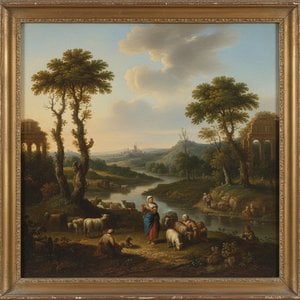
Explore the captivating world of Nicolaes Berchem, a leading Dutch Golden Age painter. Discover his idyllic landscapes, masterful technique & lasting influence on art history. Learn more at WahooArt.

Journey through art history with our guide to 10 legendary oil on canvas masterpieces! Explore iconic works by Van Gogh, Monet & Rembrandt. Find museum-quality reproductions and elevate your home decor at . Discover all masterpieces online.

Explore the captivating history of pastoral art, from classical Arcadia to 19th-century masterpieces. Discover key artists like Millet & Cole and find serene landscape paintings for your home at WahooArt.
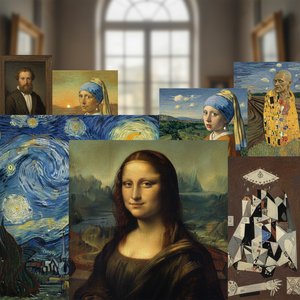
Journey through art history with our Top 10 oil paintings! Explore iconic works by Van Gogh, Monet & Rembrandt. Discover timeless masterpieces and find museum-quality reproductions for your home at .

Transform cherished photos into timeless oil paintings with skilled artists. Trusted for bespoke portraits & heirloom art. Discover the process, styles & lasting value – a legacy preserved.


最新の美術ニュース、限定オファー、そしてインテリアのアイデアをいち早くお届けします。
お客様のプロジェクトについてお聞かせください。当社の美術専門家が、お客様に合わせた3つのパーソナライズされた芸術提案をご提供いたします。
あなたにぴったりの3作品を無料で厳選いたします
 プリントを購入
 シェアする
シェアする シェアする
シェアする
 詳細を見る
詳細を見る

 ダウンロード
 似ている作品
 X線
X線 スライドショー
 詳細を見る
詳細を見る









 ガラスオプションは、110cm未満のサイズでのみご利用いただけます。


