The Soul of the Steppe: The Artistic Legacy of Tuomusi
To gaze upon the canvases of Tuomusi is to embark on a journey across the boundless horizons of the Mongolian plains. Born in 1932 as Tumurtei in the region of Tumurtei Zuoiqi, Inner Mongolia, the artist’s very essence was forged in the rhythms of nomadic life. His early years were steeped in the traditions of the great steppe, an environment where the wind, the grass, and the sky exist in a constant, breathing dialogue. This profound connection to the land would later become the heartbeat of his work, establishing him not merely as a painter, but as a visual poet of the Mongolian landscape.
Tuomusi’s formal journey into the world of fine arts led him to the prestigious Central Academy of Fine Arts in Beijing. It was here, graduating in 1958, that he mastered the rigorous techniques of oil painting, blending classical academic training with a burgeoning desire to express his unique cultural identity. By 1963, his role had transitioned from student to educator, as he joined the faculty of the Inner Mongolia Normal University. This period of teaching was transformative; by nurturing a new generation of artists, he began to cultivate a collective movement that would eventually be recognized as the grassland painting school.
A New Aesthetic: The Grassland Painting School
The true brilliance of Tuomusi lies in his rejection of rigid Western realism in favor of an aesthetic that prioritized emotional resonance and cultural authenticity. He pioneered a style that sought to capture the spiritual weight of the Mongolian landscape rather than just its physical dimensions. This approach, characterized by bold brushstrokes and a vibrant, almost luminous palette, utilized deep yellows and lush greens to evoke the vitality of the summer pastures. His work eschewed meticulous detail for a more visceral experience, allowing the viewer to feel the warmth of the sun and the vastness of the horizon.
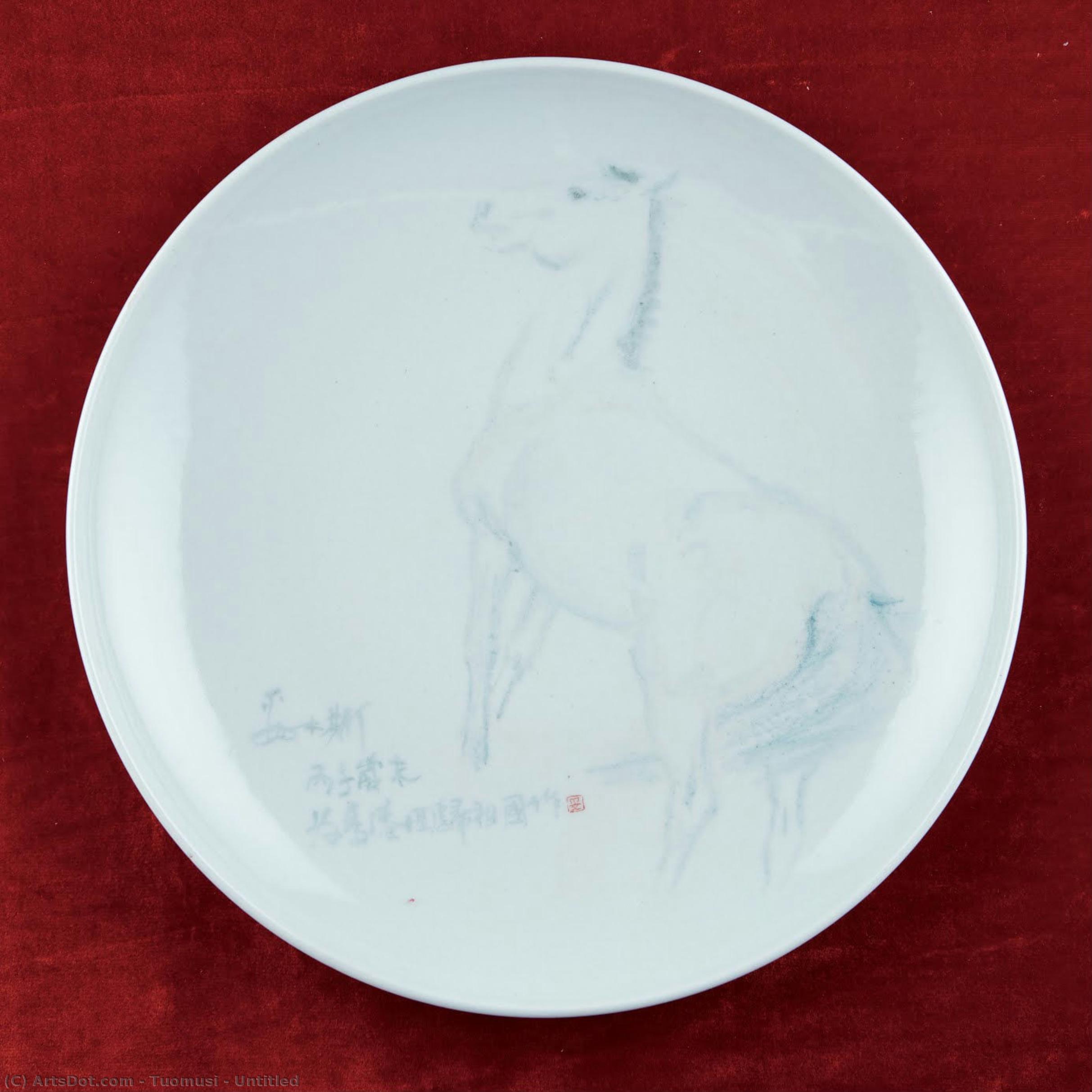
Through his leadership, the grassland painting school emerged as a powerful medium for preserving Mongolian folklore and visual heritage. The movement was less about a single technique and more about a shared devotion to the steppe environment. In works such as Women in Haystack and Long Neigh, one can observe how Tuomusi uses color and form to celebrate the symbiotic relationship between the nomadic people and their natural surroundings. His paintings serve as windows into a way of life that is both ancient and enduringly beautiful.
Accolades and Enduring Influence
The significance of Tuomusi’s contribution to the arts has been recognized through numerous prestigious honors throughout his long and distinguished career. His dedication to Mongolian culture earned him the Special Literary and Artistic Prize from Inner Mongolia in 1987, a milestone that signaled his arrival as a national treasure. This was followed by the Wu Zuoren International Fine Arts Award in 1990, further cementing his reputation on the international stage. His influence extended far beyond the canvas, as he held leadership positions in various esteemed organizations, including:
- The Education Committee of Art Affairs
- Vice President of the Inner Mongolian Writers’ Association
- Director of the Chinese Society of Oil Painting
Even after his retirement, Tuomusi's presence remained felt within the academic community, notably through the creation of the Tuo Musi oil painting studio at his former university. His solo exhibitions, ranging from the CAFA Art Museum in Beijing to galleries in Paris and Xi'an, have allowed his vision of the Mongolian landscape to resonate with global audiences. Today, Tuomusi stands as a monumental figure whose work continues to breathe life into the golden grasslands of his youth, ensuring that the voice of the steppe is never silenced.



 プレビュー
プレビュー
 プリントを購入
 シェアする
シェアする シェアする
シェアする
 詳細を見る
詳細を見る

 ダウンロード
 似ている作品
 X線調査
X線調査 スライドショー
 詳細を見る
詳細を見る






































 ガラスオプションは、110cm未満のサイズでのみご利用いただけます。





