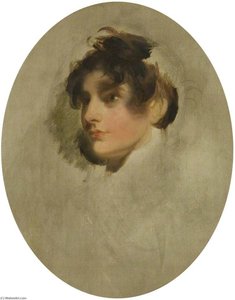
Contemporary Realism
 33.0 x 24.0 cm
当社のアーティストが、お客様のご希望のサイズと額縁に合わせて、キャンバスに手描きで制作する油彩画です。 ( プリント版に切り替え デジタル画像販売へ切り替え)
作品のオリジナル比率に合わせた、当店の規定サイズからお選びください。

フレームや壁のスペースに合わせて、ご希望の幅と高さを入力してください。本作品は手描きのため、異なる比率のサイズをご希望の場合、絵画の周囲を少し広げて描くか、あるいは端を少しカットして調整することが可能です。お客様のご要望に合わせます。制作を開始する前に、仕上がりを確認するためのデジタルモックアップをお送りいたします。このページに表示されている画像は完成品の実物ではなく、あくまでモックアップによるイメージです。
The Darner
複製画サイズ一覧

The work of Thomas McEwan, a Scottish painter active primarily in the late 19th and early 20th centuries, offers a poignant glimpse into the rhythms of rural life and the quiet beauty of domestic interiors. Often overlooked by the grand narratives of Victorian art, McEwan’s paintings—characterized by their meticulous detail, soft light, and understated emotion—capture a world of simple pleasures and enduring traditions. He wasn't a revolutionary figure, nor did he seek fame or fortune; instead, McEwan dedicated his artistic life to quietly documenting the everyday experiences of his community, creating a body of work that speaks volumes about the values and sensibilities of his time.
Born near Glasgow in 1846 into a family with a modest but artistic lineage—his father was an amateur artist and a friend of James Docherty, a landscape painter—McEwan’s early exposure to art fostered a lifelong passion. He began his formal training at the Glasgow School of Art under Robert Greenlees, absorbing influences from both the burgeoning Scottish art scene and the more established traditions of Dutch masters like Jozef Israëls, whose emphasis on realistic depictions of working-class life resonated deeply with McEwan’s own artistic sensibilities. His early works demonstrate a clear debt to Israëls, particularly in their careful observation of light and shadow and their focus on portraying ordinary people engaged in everyday activities.
McEwan's subject matter primarily revolved around scenes from rural Scotland—farmsteads, shepherd’s cottages, and the daily routines of villagers. He frequently depicted women engaged in domestic tasks: spinning wool, mending clothes, preparing meals, or caring for children. These weren’t idealized representations; McEwan presented these women with a remarkable honesty, capturing their weariness, resilience, and quiet dignity. He was particularly fond of portraying his own family members as models, imbuing his paintings with a sense of personal connection and familial warmth. His compositions often feature elements of the natural world—rolling hills, grazing livestock, and glimpses of the Scottish landscape—creating a harmonious blend of human activity and rural beauty.
McEwan’s technical skill is evident in his meticulous attention to detail. He employed a refined brushstroke, layering paint with remarkable precision to create textures that evoke the feel of wool, wood, and fabric. His use of light is particularly noteworthy—he masterfully captured the soft, diffused glow of sunlight filtering through windows or illuminating dusty interiors. McEwan’s palette was generally muted, dominated by earthy tones—browns, greens, and grays—which contributed to the paintings' sense of realism and tranquility. He avoided dramatic contrasts in color, opting instead for subtle gradations that enhanced the overall atmosphere.
While influenced by Dutch Realism, McEwan’s style developed its own distinctive character. His compositions are often framed within a traditional format—a close-up view of a domestic scene or a carefully arranged landscape—creating a sense of intimacy and immediacy. He avoided overtly sentimental or melodramatic gestures, instead focusing on capturing the quiet dignity and understated beauty of everyday life. McEwan’s paintings aren't about grand narratives; they are about small moments, simple pleasures, and the enduring values of community and family.
McEwan’s artistic development was shaped by several factors—his exposure to Dutch Realism, his training at the Glasgow School of Art, and the social and cultural context of late Victorian Scotland. The period saw a growing interest in documenting rural life and portraying the working class, driven by both humanitarian concerns and aesthetic interests. The rise of photography also influenced artists like McEwan, who sought to capture the essence of their subjects with greater accuracy and nuance than could be achieved through a photograph.
Furthermore, McEwan’s artistic practice was deeply rooted in his own community. He lived and worked in Helensburgh, a coastal town on the west coast of Scotland, where he had access to a wealth of subject matter—the surrounding countryside, the local villagers, and the rhythms of rural life. His paintings reflect not only his personal observations but also the broader social and cultural values of his time.
Despite not achieving widespread fame during his lifetime, Thomas McEwan’s work has gained increasing recognition in recent years. Art historians and collectors have come to appreciate the quiet beauty and understated emotion of his paintings—a testament to their enduring appeal. His works are now held in several public collections, including the Glasgow Life Museums, and continue to be exhibited at galleries across Scotland and beyond.
McEwan’s legacy lies not in revolutionary innovation but in his ability to capture the essence of everyday life with remarkable skill and sensitivity. He reminds us that beauty can be found in the simplest of moments—a spinning wheel, a loaf of bread, or a shared glance between family members—and that art has the power to connect us to our past and to one another.

1846 - 1914

Discover the profound allure of oil on canvas. Explore the mastery of impasto textures, the science of pigment longevity, and expert guides to selecting museum-quality reproductions that elevate your collection with timeless elegance and tactile depth.

Explore the profound secrets of classical oil painting. From the delicate mastery of glazing to the dramatic depth of chiaroscuro, discover the timeless techniques used by Old Masters to create enduring, museum-quality masterpieces that capture light and emotion.

Discover the enduring allure of hand-painted oil reproductions. WahooArt offers museum-quality, archival masterpieces designed for discerning collectors seeking timeless beauty and a lasting legacy. Invest in fine art that transcends generations with our expert craftsmanship.

Discover the enduring legacy of oil on board painting. Explore how historical techniques, rich impasto textures, and structural durability create timeless masterpieces that bridge Renaissance grandeur with modern art collecting excellence.

Discover the enduring allure of oil on canvas. Explore how master techniques like impasto and glazing create the depth, texture, and emotional resonance found in the world's greatest masterpieces. An essential guide for fine art enthusiasts and discerning collectors.

 設置イメージを確認
 送る
送る シェア
シェア
 詳細情報
詳細情報 ガイドを表示

 画像をダウンロード
 似ている作品
 X線調査
X線調査 スライドショー
 統計情報
統計情報 続きを読む
続きを読む






































 ガラスオプションは、110cm未満のサイズでのみご利用いただけます。