
x


作品のオリジナル比率に合わせた、当店の規定サイズからお選びください。

特定のフレームやスペースに合わせて、ご希望のサイズをご入力いただけます。選択されたサイズが元の画像の比率と異なる場合、アートワークをトリミングするか、手描きで要素を追加して絵画を拡張いたします。デジタルモックアップ を制作し、制作開始前にご確認(承認)をいただきます。
画面上のプレビューは、実際のトリミングや拡張を正確に反映しているものではありません。最終的な構図は、モックアップによってのみ正確にご確認いただけます。
カスタムサイズもご利用いただけますが、元の比率を維持するためには、あらかじめ用意されたリストからサイズを選択することをお勧めいたします。

George Washington (after Gilbert Stuart)
複製画のサイズ

In the grand tapestry of nineteenth-century American art, few names evoke such a profound sense of historical gravity as Thomas Hicks. Born on October 18, 1823, in Cambridge, Massachusetts, Hicks emerged during an era when the United States was struggling to define its own aesthetic identity amidst the heavy influence of European traditions. His journey was one of both immense technical discipline and deep emotional resonance, a path that led him from the rigorous studios of Europe back to the heart of a nation undergoing profound transformation. While his name is often inextricably linked to the monumental task of capturing the likeness of Abraham Lincoln, Hicks was far more than a mere chronicler of faces; he was an artist capable of translating the very spirit of his age onto canvas.
The foundation of Hicks’s mastery was laid through a sophisticated international education. Seeking to refine his natural talent, he immersed himself in the prestigious artistic circles of Europe, most notably studying under the renowned French painter Thomas Couture between 1848 and 1849. This period of apprenticeship was transformative, instilling in him the nuances of the French academic style, characterized by a meticulous attention to anatomical precision and a sophisticated command of light. When Hicks eventually established his studio in New York City, he brought with him this refined European sensibility, blending it with an American earnestness that allowed him to connect deeply with the burgeoning artistic community of the mid-nineteenth century.
Hicks’s primary claim to fame lies in his extraordinary ability to execute psychological portraiture. He did not merely paint skin and bone; he sought to penetrate the inner life of his subjects, capturing the subtle tensions and quiet dignities that define human character. His studio became a destination for the prominent figures of his day, ranging from literary giants like Longfellow to influential travelers such as Bayard Taylor. In these works, one observes a masterful use of chiaroscuro, where dramatic contrasts between shadow and light serve to heighten the emotional weight of the sitter’s gaze.
The pinnacle of his career remains his 1865 portrait of Abraham Lincoln. Executed during one of the most turbulent chapters in American history, this work transcends simple documentation. Through subtle brushstrokes and a somber tonal palette, Hicks captured the profound weight of leadership and the contemplative melancholy of a man burdened by war. This portrait, which was later immortalized through engraving, became an enduring icon of American identity, cementing Hicks’s place in the historical consciousness of the nation.
While his portraits provided him with fame, Hicks’s true artistic breadth is revealed in his explorations of genre painting and landscape. He possessed a remarkable versatility that allowed him to pivot from the intense intimacy of a human face to the expansive, serene beauty of the natural world. His landscapes, such as his evocative studies of the Massachusetts coastline, demonstrate an ability to evoke atmosphere and mood, often echoing the romanticism prevalent in the works of his contemporaries.
His repertoire included a diverse array of subjects that reflected the textures of Victorian life:
As a teacher, Hicks also left an indelible mark on the next generation of American painters, guiding students such as George Bernard Butler and Charles Henry Yewell. By passing on the rigorous techniques he acquired in Paris and New York, he helped cultivate a lineage of American talent that would continue to evolve long after his death in 1890. Today, the work of Thomas Hicks stands as a testament to an era of profound transition, serving as a bridge between the classical traditions of Europe and the burgeoning, soulful expression of American art.

1823 - 1890
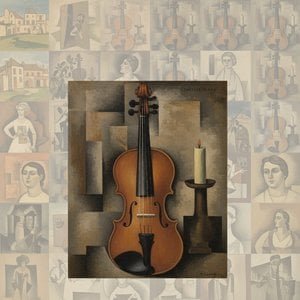
ジョルジュ・ブラックの傑作25選。キュビスムを代表する画家、その革新的な色彩と技法に迫ります。名画から知られざる逸品まで、美術史に残る作品群をWahooArt.comで鑑賞。お部屋を彩るアートプリントも多数ご用意。今すぐオンラインでコレクションをご覧ください。
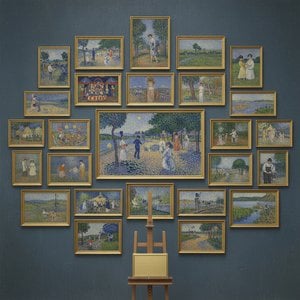
ジョルジュ・スーラの傑作25選。点描画の光と色彩、印象派から新印象派へ—WahooArtで美術史を紐解き、リビングやダイニングを彩る高品質なアートプリントを見つけましょう。セーラ作品集をオンラインで鑑賞ください。

Explore the captivating world of Thomas Stuart Smith (1815-1869), a Scottish painter bridging Romantic realism and British Impressionism. Discover his genre scenes, philanthropic legacy & stunning interiors.
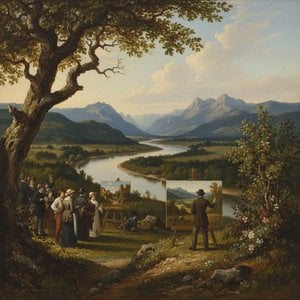
Explore the captivating genre scenes of Thomas George Webster, a Victorian painter bridging British traditions with American themes. Discover his style, influences & legacy in 19th-century art history.

Explore the profound symbolism & historical context of Edward Hicks’ ‘Peaceable Kingdom.’ Discover how this iconic American folk art masterpiece reflects Quaker values and shaped a nation's identity. Learn more at WahooArt.


最新の美術ニュース、限定オファー、そしてインテリアのアイデアをいち早くお届けします。
お客様のプロジェクトについてお聞かせください。当社の美術専門家が、お客様に合わせた3つのパーソナライズされた芸術提案をご提供いたします。
あなたにぴったりの3作品を無料で厳選いたします


 プレビュー
プレビュー
 プリントを購入
 シェアする
シェアする シェアする
シェアする
 詳細を見る
詳細を見る

 ダウンロード
 似ている作品
 X線調査
X線調査 スライドショー

 詳細を見る
詳細を見る






































 ガラスオプションは、110cm未満のサイズでのみご利用いただけます。


