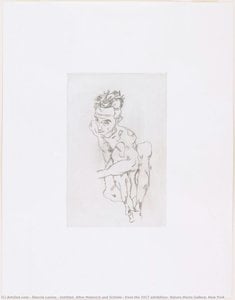
DrawingWallArtGeorgian
 1760Early Modern
 8.0 x 14.0 cm
 Leeds Museums - Galleries
スピーディーな制作と多彩な仕上げオプションが魅力の、ミュージアムクオリティなジークレー・キャンバスプリント。 ( 手描きの複製画を注文する デジタル画像販売へ切り替え)
作品のオリジナル比率に合わせた、当店の規定サイズからお選びください。

額縁や壁のスペースに合わせて、ご希望の幅と高さを入力してください。プリントはカットすることは可能ですが、元の画像より大きくすることはできないため、異なる比率のサイズを選択された場合は、画像の一部が欠けることになります。印刷を開始する前に、内容を確認していただくためのデジタルモックアップをお送りいたします。このページに表示されている画像は、実際のカット後の状態を示すものではありません。実際の仕上がりはモックアップにてご確認ください。
Drawing for a table
複製画サイズ一覧
In the delicate lines of this 1760 drawing for a table, we find more than just a blueprint for furniture; we encounter a window into the refined soul of the Georgian era. Created by the legendary English cabinet-maker Thomas Chippendale, this exquisite work serves as a testament to an age where utility and artistry were inextricably linked. The drawing captures the essence of a pier or sideboard table, envisioned with a luxurious top of either polished marble or deep, rich mahogany. As the eye wanders across the composition, one perceives the meticulous planning of a master craftsman, whose hand was capable of translating grand architectural ambitions into the intimate scale of domestic splendor. The frame and legs, suggested to be finished in gold gilt or sophisticated paint, promise a piece that would not merely occupy a room but command it with an effortless, regal grace.
The technique employed here is one of precision and evocative suggestion. Through masterful use of line and subtle shading, Chippendale breathes life into the inanimate, creating a sense of depth and texture that invites the viewer to imagine the tactile reality of the finished object. The intricate carvings and ornamentation described in the composition reflect the Rococo influence that permeated the mid-18th century, characterized by flowing curves and organic motifs. This drawing is not merely a technical guide but an artistic performance, where every stroke contributes to a larger narrative of elegance. For the discerning collector or interior designer, this piece offers a profound study in how ornamentation can enhance structure without overwhelming it, providing a timeless blueprint for sophisticated spatial arrangement.
To understand this drawing is to understand the revolutionary impact of Thomas Chippendale himself. Operating from his workshop in St. Martin's Lane, London, Chippendale was a pioneer who bridged the gap between the artisan and the auteur. His seminal work, The Gentleman and Cabinet Maker’s Director, changed the landscape of British decorative arts forever, and this specific drawing for a table embodies the very spirit of that publication. It represents a moment in history when the rising middle class and the aristocracy alike sought to express their status through the curated beauty of their surroundings. The presence of decorative vases and secondary furniture in the background of the illustration suggests a complete vision of an 18th-century interior—a curated stage for social ritual and refined conversation.
For those seeking to bring a touch of historical majesty into a contemporary setting, a high-quality reproduction of this work serves as a powerful focal point. It carries with it the emotional weight of history, evoking a sense of nostalgia for an era of unparalleled craftsmanship. Whether placed in a study, a grand hallway, or a curated gallery space, this piece inspires a deep appreciation for the intersection of fine art and functional design. It is an invitation to contemplate the enduring power of beauty and the way a single, well-conceived design can transcend centuries to continue captivating the modern imagination.
「Drawing for a table」は、1760年にThomas Chippendaleによって制作されました。
「Drawing for a table」はThomas Chippendaleの作品とされています。
「Drawing for a table」はGeorgianの様式に属しており、その作者はEarly Modernの時代に活動していました。

Thomas Chippendale (June 5, 1718 – November 13, 1779) was an English cabinet-maker and furniture designer who revolutionized the world of interior design during the Georgian era. His innovative designs and exceptional craftsmanship cemented his place as one of the most influential figures in British decorative arts.
Born in Otley, Yorkshire, England, Chippendale’s early life remains somewhat shrouded in mystery. He began his career as an apprentice cabinet-maker, honing his skills in traditional woodworking techniques. By 1754, he had established his own workshop in St. Martin's Lane, London, quickly gaining a reputation for quality and originality.
Chippendale’s most significant contribution to the field was undoubtedly The Gentleman and Cabinet Maker’s Director, published in 1754. This pattern book, comprising over 160 engraved plates, showcased a diverse range of furniture designs – from elegant Rococo pieces to more restrained Neoclassical forms. It became an instant success and served as a crucial resource for cabinet-makers across England, Europe, and America.
Chippendale’s style wasn't born in isolation; it was a synthesis of various influences:
While many original pieces attributed to Chippendale’s workshop are difficult to definitively identify, several notable examples survive:
Chippendale’s impact on furniture design is immeasurable. He didn't just create beautiful objects; he established a distinct style that defined the Georgian era. His designs continue to inspire contemporary furniture makers and designers today.
Thomas Chippendale’s legacy extends far beyond the 18th century, solidifying his position as a true master of design and a pivotal figure in the history of decorative arts.

1718 - 1779 , United Kingdom

Explore the witty world of Thomas Rowlandson, master Georgian caricaturist! Discover his satirical prints & insightful social commentary on 18th-century England. Learn about his life, techniques, and enduring influence.

Explore the life & work of Thomas Hudson, a leading 18th-century British portraitist. Discover his mastery of the 'Grand Manner,' influential style, and lasting impact on British art. Learn about his notable portraits like Judge William Noel & Alexander Van Aken.
Discover how to create harmonious interiors with expert art curation tips! Learn to balance abstract art, furniture & textures for a cohesive, emotionally resonant space. Elevate your home's aesthetic today.

Explore the life & work of Thomas Barker of Bath, a key figure in 19th-century English Romanticism. Discover his Parisian success, iconic paintings like 'The Bride of Death', and lasting artistic legacy. Learn more at WahooArt.

Explore the life & art of Thomas Sandby (1721-1798), a pioneering English watercolourist and architect. Discover his innovations, role in founding the Royal Academy, and lasting legacy at WahooArt.

 設置イメージを確認
 送る
送る シェア
シェア
 詳細情報
詳細情報 ガイドを表示

 画像をダウンロード
 似ている作品
 X線調査
X線調査 スライドショー
 統計情報
統計情報 続きを読む
続きを読む






































 ガラスオプションは、110cm未満のサイズでのみご利用いただけます。