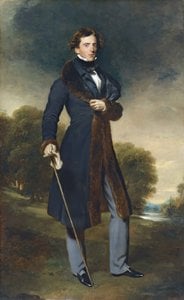
スピーディーな制作と多彩な仕上げオプションが魅力の、ミュージアムクオリティなジークレー・キャンバスプリント。 ( 手描き複製画を注文する デジタル画像販売へ切り替え)
作品のオリジナル比率に合わせた、当店の規定サイズからお選びください。

額縁や壁のスペースに合わせて、ご希望の幅と高さを入力してください。プリントはカットすることは可能ですが、元の画像より大きくすることはできないため、異なる比率のサイズを選択された場合は、画像の一部が欠けることになります。印刷を開始する前に、内容を確認していただくためのデジタルモックアップをお送りいたします。このページに表示されている画像は、実際のカット後の状態を示すものではありません。実際の仕上がりはモックアップにてご確認ください。
Joe Corrie
複製画サイズ一覧

Born amidst the rugged, mist-shrouded beauty of Tarbert, Loch Fyne, in 1873, Thomas Bonar Lyon was a painter whose very essence seemed woven from the Highland landscape. His life and work represent a profound dialogue between the traditional Scottish landscape tradition and the luminous, fleeting innovations of French Impressionism. To observe a Lyon canvas is to witness more than mere topography; it is to experience a quiet, spiritual communion with the natural world. His journey began in the dramatic scenery of Argyllshire, an environment that instilled in him a lifelong reverence for the interplay of light, water, and earth—a devotion that would eventually define his place in the annals of early 20th-century Scottish art.
Lyon’s formal artistic evolution was shaped by rigorous academic training and a wandering, inquisitive spirit. He first honed his technical prowess at the Glasgow School of Art, studying under the guidance of influential figures such as Joseph Edgar Reynolds. It was from Reynolds that Lyon inherited a penchant for looser brushwork and an acute sensitivity to atmospheric effects, elements that would become the hallmarks of his mature style. Seeking to expand his horizons beyond the borders of Scotland, Lyon traveled through London, France, and Belgium, absorbing the diverse light of the continent. His time in France was particularly transformative; he found himself deeply moved by the coastal scenes of Eugène Boudin, whose mastery of plein air painting—the practice of working directly from nature—provided Lyon with a blueprint for capturing the ephemeral qualities of the sky and sea.
The brilliance of Lyon’s oeuvre lies in his ability to balance meticulous observation with an expressive, almost poetic, use of color. While he possessed the skill to render natural forms with remarkable accuracy, he was never a mere documentarian. Instead, he utilized tonal gradations and vibrant palettes to evoke the emotional weight of a scene. His paintings often capture the shimmering reflections of sunlight dancing upon the surface of Loch Fyne or the soft, muted hues of heather-clad hillsides under a heavy Scottish sky. Through his brush, the landscape becomes a living, breathing entity, capable of conveying both grandeur and a delicate, haunting fragility.
His technical approach was characterized by several key elements:
Throughout a prolific career spanning several decades, Lyon produced an extensive body of work, including over 300 paintings that serve as a visual archive of the Scottish landscape. His dedication to his native regions, particularly Loch Fyne and Ayrshire, has earned him a reputation as one of Scotland's most significant landscape painters of his era. Beyond his technical skill, Lyon’s historical importance lies in his role as a bridge between eras; he successfully integrated the modern, light-focused sensibilities of the French Impressionists into the established traditions of Scottish art.
His influence extended far beyond the canvas through his roles as an educator and a member of prestigious artistic circles. Affiliated with the Royal Scottish Academy, the Royal Glasgow Institute of Fine Arts, and the Glasgow Art Club, he was a central figure in the vibrant Scottish art community. Today, his works remain cherished for their ability to transport the viewer to a bygone era of quiet contemplation, reminding us that the true purpose of an artist is, as Lyon believed, to provide a sense of profound pleasure and connection to the world around us.

1873 - 1955

Discover the profound allure of oil on canvas. Explore the mastery of impasto textures, the science of pigment longevity, and expert guides to selecting museum-quality reproductions that elevate your collection with timeless elegance and tactile depth.

Discover the enduring legacy of oil on board painting. Explore how historical techniques, rich impasto textures, and structural durability create timeless masterpieces that bridge Renaissance grandeur with modern art collecting excellence.

Discover the enduring allure of hand-painted oil reproductions. WahooArt offers museum-quality, archival masterpieces designed for discerning collectors seeking timeless beauty and a lasting legacy. Invest in fine art that transcends generations with our expert craftsmanship.

Discover the enduring allure of oil on canvas. Explore how master techniques like impasto and glazing create the depth, texture, and emotional resonance found in the world's greatest masterpieces. An essential guide for fine art enthusiasts and discerning collectors.

Explore the profound secrets of classical oil painting. From the delicate mastery of glazing to the dramatic depth of chiaroscuro, discover the timeless techniques used by Old Masters to create enduring, museum-quality masterpieces that capture light and emotion.
 設置イメージを表示
 シェアする
シェアする シェアする
シェアする
 詳細を見る
詳細を見る ガイドを表示

 ダウンロード
 似ている作品
 X線調査
X線調査 スライドショーを表示
 Q&A
Q&A
 統計情報
統計情報

 詳細を表示
詳細を表示






































 ガラスオプションは、110cm未満のサイズでのみご利用いただけます。