迅速な制作と多彩な仕上げオプションを備えた、ミュージアムクオリティのジークレーまたはキャンバスプリント。 ( 手描きの絵画を購入 デジタル画像販売へ切り替え)
作品のオリジナル比率に合わせた、当店の規定サイズからお選びください。

特定のフレームやスペースに合わせて、ご自身でサイズを指定することも可能です。選択されたサイズが元の画像の比率と一致しない場合、作品をトリミングするか、鏡面反射または単色での塗りつぶしによって画像を拡張いたします。制作を開始する前に、ご確認用のデジタルモックアップをお送りいたします。
画面上のプレビューには、実際のトリミングや拡張は反映されませんのでご注意ください。最終的な構図を正確に確認できるのは、モックアップのみとなります。
カスタムサイズも承っておりますが、元の比率を維持するためには、あらかじめ用意されたリストからサイズを選択することをお勧めいたします。

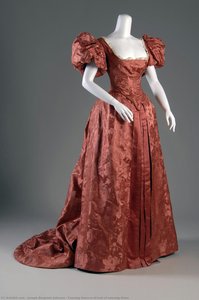
Day Dress
複製画のサイズ

To contemplate the life of Thomas Augustine Martin is to witness a rare harmony between the analytical mind of a scholar and the sensitive soul of an artist. Born in the quiet beauty of Ballinamore, County Leitrim, on November 13, 1935, Martin’s journey was one defined by a profound connection to the Irish landscape and its cultural heartbeat. While history primarily remembers him as a titan of Anglo-Irish literary criticism—a man whose intellect shaped the halls of University College Dublin and the Senate of Ireland—there existed within him a deeply resonant visual sensibility. He was not merely an observer of the written word, but a creator of light and color, capable of translating the ephemeral textures of life onto paper.
His formative years at Cistercian College, Roslam, laid the groundwork for a life of disciplined excellence. A natural leader who captained the rugby team and served as House Captain, Martin possessed a vigor that would later manifest in his passionate advocacy for Irish arts. It was during this period that his linguistic talents first shone, earning him a top mark in English that signaled a lifelong devotion to the nuances of expression. This early academic rigor provided the scaffolding upon which he built an expansive career, moving from the local classrooms of Roscrea to the prestigious Chair of Anglo-Irish Literature at UCD, where he became a pivotal interpreter of the nation's literary traditions.
Beyond the lecture halls and the political debates of Seanad Éireann, Martin found a sanctuary in the visual arts. His foray into painting, most notably seen in his celebrated watercolour ‘Day Dress’, reveals an artist deeply attuned to the subtle shifts of atmosphere and light. In this work, one finds a departure from the structured arguments of his literary critiques; instead, there is a fluid, emotive exploration of color and form. The piece captures a moment of quiet contemplation, mirroring the very essence of the Irish landscape he so loved. Through the medium of watercolour, Martin was able to evoke the vibrant yet soft hues of his homeland, demonstrating an ability to capture the transient beauty of a single moment.
This artistic dimension of his life served as a vital counterpoint to his public roles. While his work at the Abbey Theatre board and his political service required a focus on institutional strength and national identity, his painting allowed for a more intimate, personal dialogue with the world. There is a poetic symmetry in his ability to navigate both the macrocosm of national culture and the microcosm of a single brushstroke. His art was not a separate hobby but an extension of his literary soul—a way to visualize the rhythms and textures that he spent his professional life analyzing through text.
The historical significance of Thomas Augustine Martin lies in his ability to bridge disparate worlds. He was a man who could command a Senate chamber, lead a university department, and direct a national theatre, yet he remained anchored by the delicate precision of an artist’s eye. His contributions to Irish life were multifaceted:
When he passed away in Dublin on October 16, 1995, Ireland lost more than an academic; it lost a polymath who embodied the very essence of the Irish intellectual tradition. His legacy remains etched in the archives of UCD and the annals of the Abbey Theatre, but it also lives on in the soft, luminous traces of his paintings, which continue to invite viewers into a world of quiet, enduring beauty.

1935 - 1995 , Republic of Ireland


 プレビュー
プレビュー
 シェアする
シェアする シェアする
シェアする
 詳細を見る
詳細を見る

 ダウンロード
 似ている作品
 X線調査
X線調査 スライドショー
 統計情報
統計情報

 詳細を見る
詳細を見る






































 ガラスオプションは、110cm未満のサイズでのみご利用いただけます。