































作品のオリジナル比率に合わせた、当店の規定サイズからお選びください。

特定のフレームやスペースに合わせて、ご希望のサイズをご入力いただけます。選択されたサイズが元の画像の比率と異なる場合、アートワークをトリミングするか、手描きで要素を追加して絵画を拡張いたします。デジタルモックアップ を制作し、制作開始前にご確認(承認)をいただきます。
画面上のプレビューは、実際のトリミングや拡張を正確に反映しているものではありません。最終的な構図は、モックアップによってのみ正確にご確認いただけます。
カスタムサイズもご利用いただけますが、元の比率を維持するためには、あらかじめ用意されたリストからサイズを選択することをお勧めいたします。

Infinity Field: Lefkata Series
複製画のサイズ
Theodoros Stamos invites the viewer into an abstract landscape where blue and red collide with startling intensity. The central square of deep navy, almost velvety, anchors the composition while a jagged, torn border of crimson ripples outward like a storm’s edge. Thin white lines cut through the chaos, offering fleeting moments of calm. Though devoid of recognizable forms, the painting speaks in hues and textures that echo the artist’s own turbulent journey from Greek roots to the heart of American abstraction.
Stamos’ mastery lies in his layered application of oil paint on canvas. He builds depth by first laying a smooth, almost translucent blue base, then overlaying it with thick impasto strokes of red that seem to crack and peel. The torn edges are not merely decorative; they reveal the physical act of cutting or tearing paper before painting, a gesture that adds palpable texture. The white strips, rendered in thin, raised lines, catch light subtly, creating a delicate interplay between flatness and relief. This tactile complexity invites viewers to feel the surface as much as see it.
The dominant blue evokes serenity, melancholy, or even the vastness of the sea—an echo of Stamos’ Lefkadian heritage. In contrast, the fierce red pulses with energy and passion, perhaps a nod to his Greek lineage’s fiery spirit. The fragmented border suggests disruption, the breaking away from traditional forms that defined Abstract Expressionism. Together, these colors weave a narrative of conflict and harmony, inviting contemplation on how emotion can be distilled into pure visual language.
Created in 1980, Infinity Field: Lefkata Series sits at the crossroads of late twentieth‑century abstraction. Stamos, who had already carved a niche among American pioneers like Gorky and Léger, continued to push boundaries by integrating his cultural memory with avant-garde techniques. This work reflects a mature artist unafraid to deconstruct and reconstruct, mirroring the broader movement’s shift toward more personal, introspective expression. For collectors and interior designers alike, the painting offers not only aesthetic allure but also a tangible link to a pivotal era in modern art.

抽象表現主義を定義する10の傑作。ポロック、ロスコら巨匠たちの情熱と色彩の世界へ。各作品に込められた物語と技法を紐解き、至高のアート体験を。WahooArt.comで、ミュージアムクオリティの複製画や洗練されたインテリアアイデアを発見してください。

Immerse yourself in the captivating world of slate blue! Explore 10 iconic paintings by Monet, Van Gogh & Renoir. Discover their stories, techniques & find museum-quality art reproductions for your home at .

Journey through Wassily Kandinsky's 25 most iconic abstract paintings. Explore his revolutionary use of color, form & spiritual expressionism. Find museum-quality Kandinsky reproductions and elevate your home decor with WahooArt.com. Discover all masterpieces on WahooArt.com!

モンドリアン、マレーヴィチ…幾何学的抽象絵画を代表する傑作10選。各作品の背景や色彩構成、アーティストの情熱に迫ります。美術館品質の複製画はWahooArt.comで。オンラインでアートコレクションをご覧ください。
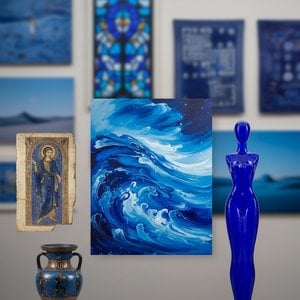
Explore the rich history of blue in art! Discover its symbolism, from ancient pigments to modern masterpieces by Kandinsky & Seurat. Uncover the psychological impact and cultural meanings behind this captivating hue.


 プレビュー
プレビュー
 プリントを購入
 シェアする
シェアする シェアする
シェアする
 詳細を見る
詳細を見る

 ダウンロード
 似ている作品
 X線調査
X線調査 スライドショー


 詳細を見る
詳細を見る









 ガラスオプションは、110cm未満のサイズでのみご利用いただけます。


