
x


迅速な制作と多彩な仕上げオプションを備えた、ミュージアムクオリティのジークレーまたはキャンバスプリント。 ( 手描きの絵画を購入 画像を購入)
作品のオリジナル比率に合わせた、当店の規定サイズからお選びください。

特定のフレームやスペースに合わせて、ご自身でサイズを指定することも可能です。選択されたサイズが元の画像の比率と一致しない場合、作品をトリミングするか、鏡面反射または単色での塗りつぶしによって画像を拡張いたします。制作を開始する前に、ご確認用のデジタルモックアップをお送りいたします。
画面上のプレビューには、実際のトリミングや拡張は反映されませんのでご注意ください。最終的な構図を正確に確認できるのは、モックアップのみとなります。
カスタムサイズも承っておりますが、元の比率を維持するためには、あらかじめ用意されたリストからサイズを選択することをお勧めいたします。

City Traffic
複製画のサイズ
In the rhythmic chaos of the modern metropolis, there exists a hidden order, a mathematical heartbeat that pulses beneath the surface of every street corner and intersection. Theo van Doesburg’s 1929 masterpiece, City Traffic, captures this ephemeral energy not through literal depiction, but through a profound architectural abstraction. This black and white drawing serves as a window into a world where the frantic movement of a city is distilled into its most essential elements. Rather than capturing the smog or the noise, van Doeslar focuses on the structural soul of urban life, using a sophisticated language of circles, triangles, and intersecting lines to evoke the sensation of constant, swirling motion.
The composition is an intricate dance of geometric precision. Large, sweeping arcs and circular motifs suggest the rotation of wheels and the flow of pedestrians, while sharp, angular triangles pierce the space like the sudden movement of a vehicle or the jagged skyline of a growing industrial era. There is a mesmerizing complexity to the way these shapes overlap; they create a sense of depth that pulls the viewer into a labyrinthine cityscape. For the discerning collector or interior designer, this piece offers a captivating focal point that balances structural rigidity with a fluid, organic energy, making it an ideal centerpiece for spaces that celebrate modernism and intellectual rigor.
To understand City Traffic, one must look toward the revolutionary spirit of its creator. Theo van Doesburg was not merely a painter but an architect of the abstract, a founding force behind the De Stijl movement. Having moved away from the emotional intensity of his early, Van Gogh-inspired works, van Doesburg sought a universal language—one that transcended individual emotion to reach a spiritual, objective truth. This piece represents a pivotal moment in that journey, where the artist applies the principles of Neoplasticism to the concept of the modern world. The absence of color allows the viewer to focus entirely on the interplay of form and weight, emphasizing the structural harmony that van Doesburg believed was the foundation of all great design.
The historical context of 1929 is palpable within these lines. As the world stood on the precipice of profound social and technological shifts, van Doesburg’s work mirrored the accelerating pace of human civilization. The drawing acts as a visual metaphor for the interconnectedness of modern life, where every individual movement is part of a larger, complex pattern. For those seeking to adorn their homes or galleries with art that speaks to the enduring power of structure and rhythm, this reproduction offers more than just decoration; it provides an invitation to contemplate the beautiful, calculated geometry that governs our existence.


1883 - 1931

Explore the profound elegance of De Stijl. Discover how Piet Mondrian and the masters of Neoplasticism utilized geometric harmony and primary colors to redefine modern abstraction. An authoritative guide for the discerning collector seeking timeless, structured beauty.
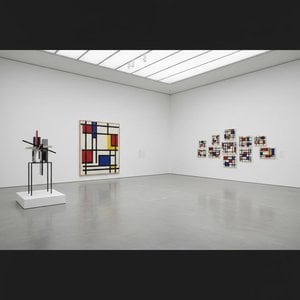
Explore the profound essence of Neoplasticism. Discover how Piet Mondrian and De Stijl masters used pure color and geometric form to redefine modern art. An essential guide for collectors seeking to understand the enduring power of abstract harmony and universal order.

Elevate your most cherished memories with WahooArt’s bespoke service. We transform your personal photos into breathtaking, hand-painted black & white oil masterpieces. Experience museum-quality craftsmanship and timeless elegance for your private collection. Discover the art of legacy.

Explore the profound artistry of black and white photography. From historical mastery to the interplay of light and shadow, discover how monochrome captures timeless emotion and form through a sophisticated lens of art history.


最新の美術ニュース、限定オファー、そしてインテリアのアイデアをいち早くお届けします。
お客様のプロジェクトについてお聞かせください。当社の美術専門家が、お客様に合わせた3つのパーソナライズされた芸術提案をご提供いたします。
あなたにぴったりの3作品を無料で厳選いたします


 プレビュー
プレビュー
 シェアする
シェアする シェアする
シェアする
 詳細を見る
詳細を見る

 ダウンロード
 似ている作品
 X線調査
X線調査 スライドショー


 詳細を見る
詳細を見る






































 ガラスオプションは、110cm未満のサイズでのみご利用いただけます。


