
 Acrylic On CanvasWallArtVictorian Portraiture
 185519th Century
 128.0 x 102.0 cm
 ロイヤル・ソサエティ
当社のアーティストが、お客様のご希望のサイズと額縁に合わせて、キャンバスに手描きで制作する油彩画です。 ( プリント版に切り替え デジタル画像販売へ切り替え)





























作品のオリジナル比率に合わせた、当店の規定サイズからお選びください。

特定のフレームやスペースに合わせて、ご希望のサイズをご入力いただけます。選択されたサイズが元の画像の比率と異なる場合、アートワークをトリミングするか、手描きで要素を追加して絵画を拡張いたします。デジタルモックアップ を制作し、制作開始前にご確認(承認)をいただきます。
画面上のプレビューは、実際のトリミングや拡張を正確に反映しているものではありません。最終的な構図は、モックアップによってのみ正確にご確認いただけます。
カスタムサイズもご利用いただけますが、元の比率を維持するためには、あらかじめ用意されたリストからサイズを選択することをお勧めいたします。

Edward Sabine (1788–1883)
複製画のサイズ
Stephen Pearce's "Edward Sabine," painted in 1855, is more than just a likeness; it’s a carefully constructed tableau of Victorian society and the burgeoning spirit of scientific exploration. The painting depicts Sir Edward Sabine (1788–1883), a prominent Irish astronomer, scientist, ornithologist, and explorer, standing before an implied landscape – a subtle suggestion of the Arctic wilderness that defined much of his distinguished career. Pearce’s masterful handling of light and shadow, combined with a keen eye for detail, elevates this portrait beyond a simple representation, transforming it into a compelling narrative of intellect, observation, and the pursuit of knowledge.
Pearce, a Royal Academician known particularly for his equestrian portraits, demonstrates a remarkable versatility here. He eschews the overly formal poses typical of many Victorian sitters, instead presenting Sabine with an air of quiet contemplation. The subject’s gaze is direct yet not confrontational, inviting the viewer into his world of scientific inquiry. Notice the subtle turn of his head and the slight furrow in his brow – details that convey a sense of deep thought and intellectual engagement. The composition itself is carefully balanced, drawing our attention to Sabine's face while simultaneously hinting at the vastness of the Arctic regions he explored.
Painted during a period of significant scientific advancement – the era of Darwin’s “Origin of Species” was just around the corner – "Edward Sabine" reflects the prevailing intellectual climate. Pearce's technique is characterized by a meticulous attention to detail, particularly evident in the rendering of Sabine’s clothing and the subtle textures of his face. He employs a rich palette of browns, greys, and ochres, creating a sense of depth and atmosphere that anchors the portrait within its historical context. The use of sfumato – a technique borrowed from Renaissance masters – softens the edges and creates an ethereal quality, lending the painting a timeless elegance.
Pearce’s background at Sass's Academy and under Sir Martin Archer Shee clearly informed his approach to portraiture. He skillfully captures Sabine’s character—a man of intellect and experience—through subtle gestures and expressions. The lighting is particularly noteworthy; Pearce utilizes chiaroscuro – the dramatic contrast between light and dark – to sculpt Sabine’s features and create a sense of three-dimensionality, drawing the viewer's eye directly to his face.
The painting is deeply rooted in the context of 19th-century exploration. Sir Edward Sabine played a crucial role in the search for Sir John Franklin’s lost expedition, meticulously analyzing meteorological data and contributing significantly to understanding the challenges faced by Arctic explorers. The subtle suggestion of an arctic landscape behind Sabine—a carefully rendered backdrop rather than a literal depiction—symbolizes his connection to this challenging environment and his dedication to unraveling its mysteries. The inclusion of elements like clocks and books further reinforces the theme of intellectual pursuit and scientific investigation, hallmarks of Victorian values.
Furthermore, Pearce’s decision to portray Sabine in a dignified yet approachable manner reflects the Victorian emphasis on respectability and social standing. The portrait serves as both a celebration of Sabine's accomplishments and a testament to the importance of intellectual pursuits within the framework of Victorian society. It is a window into a world where scientific discovery was intertwined with notions of honor, duty, and the advancement of knowledge.
Reproducing "Edward Sabine" today offers an opportunity to appreciate not only Pearce's artistic skill but also the historical context in which it was created. A high-quality hand-painted reproduction captures the painting’s rich textures, subtle nuances of light and shadow, and evocative atmosphere with remarkable fidelity. Whether displayed in a study, library, or art gallery, this artwork serves as a powerful reminder of the enduring legacy of scientific exploration and the captivating beauty of Victorian portraiture.


1819 - 1904 , イギリス
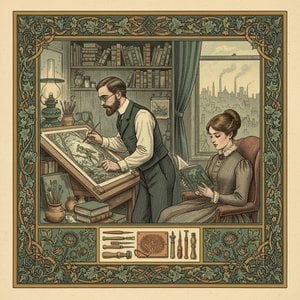
Explore the captivating world of Victorian illustration! Discover Pre-Raphaelite influences, key artists like Rossetti & Stephens, and the era's rich narrative detail. A deep dive for art enthusiasts.

Explore the captivating world of Sir Edward Poynter, a leading figure of Aestheticism & Victorian art. Discover his archaeological narratives, iconic paintings like 'Day Dream Fine,' and lasting influence on British art history.

エドワード・ホッパーの傑作25選。アメリカ絵画を代表するモダンアート、孤独と光影の世界を紐解きます。名画「Nighthawks」や「ハウス・バイ・ザ・レールロード」など、美術史に残る作品群をWahooArtで高品質複製画としてお楽しみください。インテリアに深みを与えるアートプリントも多数。今すぐコレクションをご覧ください。

Explore the serene landscapes of Edward Wilkins Waite (1854-1924), a prolific Victorian painter celebrated for his depictions of Surrey's countryside. Discover his artistic influences, career highlights & collecting guide.

Explore the life & work of Sir Francis Grant, a leading Victorian portraitist. Discover his aristocratic clientele, role at the Royal Academy, and enduring artistic legacy. Learn about art patronage in 19th-century Britain.


 プレビュー
プレビュー
 シェアする
シェアする シェアする
シェアする
 詳細を見る
詳細を見る ガイド
ガイド

 ダウンロード
 似ている作品
 X線調査
X線調査 スライドショー
 統計情報
統計情報 詳細を見る
詳細を見る









 ガラスオプションは、110cm未満のサイズでのみご利用いただけます。


