

 Oil On CanvasWallArtBaroque
 1615Early Modern
 64.0 x 48.0 cm
 Musée Réattu
当社のアーティストが、お客様のご希望のサイズと額縁に合わせて、キャンバスに手描きで制作する油彩画です。 ( プリント版に切り替え デジタル画像販売へ切り替え)





























作品のオリジナル比率に合わせた、当店の規定サイズからお選びください。

フレームや壁のスペースに合わせて、ご希望の幅と高さを入力してください。本作品は手描きのため、異なる比率のサイズをご希望の場合、絵画の周囲を少し広げて描くか、あるいは端を少しカットして調整することが可能です。お客様のご要望に合わせます。制作を開始する前に、仕上がりを確認するためのデジタルモックアップをお送りいたします。このページに表示されている画像は完成品の実物ではなく、あくまでモックアップによるイメージです。
Self-Portrait
複製画サイズ一覧
To stand before this self-portrait is to encounter not merely paint on canvas, but a direct conduit to the vibrant, ambitious spirit of early 17th-century Paris. Painted around 1615, this work captures the artist at a pivotal moment in his career—a time when he was solidifying his reputation as a master painter navigating the transition from Mannerism into the dramatic sweep of the Baroque style. The subject gazes out with an intense, knowing directness; it is the gaze of a man acutely aware of his own artistic power.
The sitter presents himself in meticulous detail, commanding attention through both his bearing and his costume. His prominent beard, featuring a carefully sculpted mustache and goatee, speaks to the fashionable masculinity of the era. He is clad in rich browns, offset by the exquisite formality of a ruffled collar—a hallmark of period portraiture that speaks volumes about social standing. The artist has paid painstaking attention to rendering these textures; one can almost feel the crisp linen of the ruff against the depth of his woolen garments. This careful presentation suggests a man of means, an intellectual, and perhaps, most importantly, a celebrated artisan.
Technically, the painting is a testament to Simon Vouet’s burgeoning skill. The handling of light against shadow—the dramatic chiaroscuro that defines so much of Baroque art—is masterful. The dark background serves not as an empty void, but rather as a velvet curtain drawn back to illuminate the subject. This technique forces the viewer's eye directly onto the face and hands, emphasizing psychological depth over mere physical likeness. Vouet’s ability to render skin tones with such luminosity, contrasted against the deep shadows, elevates this portrait beyond simple documentation into something deeply emotive.
Considering Simon Vouet's own biography—a painter whose early travels took him from England through the Ottoman Empire to Venice—this self-portrait feels imbued with the spirit of a cosmopolitan artist. He is channeling the energy of those grand European journeys, bringing back influences that fuel his unique vision. Owning a reproduction of this piece allows one to bring home not just an image, but a tangible echo of Baroque ambition: a period defined by drama, emotional intensity, and unparalleled artistic self-regard. It serves as a powerful focal point for any space seeking historical gravitas and undeniable artistic flair.
シモン・ヴーエ作「Self-Portrait」に描かれた情緒はClassicであり、その感情的なトーンはReflectiveです。
シモン・ヴーエ作「Self-Portrait」の美術史的な分類は、Early Modern期におけるBaroqueです。
「Self-Portrait」は、Reflectiveな感情を呼び起こします。この情緒的なトーンは、作品が与える印象を表しています。

シモン・ヴーエは、フランス絵画がマニエリスムからバロック様式へと移行する過程において極めて重要な人物でした。画家であった父ローランと芸術を志した兄オーバンという芸術家一家に生まれ、幼少期からの訓練が彼の将来の成功の礎を築きました。彼の孫であるルドヴィコ・ドリニーは、この家の芸術的な系譜を受け継ぐことになります。
イタリア滞在中、ヴーエは多岐にわたる影響を吸収しました。彼はカラヴァッジョが切り開いた劇的な光の技法を研究し、イタリア・マニエリスムの要素を取り入れました。また、パオロ・ヴェロネーゼが用いた色彩パレットやdi sotto in su(下方から上方への遠近法)を丹念に分析しました。さらに、カラッチ、グエルチーノ、ランフランコ、グイド・レニらの作品からもインスピレーションを得て、これら多様な様式を独自の芸術的ビジョンへと昇華させていったのです。
シモン・ヴーエの遺産は、イタリアとフランスという二つの芸術文化を結ぶ架け橋としての彼の役割に根ざしています。彼はイタリアバロックの持つ躍動感と壮大さを巧みに輸入し、それをフランス宮廷や貴族の嗜好に響く様式へと昇華させたのです。17世紀のフランス絵画の発展における彼の影響力は否定できず、その貢献は今日に至るまで美術史家たちから認められ続けています。

1590 - 1649 , フランス
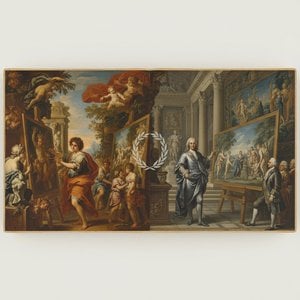
Explore the life & art of Simon Vouet, a pivotal French Baroque painter who introduced Italian styles to France. Discover his masterpieces and lasting influence on 17th-century art.

Explore the life & art of Charles Le Brun, master of French Baroque Classicism. Discover his royal commissions, influence on Versailles, and enduring legacy through detailed analysis & stunning artworks.
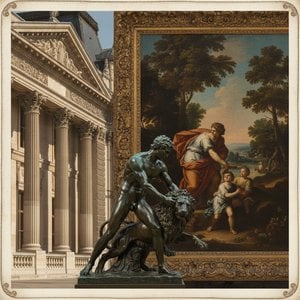
Explore the profound elegance of Baroque Classicism. Discover how 17th-century masters synthesized dramatic emotion with classical order through the lens of the Counter-Reformation and the works of legends like Carlo Maratta and Andrea Sacchi.
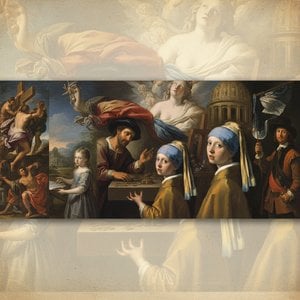
バロック美術の華!カラヴァッジョ、ベルニーニら巨匠が創り上げた10大名作を徹底解剖。ドラマチックな色彩と豪華絢爛の世界観に触れ、至宝のアートプリントで空間を彩ろう。WahooArt.comで美術館品質の複製と洗練されたインテリアを見つけましょう!

バロック美術の核心である光と影の技法や、カラヴァッジョからハルスに至る巨匠たちの情熱を専門的に解説します。17世紀ヨーロッパが放つ劇的な美の世界を今すぐ体験してください。

 設置イメージを確認
 送る
送る シェア
シェア
 詳細情報
詳細情報 ガイドを表示

 画像をダウンロード
 似ている作品
 X線調査
X線調査 スライドショー
 統計情報
統計情報 続きを読む
続きを読む









 ガラスオプションは、110cm未満のサイズでのみご利用いただけます。


