

このページに掲載されている作品は著作権法によって保護されており、当社の許可なく同一の複製物を制作または販売することは法律で禁じられています。この保護は、以下のような国際条約に基づき執行されます。 ベルヌ条約 および、以下の条項に定められたものを含む各国の法律により、 米国著作権法 第17編。
この手法は、著作権で保護された作品の複製や複写を伴わないため、著作権法に完全に準拠しています。これは単なる模倣ではなく、創造的な再解釈です。元の作品からインスピレーションを受けつつも、それとは異なる、全く新しい絵画を生み出すものです。
スピーディーな制作と多彩な仕上げオプションが魅力の、ミュージアムクオリティなジークレー・キャンバスプリント。 ( 手描き複製画を注文する デジタル画像販売へ切り替え)





























作品のオリジナル比率に合わせた、当店の規定サイズからお選びください。

額縁や壁のスペースに合わせて、ご希望の幅と高さを入力してください。プリントはカットすることは可能ですが、元の画像より大きくすることはできないため、異なる比率のサイズを選択された場合は、画像の一部が欠けることになります。印刷を開始する前に、内容を確認していただくためのデジタルモックアップをお送りいたします。このページに表示されている画像は、実際のカット後の状態を示すものではありません。実際の仕上がりはモックアップにてご確認ください。
Self-Portrait with White Cap
複製画サイズ一覧
Step closer and observe the man before us. In this 1935 oil portrait, we encounter an elderly figure caught in a moment of profound stillness. He is positioned slightly off-center, his presence felt through a medium close-up that brings us face-to-face with his weathered features. A dark hat sits low upon his brow, and his gaze, framed by spectacles, suggests a mind turned inward. There is a certain dignity in his composure, even as he holds a thin cigarette, the rising wisps of smoke adding a vertical movement to an otherwise stationary scene. The background remains a pale, desaturated greenish-beige, providing a muted stage that allows the darker tones of his suit and the textures of his white beard to emerge with clarity.
The artist has moved away from precise, clinical lines in favor of a more painterly approach. You can see the physical weight of the paint here; thick, impasto strokes create a tactile surface, particularly where light catches the highlights of the face and the drifting smoke. This heavy application of pigment gives the portrait an almost sculptural quality. The lighting is soft, appearing to descend from the upper left to cast gentle shadows that define the contours of the man's cheek and the structure of his clothing. Through these earthy tones—deep browns, blacks, and grays—the work achieves a sense of weight and character. It is a study in light manipulation, where the focus remains on the emotional gravity of the subject rather than mere anatomical accuracy.
Max Kaus作「Self-Portrait with White Cap」の色調は、Balancedな強さを持っています。
1935年という制作年代から、「Self-Portrait with White Cap」はMax KausのSurrealist Periodに属します。
「Self-Portrait with White Cap」は、1935年にOil On Canvasで制作されました。

Max Kaus was a German painter, printmaker, graphic artist, and lithographer. Born in Berlin, Germany, his early training took place at the Study Institute of the Decorative Arts Museum in Berlin between 1908 and 1913. During the First World War, he served as a medical orderly and ambulance driver in western Flanders. It was during this time in Ostend that he learned to make lithograph prints, utilizing a printing press constructed from timber recovered from a destroyed railway station. Upon returning to Berlin in 1918, he acquired his own lithography equipment, which became a foundation for much of his subsequent artistic output.
His career saw significant shifts in subject matter and style. While he was widely recognized for his landscape works—drawing inspiration from travels within Germany, Austria, and northern Italy—he also worked extensively on portraiture. His post-war output was characterized by a shift where form began to dominate content. His later creative years included several distinct categories of work:
Beyond his personal practice, Kaus was an influential teacher. He held a professorship teaching landscape art at the Kunstgewerbe- und Handwerkerschule in Berlin, and later served as a professor and head of the department for "Freie Kunst" at the Hochschule für Bildende Künste in Berlin. He also served as the deputy director at the academy.
Kaus was a member of the German Artists' Association, serving on its executive board and as deputy chair. His surviving works are catalogued and indexed, with his literary estate held at the German National Arts Archive in Nuremberg.

1891 - 1977 , Germany

Explore the profound connection between technique and emotion. From the sculptural depth of impasto to classical mastery, decode the language of brushstrokes through an expert lens of art history and fine art connoisseurship.

Explore the profound emotional depth of Van Gogh's impasto technique. Discover how his sculptural brushstrokes and textured oil layers define Post-Impressionism through an expert art-historical lens, perfect for discerning collectors and fine art enthusiasts.

Discover the exquisite mastery of pastel and chalk in fine art. Explore how texture, light, and softness create depth in Impressionist masterpieces and learn to curate these velvety textures for sophisticated, luxury interiors with expert guidance.

Discover how custom historical portraits transcend decor to become profound expressions of identity. Explore the artistry of bespoke oil reproductions, from Renaissance mastery to modern reimagining, and learn to transform personal legacies into museum-quality fine art masterpieces.
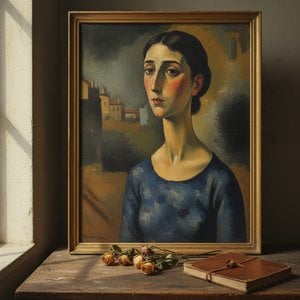
Delve into the haunting beauty of Amedeo Modigliani's portraits. Explore the intersection of Expressionism and Modernism through an expert analysis of his iconic elongated forms, melancholic gazes, and profound influence on art history.
 設置イメージを表示

 シェアする
 シェアする
 詳細を見る
 ガイドを表示


 ダウンロード
 似ている作品
 X線調査
 スライドショーを表示
 Q&A

 統計情報


 詳細を表示









 ガラスオプションは、110cm未満のサイズでのみご利用いただけます。


