Salvador Dali’s Pieta: A Surrealist Reverie
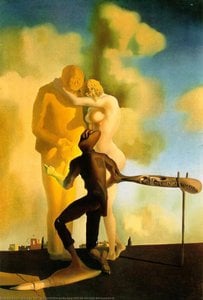
Salvador Dalí's “Pieta,” completed in 1982, stands as a testament to the artist’s singular vision—a masterful blend of religious iconography and surrealist experimentation that continues to fascinate viewers decades later. This monumental oil painting on canvas transcends mere representation; it plunges into the subconscious mind, inviting contemplation on themes of grief, compassion, and divine grace.
Style and Composition – Distortion as Revelation
Dalí’s stylistic approach is immediately recognizable through its deliberate distortions. Unlike traditional depictions of Mary mourning Jesus—characterized by solemn realism—this Pieta abandons conventional perspective, elongating figures to create an unsettling yet profoundly expressive effect. The background eschews detail, opting for amorphous shapes and textures that defy gravity and logic, mirroring the dreamlike atmosphere prevalent throughout Dali’s oeuvre. This technique isn't simply decorative; it serves as a conduit for conveying emotional intensity—a palpable sense of sorrow interwoven with spiritual serenity.
Technique – Oil Paint on Canvas: Texture and Luminosity
Dalí employed oil paint on canvas, a medium that allowed him to achieve remarkable textural richness and luminous color gradations. The artist meticulously layered pigments, creating subtle variations in tone and surface sheen—a technique honed during his extensive artistic training at the San Fernando Academy of Fine Arts. Close observation reveals delicate brushstrokes that contribute to the painting’s ethereal quality, capturing the translucence of Mary's robe and highlighting the contours of Jesus’ body with remarkable precision.
Historical Context – Surrealism Revisited
“Pieta” firmly establishes itself within the broader context of Surrealism—a movement born in the 1920s that championed irrationality, automatism, and the exploration of dreams as pathways to artistic truth. Dali’s work aligns with the Surrealist impulse to challenge accepted notions of reality, prompting viewers to confront their own anxieties and desires. It echoes the influence of artists like Giorgio de Chirico and René Magritte, who similarly sought to destabilize visual perception.
Symbolism – Grief and Transcendence
The Pieta’s symbolism is multilayered—a poignant meditation on grief tempered by spiritual transcendence. Mary's posture embodies compassion and maternal devotion, while Jesus’ lifeless body symbolizes sacrifice and redemption. The inclusion of cellular patterns in the background underscores Dali’s fascination with scientific concepts—representing a harmonious blend between faith and reason. Ultimately, “Pieta” invites viewers to contemplate the profound mysteries of existence and the enduring power of artistic expression.
Q&A
サルバドール・ダリ作「ピエタ」のプリントサイズと向きは、どのような設定がおすすめですか?
「ピエタ」の推奨プリント設定は、サイズ大判、向き縦長です。
サルバドール・ダリ作「ピエタ」のデジタル画像はどこで購入できますか?
サルバドール・ダリ作「ピエタ」のデジタルファイルをご希望の場合は、高解像度デジタル画像ページより高解像度デジタル画像のダウンロードをご注文ください。
サルバドール・ダリ作「ピエタ」の彩度や色の強さはどのような感じでしょうか?
サルバドール・ダリ作「ピエタ」は、繊細な色彩の彩度とバランスの取れたの強烈な色彩で描かれています。