このページに掲載されている作品は著作権法によって保護されており、当社の許可なく同一の複製物を制作または販売することは法律で禁じられています。この保護は、以下のような国際条約に基づき執行されます。 ベルヌ条約 および、以下の条項に定められたものを含む各国の法律により、 米国著作権法 第17編。
敬意を払った法的な代替手段として、私たちはオリジナルにインスピレーションを与えられた、カスタムの手描きアートワークを提供しています。私たちの熟練したプロのアーティストは、元の作品が持つスタイル、情緒、そして芸術的なエッセンスを注意深く研究し、独自の創作物でありながら、同じ感性を呼び起こすような、新しくユニークな作品を作り上げます。
この手法は、著作権で保護された作品の複製や複写を伴わないため、著作権法に完全に準拠しています。これは単なる模倣ではなく、創造的な再解釈です。元の作品からインスピレーションを受けつつも、それとは異なる、全く新しい絵画を生み出すものです。
当社のアーティストが、お客様のご希望のサイズと額縁に合わせて、キャンバスに手描きで制作する油彩画です。 ( プリント版に切り替え デジタル画像販売へ切り替え)





























作品のオリジナル比率に合わせた、当店の規定サイズからお選びください。

フレームや壁のスペースに合わせて、ご希望の幅と高さを入力してください。本作品は手描きのため、異なる比率のサイズをご希望の場合、絵画の周囲を少し広げて描くか、あるいは端を少しカットして調整することが可能です。お客様のご要望に合わせます。制作を開始する前に、仕上がりを確認するためのデジタルモックアップをお送りいたします。このページに表示されている画像は完成品の実物ではなく、あくまでモックアップによるイメージです。
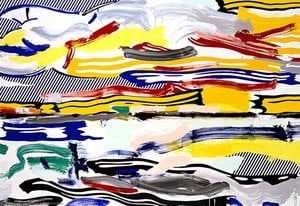
Imperfect Painting 2
複製画サイズ一覧
Roy Lichtenstein’s “Imperfect Painting 2,” completed in 1986, isn't merely a canvas splashed with color; it’s an audacious declaration of the artist’s engagement with the visual language of mass media and the very nature of artistic representation. This vibrant abstraction, rendered primarily in acrylic on canvas, embodies the core tenets of Pop Art while simultaneously hinting at a deeper exploration of form, balance, and the inherent imperfections within even the most meticulously constructed compositions. The painting immediately commands attention – not through recognizable imagery, but through its dynamic arrangement of geometric shapes: predominantly triangles and circles, each defined by crisp, clean lines and an almost unsettlingly flat application of color.
The composition itself is deliberately ambiguous, eschewing a traditional focal point in favor of a carefully orchestrated dance between overlapping forms. Large, assertive triangles dominate the central space, their edges often partially obscured by smaller triangular elements scattered throughout the canvas. Interspersed amongst these angular shapes are circles – a subtle counterpoint that introduces an element of softness and visual rhythm. This interplay creates a sense of controlled chaos, mirroring the complexities of modern life as perceived through Lichtenstein’s uniquely critical lens. The color palette is boldly primary: yellows, blues, reds, greens, blacks, and greys collide in a manner both energetic and surprisingly harmonious. The deliberate use of unmixed colors – flat planes of hue rather than blended gradients – evokes the aesthetic of commercial printing, directly referencing the techniques Lichtenstein admired and sought to emulate.
At first glance, “Imperfect Painting 2” might appear deceptively simple. However, a closer examination reveals the meticulous craftsmanship that underpins Lichtenstein’s signature style. The painting is infused with the characteristic ‘Ben-Day dots,’ tiny colored squares meticulously applied to create the illusion of shading and texture – a technique borrowed directly from comic book printing. This deliberate nod to commercial illustration underscores Lichtenstein's fascination with popular culture and his desire to blur the boundaries between “high” art and “low” culture. The effect is both visually arresting and subtly ironic, elevating everyday imagery into the realm of artistic contemplation.
The painting’s flatness – a deliberate rejection of traditional perspective – further reinforces its Pop Art identity. There's no illusion of depth or three-dimensionality; instead, shapes appear to float on the surface of the canvas, creating a sense of immediacy and directness. This flattening effect mirrors the static quality often found in advertising and mass media, reflecting Lichtenstein’s critique of consumerism and the homogenization of visual culture. The deliberate lack of brushstrokes – achieved through a smooth, even application of paint – contributes to this sense of manufactured perfection, mirroring the idealized images prevalent in contemporary society.
The title itself, “Imperfect Painting,” is profoundly significant. It’s not simply a descriptive label; it's an assertion of Lichtenstein’s artistic philosophy – a recognition that even the most carefully constructed works are inherently flawed. This imperfection isn’t a mistake or a failure; rather, it’s an integral part of the creative process, a testament to the artist’s engagement with the material and his willingness to embrace chance and spontaneity. The painting's slightly off-kilter arrangement, the subtle variations in color saturation, and the occasional misalignment of shapes all contribute to this sense of controlled imperfection.
“Imperfect Painting 2” stands as a powerful example of Lichtenstein’s ability to distill complex ideas into visually compelling forms. It's a work that rewards repeated viewing, revealing new layers of meaning with each encounter. More than just an abstract composition, it’s a meditation on the nature of art, the influence of popular culture, and the inherent beauty found within imperfection – a timeless masterpiece that continues to resonate with audiences today.
対応するデバイスの拡張現実(AR)機能を使用し、作品のARプレビューページから、ご自身の壁にロイ・リヒテンシュタイン作「Imperfect Painting 2」をプレビュー表示することができます。
ロイ・リヒテンシュタインは、ロイ・フォックス・リヒテンシュタインという別名でも知られています。
ロイ・リヒテンシュタイン作「Imperfect Painting 2」の手描き複製画は、こちらの手描き油彩複製画ページからご注文いただけます:リネンキャンバスに手描きされた油彩複製画(受注制作)


1923 - 1997 , アメリカ合衆国

Explore the profound psychological depth of Roy Lichtenstein's color theory. An expert analysis for art collectors on how bold palettes and Ben-Day dots redefine modern aesthetics and luxury interior curation.

Explore the industrial artistry of Pop Art. Delve into the sophisticated history of Ben-Day dots and silk screen techniques that transformed mass media into high art, perfect for discerning collectors seeking deep historical insight and aesthetic excellence.

Explore the profound impact of the Pop Art Revolution on modern aesthetics. From Lichtenstein’s dots to Warhol’s icons, gain expert insights into how this vibrant movement redefined culture through consumerism and mass media. A definitive guide for art lovers and collectors.

Dive into the vibrant world of Ben-Day dots. Explore how Roy Lichtenstein transformed mass media imagery into high art, redefining modern aesthetics through the iconic textures of Pop Art and its enduring impact on contemporary visual culture.

 設置イメージを確認
 送る
送る シェア
シェア
 詳細情報
詳細情報 ガイドを表示

 画像をダウンロード
 似ている作品
 X線調査
X線調査 スライドショー
 統計情報
統計情報

 続きを読む
続きを読む









 ガラスオプションは、110cm未満のサイズでのみご利用いただけます。