アーティスト・プロフィール
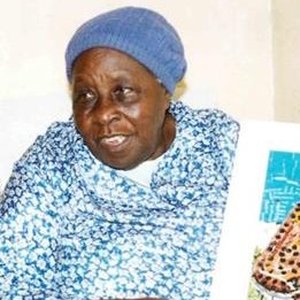
A Pioneer Forged in Resilience: The Life and Art of Rosemary Karuga
Rosemary Namuli Karuga, born in Meru, Kenya, in 1928, stands as a monumental figure in the narrative of African modernism. Her journey was one of quiet determination, breaking barriers not through overt proclamation but through sheer artistic force and an unwavering commitment to her vision. From humble beginnings – a childhood marked by a natural inclination towards art that initially met with familial disapproval – Karuga’s path led her to become the first woman graduate of the Margaret Trowell School of Industrial and Fine Arts at Makerere University in Kampala, Uganda (1950-1952). This achievement wasn't merely personal; it was a seismic shift, opening doors for generations of female artists across East Africa. Her early education at St. Theresa Primary School in Nairobi had already revealed her talent, nurtured by observant nuns who recognized the spark within her and encouraged her pursuit of formal training. However, life after university saw Karuga dedicate herself to teaching, a profession that sustained her but temporarily veiled her own artistic expression.
The Alchemy of Necessity: Materials and Style
For decades, Karuga’s creative energies were channeled into educating others, yet the artist within never truly lay dormant. It wasn't until her retirement in the 1980s that she fully embraced her vocation, a turning point catalyzed by encouragement from her daughter. This liberation coincided with a period of economic hardship and limited access to traditional art supplies. Rather than hindering her creativity, these constraints became the catalyst for innovation. Karuga ingeniously turned to readily available, discarded materials – Rexona soap packaging, newspapers, magazines, flour sacks – transforming what others deemed waste into vibrant works of art. This resourceful approach wasn’t simply a matter of practicality; it was a powerful statement about resourcefulness and finding beauty in unexpected places. Her technique evolved into a distinctive collage style, deeply influenced by the rich textures and layered symbolism of Byzantine art. These weren't haphazard assemblages but meticulously constructed compositions, built layer upon layer to create depth, narrative, and emotional resonance. The resulting works are characterized by bold graphics, warm tones, and a captivating interplay of form and texture.
Echoes of Kenya: Themes and Inspirations
Karuga’s art is profoundly rooted in the realities of Kenyan life. Her collages frequently depict scenes from rural landscapes – pastoral vistas teeming with life – and intimate domestic settings, offering glimpses into the daily rhythms of her community. She captured the essence of everyday existence, portraying villagers engaged in labor, farmers tending their land, and the quiet dignity of ordinary people. These weren’t idealized representations but honest portrayals imbued with empathy and a deep understanding of Kenyan culture. Beyond specific scenes, Karuga's work also reflects broader themes of information overload and individual expression, hinting at the complexities of modern life even within a traditional context. The influence of Byzantine aesthetics is evident not only in her technique but also in the symbolic weight she assigns to colors and forms, creating layers of meaning that invite contemplation.
Recognition and Legacy
Though Karuga’s artistic career blossomed later in life, her talent did not go unnoticed. In 1987, she served as an Artist-in-Residence at the Paa ya Paa Arts Centre in Nairobi, a pivotal experience that brought her work to wider attention. The 1990s saw her art showcased on international stages – Paris, London’s Commonwealth Institute, and New York City’s Studio Museum in Harlem – earning her critical acclaim and establishing her as a significant voice in African contemporary art. She received a lifetime achievement award from the African Voice newspaper, acknowledging her enduring contribution to the field. A particularly noteworthy commission came in 1988-1989 when she was asked to illustrate a theatrical adaptation of Amos Tutuola’s *The Palm Wine Drinkard* in France, demonstrating the versatility and universal appeal of her artistic vision. Rosemary Karuga passed away in Ireland in February 2021 at the age of 93, leaving behind a legacy that continues to inspire. Her work is now held in prominent collections including the Red Hill Gallery, National Museums of Kenya, Murumbi Trust, and Watatu Foundation, ensuring that her pioneering spirit and unique artistic voice will resonate for generations to come. She wasn’t just an artist; she was a trailblazer who redefined what it meant to be a woman artist in Africa, proving that creativity can flourish even amidst adversity and that beauty can be found in the most unexpected of places.


 プリント版に切り替え

 設置イメージを確認
 送る
送る シェア
シェア
 詳細情報
詳細情報 ガイドを表示

 画像をダウンロード
 似ている作品
 X線調査
X線調査 スライドショー
 Q&A
Q&A 統計情報
統計情報

 続きを読む
続きを読む


