

当社のアーティストが、お客様のご希望のサイズと額縁に合わせて、キャンバスに手描きで制作する油彩画です。 ( プリント版に切り替え デジタル画像販売へ切り替え)





























作品のオリジナル比率に合わせた、当店の規定サイズからお選びください。

フレームや壁のスペースに合わせて、ご希望の幅と高さを入力してください。本作品は手描きのため、異なる比率のサイズをご希望の場合、絵画の周囲を少し広げて描くか、あるいは端を少しカットして調整することが可能です。お客様のご要望に合わせます。制作を開始する前に、仕上がりを確認するためのデジタルモックアップをお送りいたします。このページに表示されている画像は完成品の実物ではなく、あくまでモックアップによるイメージです。
Highland Raid
複製画サイズ一覧
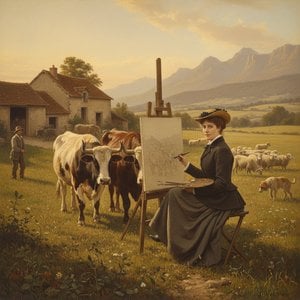
In the vast, sweeping expanse of the Scottish Highlands, where the mist clings to rugged peaks and the air carries the scent of damp earth, Rosa Bonheur captures a moment of profound kinetic energy. Highland Raid is not merely a painting of livestock; it is a visceral experience of movement, a masterclass in the art of animalier realism. The canvas unfolds with a dramatic herd of cattle, their heavy forms navigating the undulating terrain of the mountains. At the heart of this pastoral drama, a lone rider on horseback guides the procession, acting as the steadying force amidst the swirling energy of the herd. The composition is expertly balanced, drawing the eye from the foreground figures through the rhythmic placement of cows that stretch deep into the atmospheric distance, creating an immense sense of scale and topographical grandeur.
Bonheur’s technical prowess is on full display through her sophisticated use of light and texture. To witness this work is to feel the palpable tension of impending weather; the sky seems heavy with the promise of rain, casting a soft, diffused light that illuminates the muscular anatomy of the cattle with breathtaking precision. The artist employed impasto techniques—applying paint in thick, deliberate layers—to imbant the scene with physical substance. This tactile approach allows the viewer to perceive the ruggedness of the landscape and the coarse texture of the animals' coats, bridging the gap between the two-dimensional surface and the three-dimensional reality of the natural world.
To understand the emotional depth of Highland Raid, one must look to the revolutionary spirit of Rosa Bonheur herself. Emerging from a nineteenth-century era where female artists were often relegated to delicate portraiture or still lifes, Bonheur broke through societal barriers with an uncompromising dedication to scientific accuracy and anatomical truth. Her upbringing, influenced by the egalitarian ideals of Saint-Simonianism, nurtured a fierce independence that is reflected in her choice of subject matter. She did not seek to idealize the rural life; instead, she sought to document its raw, unvarnished essence. This commitment to Realism—a movement that rejected the polished escapism of Romanticism—allows the painting to resonate with a sense of truth that is both grounding and deeply moving.
For the discerning collector or interior designer, this piece offers more than just aesthetic beauty; it provides a window into a bygone era of rugged pastoralism. The painting serves as a powerful focal point in any sophisticated space, bringing an element of the wild, untamed outdoors into the refined atmosphere of a home or gallery. Its ability to evoke both the tranquility of nature and the underlying tension of survival makes it a timeless addition to a curated collection. Whether placed in a sunlit study or a grand salon, Highland Raid commands attention, inviting viewers to lose themselves in the rhythmic dance of the herd and the enduring legacy of one of history's most courageous artistic pioneers.
「Highland Raid」はローザ・ボヌールによって制作されました。このページでは、ローザ・ボヌールのオリジナル作品についてご紹介しています。
「Highland Raid」の色調は、Earthyなパレットを構成しています。この分類は、主要な色相のグループを表しています。
「Highland Raid」は、Contemporary Realism様式のもと、ローザ・ボヌールによって制作されました。作者と様式は、その作品が受け継ぐ伝統を定義するものです。


1822 - 1899 , フランス

ロマン派絵画の時代を彩る10選。巨匠たちの風景が織りなす感動の世界へ。ターナー、ルーベンスなど、名作の裏話と高精細複製でアートをお部屋に。WahooArt.comで至福のアート体験を。

WahooArtで、生命空間に息吹を吹き込む芸術作品を見つけませんか?高品質な油絵複製、カスタム制作、無料アートコンサルテーション。美術史に基づいた確かな品質と、お客様だけの特別な空間演出をお手伝いします。

Explore the life & work of James Giles (1801-1870), a master of Scottish landscape painting and favored artist of Queen Victoria. Discover his atmospheric realism & royal commissions.
Explore the life & art of Rosa Bonheur, a pioneering Realist painter who redefined women's roles in 19th-century France. Discover her iconic animal paintings and lasting influence on art history. Learn more at WahooArt.

Explore 10 defining masterpieces of Romantic Realism! Discover Courbet, Millet & Daumier's powerful paintings—capturing emotion and social realities. Find museum-quality reproductions for your home at WahooArt.com.

 設置イメージを確認
 送る
送る シェア
シェア
 詳細情報
詳細情報 ガイドを表示

 画像をダウンロード
 似ている作品
 X線調査
X線調査 スライドショー
 Q&A
Q&A 統計情報
統計情報


 続きを読む
続きを読む









 ガラスオプションは、110cm未満のサイズでのみご利用いただけます。


