

 Oil On CanvasWallArtCubism
 1910Modern
 116.0 x 81.0 cm
 シュタットリッヒェ・クンストハレ・カールスルーエ
当社のアーティストが、お客様のご希望のサイズと額縁に合わせて、キャンバスに手描きで制作する油彩画です。 ( プリント版に切り替え デジタル画像販売へ切り替え)





























作品のオリジナル比率に合わせた、当店の規定サイズからお選びください。

フレームや壁のスペースに合わせて、ご希望の幅と高さを入力してください。本作品は手描きのため、異なる比率のサイズをご希望の場合、絵画の周囲を少し広げて描くか、あるいは端を少しカットして調整することが可能です。お客様のご要望に合わせます。制作を開始する前に、仕上がりを確認するためのデジタルモックアップをお送りいたします。このページに表示されている画像は完成品の実物ではなく、あくまでモックアップによるイメージです。
The Eiffel Tower
複製画サイズ一覧
In the heart of early twentieth-century Paris, a radical transformation was unfolding, one that sought to dismantle the traditional boundaries of sight and perception. Robert Delaunay’s The Eiffel Tower stands as a breathtaking monument to this era of profound change. Rather than offering a mere photographic record of the iron lattice structure, Delaunay invites us into a world where architecture dissolves into rhythm. The painting is not simply a depiction of a landmark; it is a pulsating tapestry of light and movement, capturing the very soul of modernity. Through his pioneering use of Orphism, Delaunay transcends the physical weight of the steel, replacing it with a dynamic interplay of geometric forms that seem to vibrate against the canvas.
The composition functions like a visual musical score, where every line and plane contributes to a larger, melodic whole. The tower itself is fragmented into a series of interlocking triangles and rectangles, a technique deeply rooted in the Cubist revolution. This fragmentation allows the viewer to experience the structure from multiple perspectives simultaneously, creating an illusion of depth that feels both structural and ethereal. As the eye wanders across the canvas, it encounters a deliberate tension between the grounded, earthy tones of the tower’s base and the explosive, luminous energy of the sky. It is a masterful balance of stability and motion, making the piece an ideal focal point for any space seeking a sense of sophisticated dynamism.
To gaze upon this work is to experience the artist's fascination with synesthesia—the enchanting blurring of the senses. Delaunay did not merely paint what he saw; he painted what he felt through color. While the palette is anchored by the muted, weathered greys and browns that echo the industrial reality of the Eiffel Tower, it is frequently interrupted by sudden, brilliant bursts of crimson, sapphire, and lemon yellow. These chromatic accents act as rhythmic pulses, injecting a sense of urban vitality into the scene. This use of color serves to evoke the sensory overload of Parisian life, mirroring the clatter of streets and the shimmering light of the Seine.
For the discerning collector or interior designer, this painting offers more than just aesthetic beauty; it provides an emotional atmosphere. The interplay of light and shadow creates a sense of atmospheric depth that can transform a room, bringing with it the romantic yet avant-garde spirit of 1914 Paris. Whether placed in a minimalist contemporary setting to provide a bold pop of color or integrated into a classic study to add historical weight, a high-quality reproduction of this masterpiece serves as a window into a moment when art first learned to dance with light. It is an invitation to contemplate the beauty of abstraction and the enduring power of the modern spirit.
ロベール・ドローネイは、「The Eiffel Tower」においてOil On Canvasの技法を用いています。この技法が、原画の素材としての性質を決定づけています。
ロベール・ドローネイ作「The Eiffel Tower」は1910年に制作されたもので、Cubismに属します。
「The Eiffel Tower」のガイドは、作品のガイドページです。このページは印刷可能なファクトシートとなっており、作品のキャプション、クレジット、および詳細情報(作家名、制作年、技法、原寸大、所蔵)をまとめてご確認いただけます。


1885 - 1941 , フランス

Journey through the bold shapes and vibrant colors of geometric abstraction. Explore the stories behind 10 iconic masterpieces that redefined modern art. Find museum-quality reproductions and decor inspiration for your space. Discover all masterpieces on WahooArt.com.
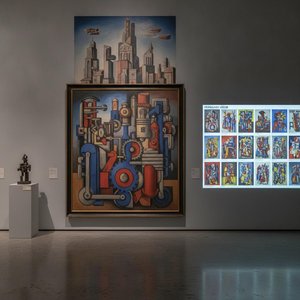
Immerse yourself in the vibrant world of Fernand Léger. Explore 25 iconic masterpieces of Cubism and Tubism, from bold geometric forms to machine-age energy. Find inspiration for your decor with museum-quality reproductions. Discover all masterpieces on WahooArt.com.

Journey through the revolutionary world of Georges Braque. Explore 25 iconic Cubist masterpieces, from geometric abstractions to timeless still lifes. Find inspiration for your collection with museum-quality art reproductions. Discover all masterpieces on WahooArt.com.

Immerse yourself in the luminous world of Laurent Fabre. Explore 25 iconic Neo-Abstract masterpieces defined by geometric precision and chromatic harmony. Find inspiration for your space with museum-quality art reproductions. Discover all masterpieces on WahooArt.com.

 設置イメージを確認
 送る
送る シェア
シェア
 詳細情報
詳細情報 ガイドを表示

 画像をダウンロード
 似ている作品
 X線調査
X線調査 スライドショー
 統計情報
統計情報 続きを読む
続きを読む









 ガラスオプションは、110cm未満のサイズでのみご利用いただけます。


