
 Oil On PanelDutch Golden Age
 1631Renaissance
 61.0 x 49.0 cm
当社のアーティストが、お客様のご希望のサイズと額縁に合わせて、キャンバスに手描きで制作する油彩画です。 ( プリント版に切り替え デジタル画像販売へ切り替え)





























作品のオリジナル比率に合わせた、当店の規定サイズからお選びください。

特定のフレームやスペースに合わせて、ご希望のサイズをご入力いただけます。選択されたサイズが元の画像の比率と異なる場合、アートワークをトリミングするか、手描きで要素を追加して絵画を拡張いたします。デジタルモックアップ を制作し、制作開始前にご確認(承認)をいただきます。
画面上のプレビューは、実際のトリミングや拡張を正確に反映しているものではありません。最終的な構図は、モックアップによってのみ正確にご確認いただけます。
カスタムサイズもご利用いただけますが、元の比率を維持するためには、あらかじめ用意されたリストからサイズを選択することをお勧めいたします。

Minerva
複製画のサイズ
Rembrandt van Rijn's “Minerva,” painted circa 1631 and now residing within the Staatliche Museen zu Berlin, isn’t merely a portrait; it’s an immersion into a realm of profound contemplation and regal power. This oil-on-panel masterpiece immediately captivates with its dramatic chiaroscuro – the masterful interplay of light and shadow that defines Rembrandt's signature style. The painting depicts a woman, undeniably embodying the Roman goddess Minerva, seated in stately repose within a richly appointed interior. Her posture exudes authority and wisdom, yet her gaze, directed off-camera, invites us to ponder her thoughts, creating an immediate sense of mystery and intrigue. It’s a deliberate choice that elevates the portrait beyond a simple likeness, transforming it into a psychological study.
The composition of “Minerva” is carefully constructed, adhering to the conventions of portraiture prevalent during Rembrandt’s era while simultaneously imbuing it with a uniquely dramatic quality. The subject occupies a central position within the frame, yet she isn't rigidly posed; rather, her posture suggests a quiet deliberation, as if engaged in an internal dialogue. Notice the subtle details – the crossed legs of her chair, a deliberate gesture that reinforces her sense of control and stability. Beyond the primary figure, two secondary figures—a man standing behind her on the left and another partially visible on the right—add layers of narrative complexity, hinting at a larger context without explicitly revealing it. A small object, possibly part of the chair’s ornamentation or a decorative element, further enriches the scene with subtle visual cues.
Rembrandt's genius lies not just in his technical skill but also in his profound understanding of light’s ability to shape emotion. The dramatic use of chiaroscuro is paramount here; a strong light source illuminates the woman’s face and upper body, casting much of the background into deep shadow. This technique doesn’t simply create volume and dimensionality—it imbues the scene with an atmosphere of solemnity, grandeur, and introspection. The interplay of light and darkness draws our attention to the subject's features, emphasizing her intelligence, wisdom, and perhaps even a hint of melancholy. The overall effect is profoundly moving, inviting us to contemplate the mysteries within her gaze.
“Minerva” stands as a quintessential example of Rembrandt’s mastery during the Dutch Golden Age. His meticulous attention to detail, combined with his innovative use of light and shadow, elevates this portrait beyond a mere likeness—it becomes a profound exploration of human psychology and the power of artistic representation. The painting's historical context is equally significant; it reflects the intellectual and cultural currents of 17th-century Holland, where art was both a reflection of societal values and a vehicle for expressing complex ideas. Rembrandt’s oeuvre includes numerous other notable works – “Tobit and Anna with the Kid,” “Head of Christ,” and “Portrait of Mother of Rembrandt” – all available for viewing at the Staatliche Museen zu Berlin, offering a deeper appreciation of his artistic vision. For art enthusiasts seeking to own a piece of this rich history, WahooArt.com offers meticulously crafted oil painting reproductions that faithfully capture the beauty and drama of “Minerva.”


1606 - 1669 , オランダ

Explore the dramatic mastery of the Dutch Baroque era. Discover how masters like Rembrandt used chiaroscuro to manipulate light and shadow, creating profound emotional depth and timeless beauty in art history's most captivating masterpieces.

Explore the profound mastery of light and shadow in Dutch Golden Age paintings. From Rembrandt's dramatic chiaroscuro to serene landscapes, discover the techniques that defined an era of art history and learn how these timeless masterpieces are preserved for modern collectors.

Explore the profound mastery of Rembrandt's chiaroscuro technique. Discover how the Dutch Master manipulated light and shadow to create unparalleled psychological depth and dramatic narrative in the world's most iconic Baroque masterpieces.
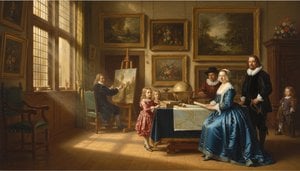
Embark on a journey through the Dutch Golden Age. Discover how masters like Rembrandt and Vermeer used chiaroscuro to manipulate light and shadow, creating timeless depth and spiritual resonance in art history's most captivating masterpieces.


 プレビュー
プレビュー
 シェアする
シェアする シェアする
シェアする
 詳細を見る
詳細を見る

 ダウンロード
 似ている作品
 X線調査
X線調査 スライドショー
 統計情報
統計情報 詳細を見る
詳細を見る









 ガラスオプションは、110cm未満のサイズでのみご利用いただけます。


![トルプ医師の解剖学講座 [1632]](/media/artworks/images-thumb/e5/fc/e5fcb33447eac6b24ab049b22effa1a3.jpg)


