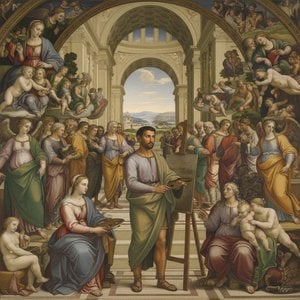
A Symphony of Sorrow and Grace
In the quiet corridors of the Galleria Borghese, there exists a moment frozen in time, a profound meditation on loss captured by the hand of Raphael. The Entombment, also known as the Pala Baglioni, is not merely a religious tableau; it is a visceral encounter with the weight of human grief. Painted during the pivotal years of 1507-1508, this masterpiece transcends its biblical origins to offer a universal study of mourning. As we gaze upon the figures gathered around the lifeless body of Christ, we are drawn into a narrative where every gesture—the slumped shoulders of the mourners, the gentle yet firm support of a heavy limb—speaks of a profound, shared tragedy. For the discerning collector or lover of Renaissance beauty, this work represents the pinnacle of emotional storytelling, where the divine and the human intersect in a dance of sorrow.
The composition is a masterclass in High Renaissance balance, a hallmark of Raphael’s ability to find harmony within chaos. While the subject matter is heavy with the gravity of death, the arrangement of figures possesses an ethereal lightness. Raphael utilizes a pyramidal structure, a technique that provides stability to the scene while guiding the viewer's eye toward the central, luminous figure of Christ. Through the subtle application of sfumato—the soft, smoky blending of tones pioneered by Leonardo da Vinci—Raphael softens the edges of reality, imbuing the skin of the figures with a lifelike warmth and an almost supernatural glow. This manipulation of light and shadow, or chiaroscuro, creates a dramatic tension that pulls the viewer into the intimate circle of mourners, making the scene feel less like a distant historical event and more like a present, breathing reality.
The Humanity Within the Divine
Beyond its technical brilliance, the painting is steeped in a complex historical and personal context. Commissioned during a period of intense religious devotion in the Papal States, the work was born from a backdrop of real-world tragedy. The commission itself was tied to the Baglioni family's own history of violence and loss, adding a layer of authentic, lived sorrow to the sacred scene. This connection between the artist’s execution and the patron's grief allows the painting to resonate with an authenticity that is rare in religious iconography. Raphael does not merely depict a ritual; he captures the psychological landscape of those left behind. The way Mary Magdalene kneels in anguish and the focused, somber expressions of Nicodemus and John serve as mirrors for our own experiences of loss.
For those looking to bring the spirit of the Renaissance into a contemporary space, a high-quality reproduction of this detail offers more than just decoration; it provides a focal point for contemplation. The rich textures of the flowing robes, the intricate details of the drapery, and the masterful use of color palettes—ranging from deep, somber tones to soft, luminous highlights—make this piece an exquisite addition to any curated interior. It is a work that invites the eye to linger, rewarding the viewer with new discoveries of emotion and technique upon every encounter. To possess such an image is to hold a fragment of history's most beautiful era, a testament to the enduring power of art to transform suffering into something sublime and eternal.



 プレビュー
プレビュー
 手描きの絵画を購入
 シェアする
シェアする シェアする
シェアする
 詳細を見る
詳細を見る

 ダウンロード
 似ている作品
 X線調査
X線調査 スライドショー

 詳細を見る
詳細を見る






































 ガラスオプションは、110cm未満のサイズでのみご利用いただけます。