

当社のアーティストが、お客様のご希望のサイズと額縁に合わせて、キャンバスに手描きで制作する油彩画です。 ( プリント版に切り替え デジタル画像販売へ切り替え)
作品のオリジナル比率に合わせた、当店の規定サイズからお選びください。

特定のフレームやスペースに合わせて、ご希望のサイズをご入力いただけます。選択されたサイズが元の画像の比率と異なる場合、アートワークをトリミングするか、手描きで要素を追加して絵画を拡張いたします。デジタルモックアップ を制作し、制作開始前にご確認(承認)をいただきます。
画面上のプレビューは、実際のトリミングや拡張を正確に反映しているものではありません。最終的な構図は、モックアップによってのみ正確にご確認いただけます。
カスタムサイズもご利用いただけますが、元の比率を維持するためには、あらかじめ用意されたリストからサイズを選択することをお勧めいたします。

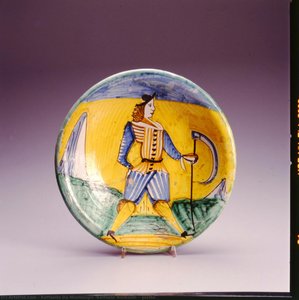
piatto
複製画サイズ一覧

In the vibrant, competitive landscape of the Italian Renaissance, few figures embody the spirit of collaborative mastery quite like Raffaello da Montelupo. Born Raffaele Sinibaldi around 1504 in the industrious town of Montelupo Fiorentino, his very name suggests a deep-rooted connection to the Tuscan tradition of craftsmanship. As the son of the esteemed sculptor Baccio da Montelupo, Raffaello was destined for a life shaped by marble and chisel. His early years were not merely spent observing the masters but actively participating in the grand architectural and sculptural dialogues that defined the era. This lineage provided him with a foundational understanding of form and material that would later allow him to navigate the complex demands of both the Florentine and Roman artistic circles.
The trajectory of Montelupo’s career was irrevocably altered when he entered the orbit of Michelangelo Buonarroti. Apprenticeship under such a titan of the High Renaissance was a transformative experience, instilling in him a rigorous devotion to anatomical precision and the dramatic potential of stone. During his time in Rome around 1520, he absorbed the revolutionary techniques of the master, learning how to breathe life into cold marble through the subtle manipulation of muscle and tension. This period of intense study allowed him to contribute significantly to some of the most sacred spaces in Christendom. He worked alongside Lorenzetto on the execution of the statues of Elijah and Jonah for the Chigi Chapel, following the divine designs of Raphael himself—a testament to his ability to operate within the highest echelous of papal artistic commissions.
As his reputation grew, Montelupo’s work began to reflect a unique synthesis of Florentine Mannerism and classical grace. His talent was not confined to a single medium; while he is celebrated as a sculptor, his ability to integrate architectural embellishments with delicate relief work showcased a profound versatility. In Florence, he became a vital participant in the monumental projects of the Medici family. One of his most poignant achievements includes the sculpture of Saint Damian for the Medici Chapel in the Basilica di San Lorenzo, a work that demonstrates his capacity for spiritual depth and technical finesse. His hands also shaped the likeness of Saint Cosmas, working in tandem with other masters to fulfill the grander vision of the Florentine nobility.
Beyond the confines of Florence, Montelupo’s journey took him back to the heart of Rome, where he continued to serve as a crucial hand in the execution of monumental funerary works. His contributions to the tombs of Pope Julius II and Pope Leo X placed him at the center of the most significant sculptural endeavors of the sixteenth century. Perhaps most evocative of his skill was his work for Castel Sant'Angelo, where he created a Madonna and a striking marble statue of Saint Michael holding a sword. These works were not merely decorations but were intended to command the landscape, serving as eternal sentinels of faith and power.
The enduring significance of Raffaello da Montelupo lies in his role as a bridge between generations. He carried the weight of Michelangelo’s revolutionary style into the nuanced complexities of Mannerism, ensuring that the precision of the High Renaissance evolved into something more decorative, intricate, and emotionally layered. His life remains a testament to the power of apprenticeship, the importance of lineage, and the tireless pursuit of perfection in the service of both art and divinity.
1504 - 1566 , Italy

 設置イメージを確認
 送る
送る シェア
シェア
 詳細情報
詳細情報 ガイドを表示

 画像をダウンロード
 似ている作品
 X線調査
X線調査 スライドショー
 統計情報
統計情報
 続きを読む
続きを読む






































 ガラスオプションは、110cm未満のサイズでのみご利用いただけます。


