

当社のアーティストが、お客様のご希望のサイズと額縁に合わせて、キャンバスに手描きで制作する油彩画です。 ( プリント版に切り替え デジタル画像販売へ切り替え)





























作品のオリジナル比率に合わせた、当店の規定サイズからお選びください。

フレームや壁のスペースに合わせて、ご希望の幅と高さを入力してください。本作品は手描きのため、異なる比率のサイズをご希望の場合、絵画の周囲を少し広げて描くか、あるいは端を少しカットして調整することが可能です。お客様のご要望に合わせます。制作を開始する前に、仕上がりを確認するためのデジタルモックアップをお送りいたします。このページに表示されている画像は完成品の実物ではなく、あくまでモックアップによるイメージです。
Handscroll
複製画サイズ一覧
“Up the River During Qingming,” painted by Qiu Ying during the mid-16th century, is more than just a landscape; it's a carefully constructed meditation on harmony, leisure, and the enduring beauty of nature. Attributed to one of China’s Four Masters of the Ming Dynasty – alongside Shen Zhou, Tang Yin, and Wen Zhengming – this exquisite handscroll offers a rare glimpse into the refined aesthetic sensibilities of Suzhou during that era. The work, currently residing in the collection of the National Gallery of Canada, invites viewers into a tranquil scene brimming with subtle symbolism and masterful brushwork.
Qiu Ying’s artistic journey was remarkably unconventional for his time. Rather than pursuing formal training within established art circles, he began as a lacquer artisan, honing his skills in meticulous detail – a foundation that profoundly influenced the precision and control evident throughout “Up the River During Qingming.” This early experience instilled in him an unparalleled understanding of line and color, qualities he would later translate into his celebrated landscape paintings. His apprenticeship with Zhou Chen in Suzhou further solidified his technical abilities, exposing him to the techniques of the Wu School, known for its emphasis on ink washes and a more expressive approach to nature.
The painting’s remarkable quality stems from Qiu Ying's mastery of the gongbi technique – a highly detailed, realistic style that was favored by court painters. Each element—from the meticulously rendered bamboo stalks to the delicate folds of the pavilions—is executed with painstaking precision, creating an illusion of incredible depth and texture. Notice the subtle gradations of color achieved through layering washes of ink and pigment; this creates a luminous quality that brings the scene to life. The composition is carefully balanced, drawing the eye across the landscape in a deliberate and engaging manner. The artist’s use of loose brushwork, particularly in depicting the distant mountains and flowing river, contrasts beautifully with the tightly controlled detail of the foreground elements, demonstrating Qiu Ying's versatility and his ability to seamlessly blend different artistic approaches.
“Up the River During Qingming” is rich in symbolic meaning. The scene depicts a scholar leisurely enjoying a day by the river, surrounded by carefully arranged pavilions and gardens. This imagery reflects the Confucian ideals of scholarly pursuits, contemplation, and harmony with nature – values highly esteemed during the Ming Dynasty. The presence of the tavern and the farmer gathering water vegetables adds a touch of everyday life to the scene, reminding us that even amidst beauty and tranquility, human activity continues. The bamboo grove, a recurring motif in Chinese art, symbolizes resilience, integrity, and longevity—qualities admired in virtuous individuals. The distant mountains represent permanence and stability, while the flowing river embodies fluidity and change.
Beyond its aesthetic beauty, “Up the River During Qingming” offers a valuable insight into Ming Dynasty culture. It reflects the importance of gardens as spaces for contemplation, artistic expression, and social interaction. The lavish furnishings within the pavilions—including the exquisite celadon vase—demonstrate the wealth and sophistication of the era’s elite. The painting also reveals the influence of philosophical ideas, particularly those associated with Zhou Dunyi, whose “On the Love for the Lotus” inspired the scene's composition and symbolism. Qiu Ying’s ability to seamlessly integrate these diverse elements into a cohesive and harmonious whole is a testament to his artistic skill and cultural awareness.
Reproductions of “Up the River During Qingming” capture only a fraction of the painting's original impact. The subtle nuances of color, texture, and brushwork are difficult to replicate fully, but high-quality reproductions offer an accessible way to appreciate Qiu Ying’s artistry. This work serves as a powerful reminder of the enduring appeal of Chinese landscape painting—a genre that continues to inspire artists and captivate viewers with its beauty, symbolism, and profound sense of serenity.
丘英作「Handscroll」 は、Living Room に飾るのがおすすめです。作品の主題、色彩、そして雰囲気に合わせたご提案です。
「Handscroll」は、Late Medieval時代に制作されたものです。
丘英は、Gongbi Landscapeのムーブメントの中で「Handscroll」を制作しました。


1494 - 1552 , 中国
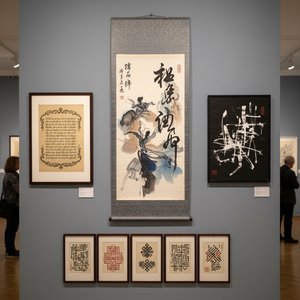
Explore the profound beauty of calligraphy art. From the fluid running script of Chinese masters to historical ink masterpieces, discover how the elegance of line transforms spaces with timeless grace and scholarly sophistication.
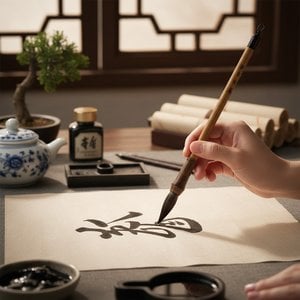
Embark on a profound journey through the soul of Chinese calligraphy. Explore the historical mastery of ink, brush, and script, from ancient Zhuanshu to elegant running script, and discover how this timeless art form reflects the enduring spirit of classical East Asian aesthetics.

 設置イメージを確認
 送る
送る シェア
シェア
 詳細情報
詳細情報 ガイドを表示

 画像をダウンロード
 似ている作品
 X線調査
X線調査 スライドショー
 統計情報
統計情報


 続きを読む
続きを読む









 ガラスオプションは、110cm未満のサイズでのみご利用いただけます。


