

 PaintingBaroque Rococo
 1746Early Modern
 50.0 x 62.0 cm
 ピナコテカ・ディ・ブレラ
当社のアーティストが、お客様のご希望のサイズと額縁に合わせて、キャンバスに手描きで制作する油彩画です。 ( プリント版に切り替え デジタル画像販売へ切り替え)





























作品のオリジナル比率に合わせた、当店の規定サイズからお選びください。

フレームや壁のスペースに合わせて、ご希望の幅と高さを入力してください。本作品は手描きのため、異なる比率のサイズをご希望の場合、絵画の周囲を少し広げて描くか、あるいは端を少しカットして調整することが可能です。お客様のご要望に合わせます。制作を開始する前に、仕上がりを確認するためのデジタルモックアップをお送りいたします。このページに表示されている画像は完成品の実物ではなく、あくまでモックアップによるイメージです。
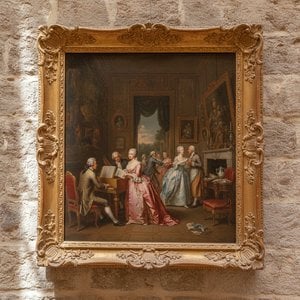
The Tooth Puller
複製画サイズ一覧
To stand before Pietro Longhi’s depiction of The Tooth Puller is not merely to observe an event; it is to slip, quite unexpectedly, into the vibrant, intimate tapestry of 18th-century Venice. This painting transports us beyond the grand pronouncements of mythology or history that often dominated art, offering instead a profoundly human moment—a scene unfolding within what appears to be a richly furnished domestic space. The composition buzzes with life, capturing a gathering around a central dining table. One can almost hear the murmur of conversation mingling with the focused tension surrounding the procedure taking place in the foreground. Longhi masterfully frames this confluence of everyday activity and minor drama, inviting the viewer not as an objective spectator, but as a privileged guest who has stumbled upon a private moment.
Pietro Longhi is celebrated precisely because he dared to look at the mundane and find it extraordinary. As a chronicler of daily life, his genius lay in elevating genre scenes—the gatherings, the meals, the simple acts of human interaction—to the level of high art. In The Tooth Puller, the sheer number of figures, numbering at least twelve, creates a complex social ecosystem. They are arranged with an almost theatrical naturalism; some stand observing from the periphery, others are seated in close proximity to the action. This density is not chaotic; rather, it suggests the interwoven nature of community life in Venice—a place where public and private spheres constantly overlapped. The black and white quality of this particular rendition lends a timeless, almost photographic quality, allowing us to focus intensely on gesture, expression, and the subtle dynamics between the assembled company.
The technical brilliance evident in Longhi’s hand is palpable. While the original medium would have allowed for rich color, this reproduction captures the delicate brushwork that defined his style—a lightness of touch paired with an acute understanding of human anatomy and costume. The setting itself, suggested by the dining table and surrounding furniture, speaks volumes about the social strata and domestic elegance of the era. Longhi’s ability to render texture, from the folds of clothing to the polished wood of the room, anchors the viewer firmly in the year 1746. It is a masterclass in observational painting, where the artist acts as both chronicler and skilled illusionist.
At its heart, the scene carries a subtle undercurrent of vulnerability juxtaposed against communal support. The tooth extraction itself is an act of necessary discomfort, a moment of focused pain managed by expertise. Yet, this singular medical event becomes the focal point for an entire social circle. It symbolizes how human experience—even moments of minor distress—are always shared, witnessed, and absorbed by the surrounding community. For the collector or decorator, owning such a piece is acquiring more than just decoration; it is acquiring a narrative device—a conversation starter that speaks to the enduring power of human connection against the backdrop of daily routine.
「The Tooth Puller」の背景には、ピエトロ・ロンギとBaroque Rococo運動があります。
「The Tooth Puller」において、Paintingの技法とBaroque Rococoのムーブメントが融合しています。
ピエトロ・ロンギ作「The Tooth Puller」の主要な色調はGolden Yellow Rangeです。この色調は、パレットの基調となるトーンを形作っています。


1701 - 1785 , イタリア
Explore the profound beauty of genre painting. From Dutch Golden Age masters to global traditions, discover how artists capture the essence of everyday life through masterful realism and timeless storytelling.

Embark on a journey through the Venetian Renaissance. Discover how masters like Giorgione and Titian revolutionized art through luminous color and light. Explore the profound legacy of the Venetian School and its enduring influence on the world of fine art.

Explore the refined world of Neoclassical portraiture. Discover the mastery of line, light, and order through an expert exploration of academic art history, from Jacques-Louis David to Jean-Antoine Houdon. Immerse yourself in the timeless elegance of classical realism.

 設置イメージを確認
 送る
送る シェア
シェア
 詳細情報
詳細情報 ガイドを表示

 画像をダウンロード
 似ている作品
 X線調査
X線調査 スライドショー
 統計情報
統計情報 続きを読む
続きを読む









 ガラスオプションは、110cm未満のサイズでのみご利用いただけます。


