
迅速な制作と多彩な仕上げオプションを備えた、ミュージアムクオリティのジークレーまたはキャンバスプリント。 ( 手描きの絵画を購入 デジタル画像販売へ切り替え)





























作品のオリジナル比率に合わせた、当店の規定サイズからお選びください。

特定のフレームやスペースに合わせて、ご自身でサイズを指定することも可能です。選択されたサイズが元の画像の比率と一致しない場合、作品をトリミングするか、鏡面反射または単色での塗りつぶしによって画像を拡張いたします。制作を開始する前に、ご確認用のデジタルモックアップをお送りいたします。
画面上のプレビューには、実際のトリミングや拡張は反映されませんのでご注意ください。最終的な構図を正確に確認できるのは、モックアップのみとなります。
カスタムサイズも承っておりますが、元の比率を維持するためには、あらかじめ用意されたリストからサイズを選択することをお勧めいたします。

Lily, after
複製画のサイズ
To gaze upon "Lily, after," is to encounter a fascinating dialogue between the organic exuberance of nature and the rigorous discipline of pure abstraction. At first glance, one might perceive the delicate curve of a lily petal or the verdant sweep of a leaf, elements that speak immediately to our primal connection with life's cyclical beauty. Yet, as the eye wanders across the canvas, it becomes clear that this depiction is no mere botanical study. It is a profound meditation, filtered through the revolutionary lens of Piet Mondrian’s Neoplasticism. The artist takes the recognizable subject—the vibrant red lily against its green foliage—and subjects it to an intellectual deconstruction, transforming natural form into a language of pure structure.
Mondrian's journey, as art historians know, was one of relentless simplification. From the Impressionistic landscapes that first captured his brushstrokes, he yearned to strip away the superficial veil of representation until only the essential truths remained: line, plane, and primary color. In "Lily, after," this quest is beautifully realized. While the subject matter retains a palpable sense of life—the suggestion of bloom, the vitality of the stem—the execution forces us to see beyond mere imitation. The vibrant reds are not painted as petals catching sunlight; they are defined by sharp, decisive planes of color interacting with stark black lines. This tension between the recognizable 'lily' and its geometric dismantling is where the artwork finds its enduring power.
The technique employed here echoes Mondrian’s mature style, demanding an almost architectural precision. The composition feels balanced, yet dynamic; the verticality of the stem contrasts with the horizontal stability implied by the color blocks. For the collector or designer considering a reproduction, understanding this technical rigor is key. It is not a soft wash of color, but a deliberate placement of pigment upon canvas. This controlled application imbues the piece with an intellectual calm that belies the passionate hue of the red blooms. Emotionally, the painting offers a unique balm: it allows the viewer to feel the wild beauty of nature while simultaneously finding solace in its underlying mathematical order.
For those decorating a space or curating a collection, "Lily, after" serves as more than just decoration; it is an anchor for contemplation. The symbolism inherent in Mondrian’s work often points toward universal harmony—the belief that the fundamental elements of existence can be reduced to their purest components. Placing this piece within a room introduces a sophisticated dialogue between chaos and control. It suggests that even the most riotous natural beauty, when viewed through an enlightened perspective, resolves into elegant, harmonious relationships of color and line. It is a statement piece for the discerning eye, whispering of modernist ideals while celebrating the enduring poetry of the flower.


1872 - 1944 , オランダ
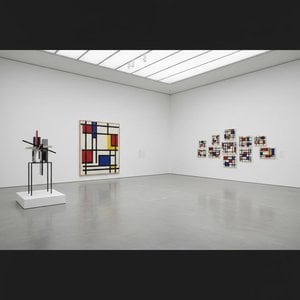
Explore the profound essence of Neoplasticism. Discover how Piet Mondrian and De Stijl masters used pure color and geometric form to redefine modern art. An essential guide for collectors seeking to understand the enduring power of abstract harmony and universal order.

Explore the profound elegance of De Stijl. Discover how Piet Mondrian and the masters of Neoplasticism utilized geometric harmony and primary colors to redefine modern abstraction. An authoritative guide for the discerning collector seeking timeless, structured beauty.


 プレビュー
プレビュー
 シェアする
シェアする シェアする
シェアする
 詳細を見る
詳細を見る

 ダウンロード
 似ている作品
 X線調査
X線調査 スライドショー
 統計情報
統計情報

 詳細を見る
詳細を見る









 ガラスオプションは、110cm未満のサイズでのみご利用いただけます。


