

スピーディーな制作と多彩な仕上げオプションが魅力の、ミュージアムクオリティなジークレー・キャンバスプリント。 ( 手描きの複製画を注文する デジタル画像販売へ切り替え)





























作品のオリジナル比率に合わせた、当店の規定サイズからお選びください。

額縁や壁のスペースに合わせて、ご希望の幅と高さを入力してください。プリントはカットすることは可能ですが、元の画像より大きくすることはできないため、異なる比率のサイズを選択された場合は、画像の一部が欠けることになります。印刷を開始する前に、内容を確認していただくためのデジタルモックアップをお送りいたします。このページに表示されている画像は、実際のカット後の状態を示すものではありません。実際の仕上がりはモックアップにてご確認ください。
Composition in colour A
複製画サイズ一覧
Piet Mondrian's 1917 work, *Composition in Colour A*, isn’t merely a painting; it’s an architectural meditation on the fundamental elements of visual experience. Emerging from the fertile ground of early 20th-century abstraction, this piece represents a pivotal moment in the development of De Stijl – a movement Mondrian co-founded with Bart van der Leck and Theo van Doesburg – dedicated to stripping art down to its purest essence: lines and colours. It’s a testament to his lifelong pursuit of universal harmony, a vision born from a desire to transcend the limitations of representational painting and create a new language for expressing spiritual truth.
The canvas itself is dominated by a carefully orchestrated interplay of muted tones – a deep rose red, a rich dark ochre, and a profound midnight blue. These aren’t vibrant, assertive hues; rather, they are deliberately subdued, almost melancholic in their restraint. Mondrian eschewed the bright, energetic palette favored by earlier movements like Fauvism, opting instead for a sophisticated, contemplative approach. The colours themselves carry symbolic weight: red representing passion and energy, blue signifying spirituality and intellect, and ochre evoking the earth and grounding the composition. The deliberate choice of these specific shades speaks to Mondrian’s belief in their inherent balance and ability to evoke profound emotional responses.
What truly distinguishes *Composition in Colour A* is its masterful use of black lines. These aren't merely outlines defining shapes; they are the very structure of the painting, acting as a rigid grid that governs the placement and relationship of each coloured area. Mondrian’s approach moved beyond simply depicting objects; he sought to define the underlying geometric framework of reality itself. The lines don’t connect or converge in any obvious way – instead, they intersect and overlap with an almost unsettling precision, creating a sense of spatial ambiguity. This deliberate lack of closure contributes significantly to the painting's feeling of timelessness and its suggestion that it exists outside conventional notions of perspective and depth.
The white space surrounding the coloured blocks is equally crucial. It’s not simply a background; it’s an active participant in the composition, treated as a distinct form alongside the lines and colours. Mondrian believed that white held a vital role in creating visual equilibrium, acting as a ‘living component’ of the painting – a concept radical for its time. This rejection of traditional notions of negative space elevates the white areas to the status of integral design elements, mirroring the principles found in architecture and urban planning within the De Stijl philosophy.
*Composition in Colour A* is deeply rooted in the intellectual climate of 1917. The De Stijl movement was fueled by a desire to create a new, utopian world – one based on rationality, order, and harmony. Mondrian’s work reflects this ambition, representing an attempt to translate abstract principles into visual form. The painting can be seen as a blueprint for a new architectural style, anticipating the sleek, minimalist designs of the Bauhaus movement that would emerge shortly after. It's a powerful statement about the potential of art to shape not just our aesthetic experience but also our understanding of reality itself.
Beyond its historical significance, *Composition in Colour A* possesses a profound emotional impact. The painting’s quiet intensity and deliberate restraint evoke a sense of calm contemplation. The carefully balanced composition invites the viewer to lose themselves within its geometric embrace, offering a momentary respite from the chaos and complexity of everyday life. It's a work that speaks to our innate desire for order and harmony, suggesting that beauty can be found in simplicity and abstraction.
A hand-painted reproduction of *Composition in Colour A* offers a unique opportunity to bring this seminal artwork into your home or office. WahooArt’s meticulous reproductions capture the subtle nuances of Mondrian's technique, faithfully recreating the painting’s muted palette and precise lines. Whether you are an art enthusiast, a collector seeking to expand your collection, or simply someone looking for a piece that embodies timeless elegance and intellectual depth, this reproduction provides a beautiful and meaningful way to experience the legacy of Piet Mondrian.
ピエト・モンドリアン作「Composition in colour A」のSquare形式は、Living Roomに飾る際におすすめです。作品の形式と空間の調和が、複製画を配置する際の指針となります。
全体として、「Composition in colour A」の明るさはbrilliantと記録されています。知覚的な明るさとは、作品がどの程度明るく、あるいは暗く感じられるかを表すものです。
はい、作品は作家の母国に保管されています。。「Composition in colour A」はオランダに所蔵されていますが、ピエト・モンドリアンの出生地はオランダです。


1872 - 1944 , オランダ
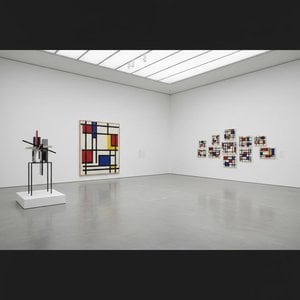
Explore the profound essence of Neoplasticism. Discover how Piet Mondrian and De Stijl masters used pure color and geometric form to redefine modern art. An essential guide for collectors seeking to understand the enduring power of abstract harmony and universal order.

Explore the profound evolution of Neo-Abstract art. Discover how bold geometric forms, vibrant chromatic depth, and tactile textures redefine modern expression for the discerning collector seeking sophisticated, high-impact masterpieces for contemporary interiors.

Explore the profound elegance of De Stijl. Discover how Piet Mondrian and the masters of Neoplasticism utilized geometric harmony and primary colors to redefine modern abstraction. An authoritative guide for the discerning collector seeking timeless, structured beauty.

 設置イメージを確認
 送る
送る シェア
シェア
 詳細情報
詳細情報 ガイドを表示

 画像をダウンロード
 似ている作品
 X線調査
X線調査 スライドショー
 統計情報
統計情報


 続きを読む
続きを読む









 ガラスオプションは、110cm未満のサイズでのみご利用いただけます。


