アート相談を無料で

x
プリントを購入 プリントを購入画像を 購入する 画像を 購入する シェアするシェアする
詳細を見る詳細を見る お気に入りに追加 お気に入りに追加 ダウンロードダウンロード 似ている作品似ている作品 X線X線 スライドショースライドショー

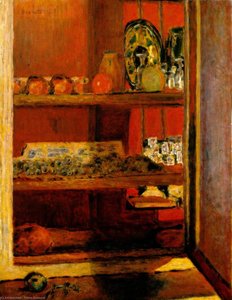
Before Dinner

Experience Pierre Bonnard’s ‘Before Dinner,’ a captivating 1924 painting of a family enjoying a quiet meal in a warmly lit domestic setting, showcasing the artist's signature style and color palette. Discover this beautiful artwork and bring its charm into your home.

ピエール・ボナール(1867-1947)は、親密な情景と鮮やかな色彩で知られるフランスのポスト印象派画家。ナビス運動に影響を受け、「Intimist」スタイルを確立しました。「チェック柄のドレスを着た女性」など、記憶や感情を色で表現した作品が魅力です。

手描き油彩複製画

当社のアーティストが、お客様のご希望のサイズと額縁に合わせて、キャンバスに手描きで制作する油彩画です。

P118B ¥10
P118H ¥10
P118W ¥10
P438Z ¥10
P508JH ¥12
P508YH ¥12
P805H ¥10
P805Z ¥10
P919BZ ¥10
P919G ¥10
P919XJ ¥10
P959ZH ¥10
P968JZ ¥12
W106C ¥8
W218G ¥10
W218JH ¥8
W218Y ¥10
W307PJ ¥10
W316G ¥10
W316PJ ¥8
W316Y ¥10
W398PJ ¥8
W4111J ¥10
W500HY ¥15
W500JH ¥15
W692G ¥12
W849H ¥8
W940BG ¥15
W953PJ ¥8

Standard
custom
CM
INCH

作品のオリジナル比率に合わせた、当店の規定サイズからお選びください。

高さ

特定のフレームやスペースに合わせて、ご希望のサイズをご入力いただけます。選択されたサイズが元の画像の比率と異なる場合、アートワークをトリミングするか、手描きで要素を追加して絵画を拡張いたします。デジタルモックアップ を制作し、制作開始前にご確認(承認)をいただきます。
画面上のプレビューは、実際のトリミングや拡張を正確に反映しているものではありません。最終的な構図は、モックアップによってのみ正確にご確認いただけます。
カスタムサイズもご利用いただけますが、元の比率を維持するためには、あらかじめ用意されたリストからサイズを選択することをお勧めいたします。

カスタマイズの例:顔をお客様の写真に置き換える、ペットを追加する(例:猫を犬に変更)、背景に隠れたメッセージを入れる、背景の風景や要素を変更するなど。
ご注文後、WahooArt.com チームより詳細な指示をお送りするとともに、仕上がりイメージ(モックアップ)をご提供いたします。

世界中への配送()は、通常の5週間ではなく、3〜4週間でお届けいたします。(7 7月)。品質には一切妥協いたしません。

why_choose_icon
世界中へ無料エクスプレス配送
why_choose_icon
高品質なリネンキャンバス
why_choose_icon
配送時完全保険付
why_choose_icon
関税・輸入税の払い戻し保証
why_choose_icon
忠実な色彩再現保証
why_choose_icon
60日間返品保証(製造上の欠陥のみ)
why_choose_icon
100% 全額返金保証
why_choose_icon
まとめ買い割引のご案内

合計金額

-

reproduction

Before Dinner

複製技法

複製画のサイズ

-

合計金額

-

作品詳細

  • Movement: Nabis
  • Notable elements: Family dinner scene
  • Artistic style: Post-Impressionism
  • Artist: Pierre Bonnard
  • Medium: Oil on canvas
  • Subject or theme: Domesticity, dining
  • Dimensions: 90 x 106 cm

作品解説

A Moment of Domestic Tranquility: Pierre Bonnard’s “Before Dinner”

Pierre Bonnard's "Before Dinner," painted in 1924, offers a poignant glimpse into the quiet intimacy of everyday life – a scene rendered with the masterly precision and luminous color palette that defined his mature style. Measuring 90 x 106 cm, this work captures a family gathered around a dining table, not as a grand spectacle but as a tender tableau of shared moments. The composition immediately draws the eye to the two figures seated at the table, their postures suggesting a comfortable familiarity, perhaps lost in conversation or simply enjoying the anticipation of the meal to come. Bonnard’s ability to distill complex emotion into simple gestures is evident in the woman on the right, her gaze downward hinting at a private thought or observation – a subtle detail that elevates the scene beyond mere representation.

The Nabis Influence and Bonnard's Palette

Painted during a period of relative stability after World War I, “Before Dinner” reflects Bonnard’s continued engagement with the principles of the Nabis group, of which he was a founding member. The Nabis, meaning "the prophets," sought to use color as the primary means of expression, rejecting academic realism in favor of subjective perception. This is powerfully evident in Bonnard's masterful manipulation of light and shadow, creating an atmosphere that is both warm and subtly melancholic. Notice the interplay of ochres, blues, and greens – colors he frequently employed to evoke a sense of nostalgia and domestic comfort. His technique involved layering thin glazes of paint, building up depth and luminosity with remarkable skill. The brushstrokes are visible yet controlled, contributing to the painting’s tactile quality and reinforcing its impressionistic character.

Symbolism of Still Life and Family

Beyond its immediate depiction of a family meal, “Before Dinner” is rich in symbolic resonance. The carefully arranged table setting – the wine glasses, cutlery, and bottles – transcends mere practicality; it becomes a still life imbued with emotional significance. These objects are not simply props but contribute to the overall mood and narrative. The presence of multiple items suggests abundance and warmth, while the slightly disordered arrangement hints at the natural chaos of family life. Bonnard’s focus on domestic subjects was a deliberate choice, reflecting his deep empathy for the lives of ordinary people and his desire to capture the beauty he found in everyday moments. This work speaks to the core values of the time – family, comfort, and simple pleasures.

A Legacy of Light and Emotion

"Before Dinner" stands as a testament to Pierre Bonnard’s enduring legacy as one of France's most beloved Impressionist painters. Its quiet beauty, coupled with its technical brilliance, continues to resonate with viewers today. This hand-painted reproduction offers an exceptional opportunity to experience the full impact of Bonnard’s artistic vision – a chance to bring a touch of his luminous world into your own home or office. The meticulous detail and vibrant colors faithfully recreate the original painting's emotional depth, making it a truly captivating addition to any art collection.

関連作品


アーティストの略歴

Pierre Bonnard (1867-1947): A Life Bathed in Light

Pierre Bonnard, born October 3, 1867, in the Parisian suburb of Fontenay-aux-Roses, wasn’t destined for a life consumed by artistic ambition. His father, a high-ranking official within the French Ministry of War, envisioned a legal profession for his son—a path sharply contrasting with Bonnard's burgeoning passion for color and form. Despite this expectation, young Pierre dutifully pursued law studies, securing his license in 1888; however, it was during his formative years at the Académie Julian that he truly discovered his artistic vocation, encountering fellow artists who championed a rejection of academic formalism and embraced the avant-garde currents reshaping Paris. This pivotal encounter propelled him into the orbit of Les Nabis—a collective of painters united by their desire to transcend mere representation and delve into the realm of subjective experience—including Maurice Denis, Paul Sérusier, and Édouard Vuillard.

The Nabi Influence: Seeking Spirituality Through Form

The Nabis’s aesthetic principles profoundly impacted Bonnard's artistic trajectory. Rejecting traditional perspective and prioritizing flattened forms alongside bold color palettes, they mirrored his own instinctive aversion to convention. Heavily influenced by Japanese prints—their elegant linearity and harmonious compositions—and fueled by the Symbolist movement’s exploration of emotion and symbolism, Bonnard embarked on a journey toward distilling visual experience into its essence. He wasn't driven by grand narratives or historical grandeur; rather, he turned inward, capturing the quietude of domestic life: women bathing, families gathered for meals, sunlit gardens—scenes rendered with an unparalleled sensitivity to light and color. This focus on intimacy became his trademark, earning him the moniker “Intimist”—a descriptor that encapsulates the profound emotional resonance inherent in his paintings. Unlike Impressionists who sought to capture fleeting moments of visual sensation, Bonnard aimed to convey inner feeling—memory and atmosphere—transforming observable reality into a conduit for subjective experience.

Color as Emotion: Mastering Chromatic Harmony

Bonnard’s artistic genius resided principally in his mastery of color—a skill he elevated beyond mere replication toward achieving luminous harmony. He didn't merely *apply* pigment; he *felt* it, allowing color to dictate the mood and ambiance of his canvases. His palette defied conventional categorization, often juxtaposing unexpected hues that generated a shimmering luminescence—a characteristic born from meticulous observation and informed by Symbolist principles. This wasn’t about literal depiction; it was about conveying emotion through chromatic resonance—capturing the intangible essence of experience. He eschewed direct visual perception, preferring instead to paint from recollection, imbuing his scenes with a dreamlike quality that distinguished him from his contemporaries. His landscapes weren't representations of places but expressions of emotional response—filtered through the prism of personal memory and illuminated by Bonnard’s distinctive artistic vision.

Notable Works & Artistic Evolution

Throughout his prolific career, Bonnard produced an impressive repertoire of paintings characterized by recurring motifs and stylistic refinements:
  • Woman in Checkered Dress (1890): An early exemplar of Nabi aesthetics—flattened forms and bold color combinations—demonstrating Bonnard’s nascent talent for capturing nuanced emotion.
  • The Dining Room (1913): A quintessential Intimist scene—a depiction of domestic tranquility bathed in diffused light—reflecting Bonnard's unwavering commitment to portraying the subtleties of everyday life.
  • Bowl of Fruit (c. 1933): Demonstrates Bonnard’s unparalleled skill in still life composition, utilizing vibrant hues and creating a palpable sense of luminous depth.
  • The Almond Tree in Blossom (1947): Bonnard's final masterpiece—completed shortly before his passing—captures the ethereal beauty of springtime light and color—a poignant testament to his enduring artistic legacy.

Legacy & Influence: A Pioneer of Intimism

Pierre Bonnard’s influence on subsequent generations of artists remains undeniable. His unwavering devotion to subjective experience, coupled with his unparalleled command of color and form, cemented his position as a cornerstone of modern art—a figure who championed the transformative potential of artistic expression beyond mere representation. He demonstrated that beauty could reside not in grand pronouncements or heroic narratives but in the quietude of domestic life—illuminated by light and imbued with emotion—leaving behind an enduring testament to the power of artistic vision. Bonnard’s works are housed in prominent museums globally, including Musée Marmottan Monet, Art Institute of Chicago, Museum of Modern Art, New York City, and Tate Modern, London—a lasting affirmation of his contribution to art history.

基本情報

  • Artistic Movement Or Style: 印象派、インティミズム
  • Artists Or Movements Influenced By This Artist: ['ヌーヴィシズム']
  • Artists Who Influenced This Artist:
    • ピエール=オーギュスト・ルノワール
    • ポール・ゴッスワン
  • Date Of Birth: 1867年10月3日
  • Date Of Death: 1947年1月23日
  • Full Name: ピエール=オーギュスト・ルノワール
  • Nationality: フランス人
  • Notable Artworks:
    • 女性を着物姿
    • ミモランドゥ・ドゥ・ラ・ガレットでの舞踏会
  • Place Of Birth: フランス・フォンタナウアウルス
テーマ、スタイル、特徴別に分類された作品を探索しましょう。