
当社のアーティストが、お客様のご希望のサイズと額縁に合わせて、キャンバスに手描きで制作する油彩画です。 ( プリント版に切り替え デジタル画像販売へ切り替え)





























作品のオリジナル比率に合わせた、当店の規定サイズからお選びください。

特定のフレームやスペースに合わせて、ご希望のサイズをご入力いただけます。選択されたサイズが元の画像の比率と異なる場合、アートワークをトリミングするか、手描きで要素を追加して絵画を拡張いたします。デジタルモックアップ を制作し、制作開始前にご確認(承認)をいただきます。
画面上のプレビューは、実際のトリミングや拡張を正確に反映しているものではありません。最終的な構図は、モックアップによってのみ正確にご確認いただけます。
カスタムサイズもご利用いただけますが、元の比率を維持するためには、あらかじめ用意されたリストからサイズを選択することをお勧めいたします。

Still Life
複製画のサイズ
Pierre-Auguste Renoir's "Still Life," a vibrant tableau of fruit bathed in dappled light, isn’t merely a depiction of apples and oranges; it’s an exquisite distillation of Impressionist philosophy. Completed around 1885, this painting captures the fleeting beauty of everyday objects – a commonplace bowl, a rustic table – transformed into a luminous meditation on color, texture, and the ephemeral nature of light. It stands as a testament to Renoir's ability to elevate the ordinary to the realm of art, mirroring his lifelong fascination with capturing the transient effects of natural illumination.
The composition is deceptively simple yet profoundly effective. A humble wooden table anchors the scene, its surface subtly textured to suggest age and wear. Upon it rests a bowl overflowing with ripe apples – some ruby red, others a cheerful yellow – alongside two vibrant oranges. The arrangement isn’t meticulously planned; rather, it feels intuitively balanced, reflecting Renoir's preference for spontaneity and direct observation. His signature loose brushstrokes are immediately apparent: short, broken dabs of color applied with rapid succession, creating an almost shimmering effect. Notice how he doesn’t attempt to render the objects with photographic precision but instead focuses on conveying their essence through a vibrant interplay of hues. The light itself seems to dance across the surfaces, reflected and refracted in countless tiny strokes – a hallmark of Impressionist technique.
Renoir’s “Still Life” is deeply rooted in the burgeoning movement of Impressionism, which sought to capture the subjective experience of seeing rather than objective reality. Influenced by artists like Claude Monet and Edgar Degas, Renoir abandoned traditional academic painting conventions – precise lines, detailed rendering – in favor of capturing the immediate impression of light and color. This work exemplifies that approach perfectly. The painting’s focus on fleeting moments, atmospheric effects, and the artist's personal perception aligns directly with the core tenets of Impressionism. Furthermore, Renoir’s exploration of color—the warm reds and yellows of the fruit contrasted against the cooler tones of the table—demonstrates a keen awareness of how colors interact and influence each other. It’s significant to note that this style was influenced by Cézanne's work, who sought to capture the underlying structure of objects through simplified forms and bold color choices.
While seemingly a straightforward depiction of fruit, “Still Life” carries subtle symbolic weight. Fruit, particularly apples and oranges, have long been associated with abundance, prosperity, and the cycle of life. The arrangement itself suggests a sense of quiet domesticity—a moment captured within the confines of a home. The painting’s overall mood is one of serene elegance, inviting contemplation and a appreciation for the simple pleasures of everyday life. It's not a dramatic or overtly emotional work; rather, it evokes a feeling of warmth, comfort, and a gentle connection to nature. The careful selection of colors and the loose brushwork contribute to this sense of tranquility, creating an image that is both visually captivating and emotionally resonant.
WahooArt offers meticulously hand-painted reproductions of Renoir’s “Still Life,” allowing art lovers to experience the beauty and nuance of this iconic Impressionist masterpiece in their own homes. Explore our collection at https://WahooArt.com.


1841 - 1919 , フランス

Explore the profound beauty of fruit arrangement masterpieces. From Dutch Golden Age opulence to Baroque chiaroscuro, discover the art history, symbolism, and timeless elegance of classical still life paintings for the discerning collector.
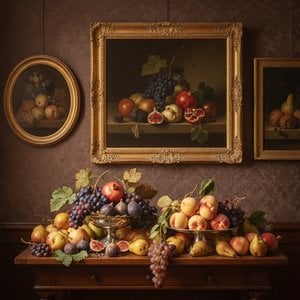
Discover the profound beauty of fruit still life paintings. Explore the rich symbolism, Baroque mastery, and timeless allure of nature's bounty through an art-historical lens, perfect for collectors and enthusiasts of classical fine art.

Discover the luminous world of Pierre-Auguste Renoir. Explore an expert guide to his mastery of light, color, and joy through the lens of Impressionist history, perfect for fine art enthusiasts and collectors seeking timeless elegance.


 プレビュー
プレビュー
 シェアする
シェアする シェアする
シェアする
 詳細を見る
詳細を見る

 ダウンロード
 似ている作品
 X線調査
X線調査 スライドショー
 統計情報
統計情報
 詳細を見る
詳細を見る









 ガラスオプションは、110cm未満のサイズでのみご利用いただけます。


