
 OilWallArtPost-Impressionism
 188819th Century
 21.0 x 27.0 cm
迅速な制作と多彩な仕上げオプションを備えた、ミュージアムクオリティのジークレーまたはキャンバスプリント。 ( 手描きの絵画を購入 デジタル画像販売へ切り替え)
作品のオリジナル比率に合わせた、当店の規定サイズからお選びください。

特定のフレームやスペースに合わせて、ご自身でサイズを指定することも可能です。選択されたサイズが元の画像の比率と一致しない場合、作品をトリミングするか、鏡面反射または単色での塗りつぶしによって画像を拡張いたします。制作を開始する前に、ご確認用のデジタルモックアップをお送りいたします。
画面上のプレビューには、実際のトリミングや拡張は反映されませんのでご注意ください。最終的な構図を正確に確認できるのは、モックアップのみとなります。
カスタムサイズも承っておりますが、元の比率を維持するためには、あらかじめ用意されたリストからサイズを選択することをお勧めいたします。

The Talisman
複製画のサイズ
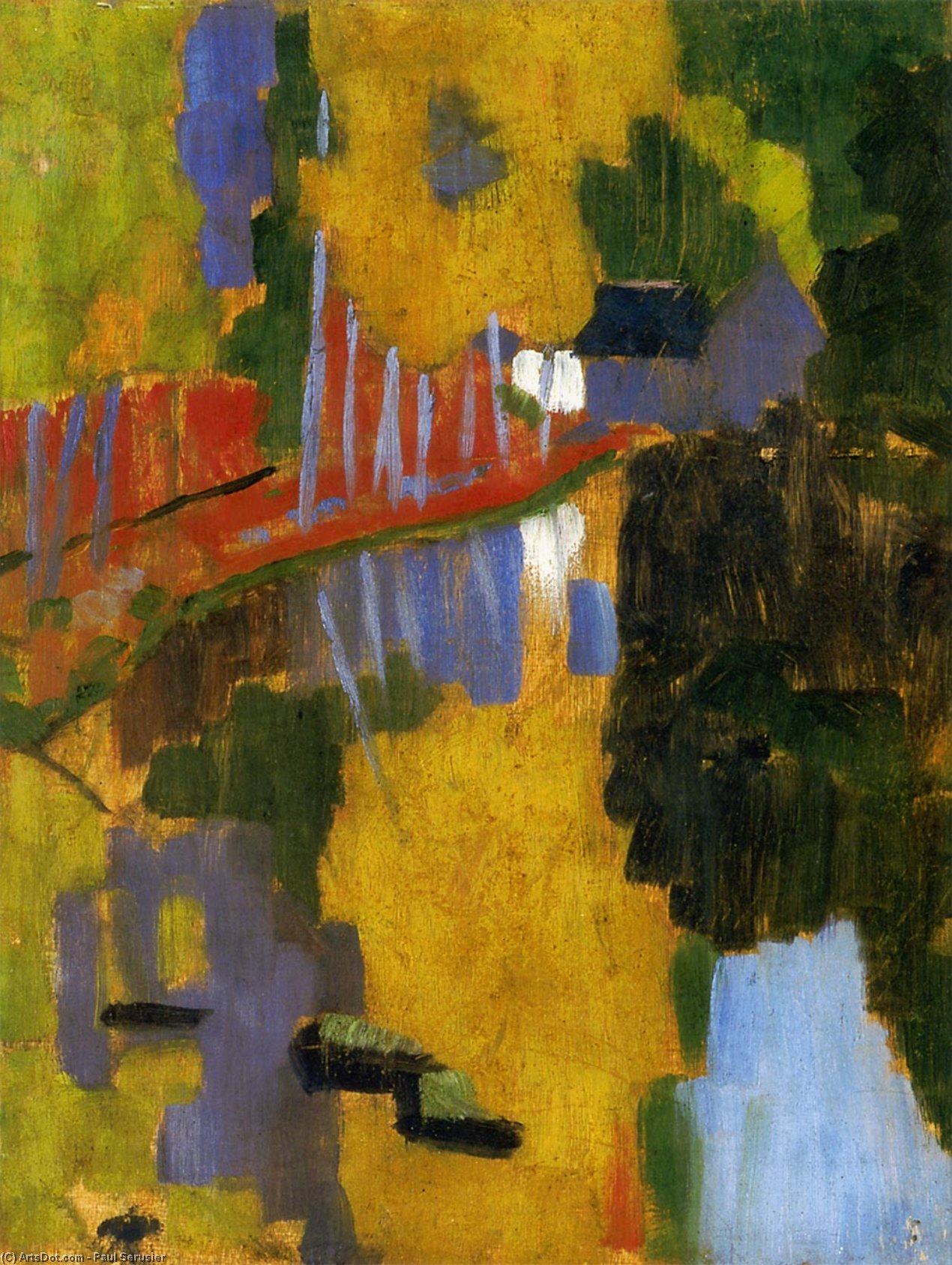
In the annals of modern art history, few small-scale works possess the seismic power of Paul Sérusier’s The Talisman. Painted in 1888, this miniature masterpiece serves as much more than a mere landscape; it is a manifesto captured in pigment. Created during a transformative summer in Pont-Aven, the painting emerged from a profound encounter between the young Sérusier and the seasoned Paul Gauguin. Under Gauguin’s rigorous guidance, Sérus deliberately moved away from the fleeting light of Impressionism toward a more structured, symbolic language. The result is a work that does not merely represent a bridge over water, but rather distills the very essence of nature into a rhythmic arrangement of pure color and form.
The composition invites the viewer to wander across a vibrant yellow archway that spans the canvas with architectural confidence. Below, the water reflects a kaleidoscope of hues, while the background is populated by lush, stylized trees that frame the scene in an embrace of verdant tones. The presence of small figures on the bridge and birds drifting through the sky adds a layer of lively, breathing energy to the piece, preventing the abstraction from feeling cold or detached. Instead, there is a palpable sense of movement and life, as if the viewer has stumbled upon a fleeting, magical moment in the French countryside.
Technically, The Talisman is a triumph of Cloisonnism, a style characterized by bold, flat areas of color separated by dark, distinct outlines. This technique, reminiscent of medieval stained glass, allows Sérusier to experiment with the emotional weight of color rather than the literal accuracy of light and shadow. The palette is unapologetically bright and saturated; the brilliant yellows and deep greens work in harmony to create a visual vibration that captivates the eye. By reducing the landscape to its most essential geometric components, Sérusier paved the way for the Nabis movement and the eventual rise of pure abstraction.
For the discerning collector or interior designer, this painting offers an unparalleled opportunity to introduce a piece of art history into a contemporary space. The work’s compact dimensions—a mere 21 x 27 cm—make it an intimate jewel, perfect for a curated gallery wall or as a focal point in a sophisticated study. A high-quality reproduction of this masterpiece brings with it not just the aesthetic beauty of Post-Impressionism, but the intellectual weight of a painting that changed the course of Western art. It is a conversation starter, a burst of historical vitality, and a profound testament to the power of seeing the world through a lens of pure, unadulterated color.


1864 - 1927 , フランス

Explore the ethereal beauty of Impressionist landscapes. Discover how masters like Monet captured fleeting light through color and texture, and learn to curate these timeless, luminous masterpieces for your home collection.

Discover the profound emotional depth of Post-Impressionist landscapes. Explore how masters like Van Gogh revolutionized art through vibrant color, textured impasto, and symbolic expression in this expert guide to the movement that redefined modern art history.

 プレビュー
プレビュー
 シェアする
シェアする シェアする
シェアする
 詳細を見る
詳細を見る

 ダウンロード
 似ている作品
 X線調査
X線調査 スライドショー
 統計情報
統計情報 詳細を見る
詳細を見る






































 ガラスオプションは、110cm未満のサイズでのみご利用いただけます。


