
当社のアーティストが、お客様のご希望のサイズと額縁に合わせて、キャンバスに手描きで制作する油彩画です。 ( プリント版に切り替え デジタル画像販売へ切り替え)





























作品のオリジナル比率に合わせた、当店の規定サイズからお選びください。

特定のフレームやスペースに合わせて、ご希望のサイズをご入力いただけます。選択されたサイズが元の画像の比率と異なる場合、アートワークをトリミングするか、手描きで要素を追加して絵画を拡張いたします。デジタルモックアップ を制作し、制作開始前にご確認(承認)をいただきます。
画面上のプレビューは、実際のトリミングや拡張を正確に反映しているものではありません。最終的な構図は、モックアップによってのみ正確にご確認いただけます。
カスタムサイズもご利用いただけますが、元の比率を維持するためには、あらかじめ用意されたリストからサイズを選択することをお勧めいたします。

Abstract Trio
複製画のサイズ
In the vast, rhythmic landscape of twentieth-century modernism, few works possess the quiet, hypnotic power of Paul Klee’s “Abstract Trio.” Created circa 1937, during a period when the artist was finding profound inspiration in the landscapes of Murnau, Bavaria, this masterpiece serves as a meditative exploration of balance and existence. At first glance, the composition appears deceptively simple, yet it invites the viewer into a complex dialogue between geometry and soul. The painting presents three figures positioned within a delicate circular frame, each accompanied by a symbolic object—a chair, a bench, and a small geometric form. These elements are not merely shapes on a page; they are characters in a silent, visual drama, arranged with a precision that suggests a cosmic order hidden beneath the surface of abstraction.
The technique employed in “Abstract Trio” is a testament to Klee’s mastery of the watercolor medium. Eschewing the heavy, aggressive strokes found in much of the Expressionist movement, Klee utilizes thin, luminous washes of color that allow light to permeate the paper itself. This creates an ethereal, almost translucent quality, where forms do not collide but rather merge through soft gradations. There is a deliberate absence of harsh outlines; instead, the boundaries between the figures and their environment are fluid, fostering a sense of interconnectedness. For the discerning collector or interior designer, this softness offers a unique versatility, providing a focal point that commands attention through subtlety rather than through sheer volume, making it an ideal centerpiece for spaces designed for contemplation and calm.
To understand the structural integrity of “Abstract Trio,” one must look toward Klee’s deep-rooted connection to the Bauhaus movement. His approach to this work reflects the core tenets of that legendary school: a rejection of unnecessary ornamentation in favor of functional, geometric clarity. Every line and shape feels intentional, as if composed by a musician arranging notes on a staff. This "visual music" is perhaps Klee’s greatest gift to art history; he did not merely paint shapes, he orchestrated them. The interplay between the circular boundary and the internal arrangement of the figures creates a rhythmic tension that keeps the eye moving in a continuous, harmonious loop.
Beyond its formal beauty, the historical context of the piece adds a layer of profound emotional weight. Painted during an era of immense global uncertainty—as the shadows of Nazism and the approach of war loomed over Germany—the painting’s pursuit of harmony feels like a courageous act of spiritual resistance. While the world outside was fracturing, Klee sought to construct a microcosm of stability and peace. This duality makes the artwork particularly poignant for modern viewers; it is a piece that acknowledges the complexity of life while striving for an equilibrium that transcends chaos. Owning a reproduction of such a work is not merely about decorating a wall; it is about inviting a sense of enduring resilience and structural grace into one's personal sanctuary.


1879 - 1940 , スイス

モンドリアン、マレーヴィチ…幾何学的抽象絵画を代表する傑作10選。各作品の背景や色彩構成、アーティストの情熱に迫ります。美術館品質の複製画はWahooArt.comで。オンラインでアートコレクションをご覧ください。

Explore the captivating world of Paul Klee! Discover his innovative art, Bauhaus influence, & unique symbolic language. Expert analysis & high-quality reproductions at WahooArt.

パウル・クレーの傑作25選🎨 色彩と象徴に満ちた抽象絵画の世界を旅。ドイツ表現主義からバウハウスまで、クレーの革新的な技法と感動的な作品群をWahooArtで。高品質な美術品複製やインテリアアートも豊富です。オンラインストアで全コレクションをご覧ください。

Journey through Wassily Kandinsky's 25 most iconic abstract paintings. Explore his revolutionary use of color, form & spiritual expressionism. Find museum-quality Kandinsky reproductions and elevate your home decor with WahooArt.com. Discover all masterpieces on WahooArt.com!
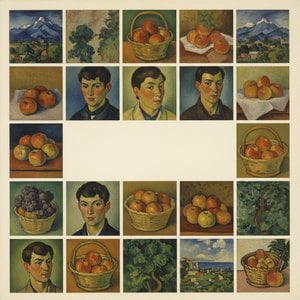
ポール・セザンヌの至高の25選。ポスト印象派を代表する画家、セザンヌの傑作と革新的な技法を紐解きます。WahooArtで高品質な複製画やインテリアアートを見つけ、芸術の世界をご自宅に。今すぐコレクションをご覧ください。


 プレビュー
プレビュー
 シェアする
シェアする シェアする
シェアする
 詳細を見る
詳細を見る

 ダウンロード
 似ている作品
 X線調査
X線調査 スライドショー
 統計情報
統計情報

 詳細を見る
詳細を見る









 ガラスオプションは、110cm未満のサイズでのみご利用いただけます。


