A Visceral Descent into Abstract Expressionism
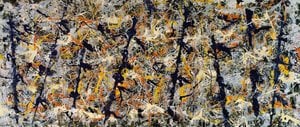
In the annals of American art history, few works capture the raw, unbridled energy of a movement quite like Paul Jackson Pollock’s Full Fathom Five. Painted in 1947, this masterpiece serves as a pivotal moment in the trajectory of Abstract Expressionism, acting as a defiant assertion of spontaneity. It is far more than a mere arrangement of pigment on canvas; it is a visceral record of process itself. Through his groundbreaking exploration of new artistic methods, Pollock challenged the established conventions of previous generations, inviting the viewer into a world where the act of creation is just as significant as the final image.
The painting presents a dynamic and visually engaging scene, characterized by a deep blue background that serves as a stage for a chaotic yet rhythmic dance of color. Bold brushstrokes and unconventional color combinations—including vibrant shades of green, yellow, and red—intertwine to create a sense of movement that captures the viewer's attention instantly. The composition is a complex tapestry of shapes, ranging from circular to rectangular forms, which lend a profound depth to the work. This intricate layering allows for a detailed examination of Pollock's skillful technique, revealing a creative vision that thrives on the edge of controlled chaos.
The Revolution of Technique and Material
To understand Full Fathom Five, one must look toward the revolutionary "drip" technique that Pollock pioneered. Rejecting the traditional constraints of the easel and brush, he laid his canvases directly onto the studio floor, allowing gravity to dictate the flow of pigment. By pouring paint from cans and using sticks or brushes to splash liquid across the surface, he transformed the canvas into a seismograph of his own physical movements. This method was not merely about applying color; it was an intuitive attempt to bypass conscious control and embrace the beauty of chance, capturing a sense of energy that feels almost alive.
Adding to its extraordinary complexity is Pollock's use of material assemblage. Unlike traditional paintings that rely solely on oil or acrylic, Full Fathom Five incorporates a surprising array of non-paint elements. Nails, tacks, buttons, keys, coins, cigarette butts, and matches are embedded within the texture of the work. These objects act as textural agents, amplifying the painting's visual complexity and providing a tactile dimension that invites closer inspection. This layering of the mundane with the artistic creates a rich, multidimensional surface that resonates with both physical weight and emotional intensity.
Symbolism and Emotional Resonance
The title of the work itself provides a profound layer of symbolic depth, drawing upon the evocative imagery of William Shakespeare’s The Tempest. By referencing Ariel's description of death by shipwreck—where bones become coral and eyes become pearls—Pollock connects his abstract explorations to themes of mortality and transformation. This allusion suggests a deep contemplation on the cyclical nature of existence and the merging of organic matter with the artist's expressive force.
For the collector or interior designer, Full Fathom Five offers an unparalleled opportunity to introduce a piece of profound emotional impact into a space. It is a work that demands engagement, offering a thought-provoking experience that shifts with every angle of light and perspective. Whether viewed as a historical landmark of the American West's influence on modernism or as a striking centerpiece for contemporary decor, this reproduction brings the transformative power of action painting into the home, serving as a constant source of inspiration and intellectual stimulation.
Q&A
ジャクソン・ポロック作「Full Fathom Five」の色味の強さはどの程度ですか?
「Full Fathom Five」の彩度はMonochromaticです。彩度とは、色の鮮やかさの度合いを表します。
「Full Fathom Five」のスタイルは、作者が生きた時代とどのように関わっていますか?
「Full Fathom Five」はAbstract Expressionismの様式に属しており、その作者は近代美術の時代に活動していました。
学生向けのジャクソン・ポロック作「Full Fathom Five」に関するファクトシートはありますか?
「Full Fathom Five」のガイドは、作品の解説資料ページです。このページは印刷可能なファクトシートとなっており、作品のキャプション、クレジット、および詳細情報(作家名、制作年、技法、原寸大、所蔵)をまとめてご確認いただけます。