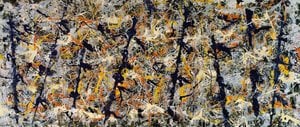
スピーディーな制作と多彩な仕上げオプションが魅力の、ミュージアムクオリティなジークレー・キャンバスプリント。 ( 手描きの複製画を注文する デジタル画像販売へ切り替え)





























作品のオリジナル比率に合わせた、当店の規定サイズからお選びください。

額縁や壁のスペースに合わせて、ご希望の幅と高さを入力してください。プリントはカットすることは可能ですが、元の画像より大きくすることはできないため、異なる比率のサイズを選択された場合は、画像の一部が欠けることになります。印刷を開始する前に、内容を確認していただくためのデジタルモックアップをお送りいたします。このページに表示されている画像は、実際のカット後の状態を示すものではありません。実際の仕上がりはモックアップにてご確認ください。
Figure
複製画サイズ一覧
Jackson Pollock, a name synonymous with Abstract Expressionism and the revolutionary ‘drip’ technique, also harbored a period of intensely focused figuration that often goes unacknowledged. The work simply titled “Figure,” dating from an uncertain point in his career but demonstrably aligning with his explorations around 1942, offers a compelling glimpse into this transitional phase. It is not the Pollock of flung paint and boundless energy, but one grappling with form, space, and the legacy of Cubism – specifically echoing the fragmented perspectives pioneered by Pablo Picasso. This piece isn’t about depicting a body as it *is*, but rather how it is *perceived*—a deconstruction of anatomical reality into geometric planes and angular shapes. The monochromatic palette, restricted to shades of gray, white, and black, amplifies this sense of intellectual dissection, stripping away the warmth of flesh and focusing instead on structural analysis.
To understand “Figure,” one must consider Pollock’s artistic lineage. His early training included exposure to Regionalist painters like Thomas Hart Benton, but it was his encounter with the European avant-garde – particularly Picasso and Surrealism – that truly ignited his creative evolution. The influence of Cubism is undeniable here; the reclining figure isn't presented from a single viewpoint, but rather as if viewed simultaneously from multiple angles. Limbs are fractured, torsos reassembled, creating a dynamic instability that challenges traditional notions of representation. This wasn’t merely stylistic imitation, however. Pollock was actively engaging with the philosophical underpinnings of Cubism – its attempt to represent not just what is seen, but how it is known. The starkness of the composition and limited color scheme further emphasize this intellectual approach, creating a sense of mystery and introspection. The work feels less like an observation of the human form and more like an exploration of the very act of seeing.
While “Figure” predates Pollock’s signature drip paintings, it reveals his developing mastery of line and texture. The artwork is likely executed in charcoal or graphite on paper, with a dense layering of lines creating both definition and visual depth. These aren't delicate strokes; they are bold, assertive marks that define the edges of fragmented forms and build up a network of intersecting planes. The combination of straight and subtly curved lines adds complexity to the composition, preventing it from becoming overly rigid. The absence of traditional perspective flattens the space, forcing the viewer to confront the figure as a collection of shapes rather than an illusionistic representation. This flattening contributes to the artwork’s emotional impact – a sense of alienation, perhaps, or the fragmentation of modern experience. The dark background doesn't offer solace but instead intensifies the feeling of isolation and invites contemplation on the complexities of human perception.
“Figure” is not an endpoint in Pollock’s artistic journey; it’s a crucial stepping stone. It demonstrates his willingness to break from convention, to experiment with form and space, and to explore the psychological dimensions of representation. While he would eventually abandon figuration altogether in favor of pure abstraction, this work reveals the intellectual rigor and formal concerns that underpinned his later innovations. It's a reminder that even the most radical artists build upon the foundations laid by their predecessors, and that seemingly disparate styles can be connected by underlying principles of artistic inquiry. For collectors and interior designers, a reproduction of “Figure” offers not just an aesthetically compelling piece but also a window into the mind of one of the 20th century’s most influential artists—a testament to his restless spirit and unwavering commitment to pushing the boundaries of art.
ジャクソン・ポロック作「Figure」は、彩度Mutedで記録されています。
「Figure」はGreen to Violet Spectrumの色調が際立っています。
「Figure」の色彩の調和は、Strong Color Unityと表現されます。
1912年、ワイオミング州コーディに生まれたポール・ジャクソン・ポロックは、生まれつき落ち着きのない性格でした。彼の幼少期は、父がアメリカ西部の広大な土地を測量するために頻繁に移住したことで特徴づけられます。この定住しない生活様式は、若いポロックに自然界との深い繋がりと、測量旅行中に遭遇する多様な文化への触れ合いを与えました。特にネイティブ・アメリカンの芸術との出会いは、その後の彼の芸術的ビジョンに微妙に浸透していきます。彼は先住民のスタイルを模倣することはありませんでしたが、初期の経験から得られた生々しいエネルギーと精神的な共鳴は、間違いなく彼の作品に痕跡を残しました。
ポロックの正式な芸術教育は、ロサンゼルスのマニュアル・アーツ高校で始まり、その後ニューヨークのアート・スチューデンツ・リーグでトーマス・ハート・ベントンの指導を受けました。地域主義運動の著名な人物であったベントンは、アメリカの生活に根ざしたリズミカルな構成と物語的なテーマを重視しました。ポロックは当初これらの教訓を取り入れましたが、彼の本質的な傾倒はより抽象的な探求へと向かっていました。また、メキシコの壁画家ホセ・クレメンテ・オロスコの作品にも深く感銘を受けました。オロスコの力強い社会闘争の描写は、彼に深い共鳴を与えました。これらの初期の影響が基礎を築きましたが、台頭しつつあったシュルレアリスムこそが、ポロックの芸術的潜在能力を真に解き放ったのです。
1930年代、ポロックは伝統的な筆致に代わる手法を模索し、様々な実験を行いました。彼は絵具を注ぎ始め、その流動性と予測不可能な性質を探求しました。しかし、1947年頃になると、彼の芸術的軌跡は劇的な変貌を遂げます。ポロックはイーゼルを完全に放棄し、キャンバスを直接床に置き、彼が「ドリッピング技法」として知られるようになるものを開始しました。そして彼は、上からキャンバスに絵具を滴らせ、飛び散らし、投げつけました。
これは単なる絵具の塗布ではありませんでした。それは創造行為そのものを体現することについてでした。ポロックのキャンバスは、アーティスト、媒体、表面とのダイナミックなダンスを描くための舞台となりました。このプロセスは、彼の身振りや感情を捉え、即時性を表現する物理的な表現の場となりました。結果として生まれた絵画は、「オールオーバー」構成によって特徴づけられます。これは中心的な焦点がないため、鑑賞者はエネルギーの統一されたフィールドとしてキャンバス全体を探求することを促します。複雑な線と色のネットワークが絡み合い、魅惑的でありながら挑戦的な視覚的な複雑さを生み出しています。
この革新的なアプローチは、第二次世界大戦後のニューヨーク市で台頭した抽象表現主義運動において、ポロックを中核的な人物として位置づけました。抽象表現主義は、自発的なジェスチャー、大規模なスケール、非代表的なイメージを優先し、伝統的な芸術的慣習から離れたより広範な文化的転換を反映していました。彼とアーティストのリー・クラズナーとの結婚も極めて重要でした。彼女は揺るぎない精神的なサポートを提供し、彼の作品の画期的な性質を認識して、彼の芸術的発展を積極的に奨励しました。
ポロックの最も有名な作品—Number 1, 1950 (Lavender Mist)、One: Number 31, 1950、Blue Poles: Number 11, 1952、そしてConvergence—は、彼の革命的な技法の証です。これらの絵画は単なるイメージではありません。それらはアーティストの物理的な存在と感情が込められたパフォーマンスの記録なのです。これらのキャンバスから発せられるダイナミックなエネルギーは触知でき、鑑賞者を純粋な抽象の世界へと引き込みます。
彼のスタイルは単なる美学を超越しています。それはプロセスよりも製品を探求するものです。ポロックは、伝統的な構成や表現の概念を拒否し、キャンバスに自身の行動と感情の即時性を捉えようとしました。彼はユング心理学にも深く入り込み、芸術における原型と潜在意識を探求し、普遍的なシンボルと原始的なエネルギーに触れようとしました。
ポロックが芸術史に与えた影響は計り知れません。彼はアーティストが絵画に取り組む方法を根本的に変え、イーゼルベースの方法から脱却し、よりパフォーマンス的なアプローチを受け入れました。彼の作品はニューヨーク市が現代美術の世界の中心地としての地位を確立するのに役立ち、ヨーロッパの優位性から焦点を移しました。彼の影響は、カラーフィールド絵画や抽象表現主義のその後の形態に関連する多くのアーティストの作品に見られます。
当初は賛否両論があり—一部の批評家は彼の作品を混沌としているか、技術に欠けていると一蹴しましたが—ポロックの名声は1956年に44歳で早逝した後、着実に高まりました。今日、彼は20世紀で最も重要かつ影響力のあるアーティストの一人として普遍的に認められています。彼は慣習に挑戦し、芸術的表現の境界を再定義することを敢行した先見者です。彼の革新的な技法と表現豊かなスタイルは、今後何世代にもわたってインスピレーションを与え続け、その永続的な遺産を確かなものとしています。

1912 - 1956 , アメリカ合衆国

Explore the profound spiritual depth of geometric abstraction. From Malevich's Suprematism to modern masters, our expert guide reveals how pure form and color command presence in fine art collections.

 設置イメージを確認
 送る
送る シェア
シェア
 詳細情報
詳細情報 ガイドを表示

 画像をダウンロード
 似ている作品
 X線調査
X線調査 スライドショー
 統計情報
統計情報

 続きを読む
続きを読む









 ガラスオプションは、110cm未満のサイズでのみご利用いただけます。