Acrylic On CanvasWallArtSurrealist Dreamscapes
 1939Modern
 117.0 x 147.0 cm
当社のアーティストが、お客様のご希望のサイズと額縁に合わせて、キャンバスに手描きで制作する油彩画です。 ( プリント版に切り替え デジタル画像販売へ切り替え)





























作品のオリジナル比率に合わせた、当店の規定サイズからお選びください。

特定のフレームやスペースに合わせて、ご希望のサイズをご入力いただけます。選択されたサイズが元の画像の比率と異なる場合、アートワークをトリミングするか、手描きで要素を追加して絵画を拡張いたします。デジタルモックアップ を制作し、制作開始前にご確認(承認)をいただきます。
画面上のプレビューは、実際のトリミングや拡張を正確に反映しているものではありません。最終的な構図は、モックアップによってのみ正確にご確認いただけます。
カスタムサイズもご利用いただけますが、元の比率を維持するためには、あらかじめ用意されたリストからサイズを選択することをお勧めいたします。

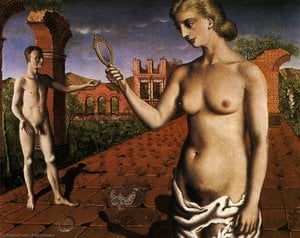
Pygmallion
複製画のサイズ
Paul Delvaux’s 1939 painting, “Pygmalion,” is more than just a depiction of a woman interacting with statues; it’s a meticulously crafted exploration of desire, the unsettling beauty of the uncanny, and the enduring power of classical myth. Measuring 117 x 147 cm, this surrealist masterpiece immediately draws the viewer into its enigmatic world, populated by figures rendered in Delvaux's signature style – a precise, almost photographic realism that simultaneously elevates and distorts reality. The scene unfolds within a dimly lit interior, suggesting a studio or perhaps a private chamber, where the woman’s presence is both alluring and profoundly unsettling. Her posture, ambiguous between invitation and restraint, invites speculation about her intentions and the nature of her relationship with the two imposing nude statues flanking her.
“Pygmalion” resonates with a complex layering of symbolism, drawing heavily from classical mythology while simultaneously reflecting the anxieties and uncertainties of the interwar period. The statues themselves represent idealized masculinity – powerful, imposing, and ultimately unattainable. Their nudity is not merely anatomical; it’s symbolic of vulnerability and exposure, mirroring the woman's own potential fragility within this charged scene. The presence of other figures in the background—a man on the left and another on the right—adds to the sense of unease and suggests a voyeuristic element, further complicating the narrative. Delvaux expertly utilizes these elements to evoke a feeling of psychological tension, prompting viewers to confront their own desires and anxieties about beauty, power, and representation.
Created in 1939, “Pygmalion” emerged during a pivotal moment in art history – the height of Surrealism. Following the devastation of World War I and the rise of totalitarian regimes, artists sought to challenge conventional notions of reality and explore the subconscious mind. Delvaux, though often resistant to rigid categorization, embraced the core tenets of Surrealism: dream imagery, irrational juxtapositions, and a fascination with the uncanny. His work reflects this broader movement’s interest in exploring the darker aspects of human psychology and questioning established social norms. The painting's stark realism within a surreal context is particularly characteristic of Delvaux's approach.
“Pygmalion” possesses a haunting beauty that transcends its narrative complexity. It’s a work that lingers in the mind long after viewing, prompting contemplation about the nature of desire, identity, and the relationship between art and reality. This meticulously crafted reproduction captures not only the visual details of Delvaux's original but also the emotional depth and psychological intensity that make it such a significant piece of Surrealist art. Its enduring appeal makes it an ideal addition to any discerning collection or a captivating focal point for interior design, offering a glimpse into the visionary world of Paul Delvaux.

1897 - 1994 , ベルギー

Embark on a journey through the subconscious with our expert guide to Surrealism. Discover the profound symbolism of masters like Dalí and Ernst, exploring how dreamlike imagery reshaped art history and continues to inspire collectors and enthusiasts worldwide.

Explore the profound depths of Surrealism. Discover how masters like Dalí and Ernst unlocked the subconscious through dreamlike imagery, and learn to integrate these evocative, museum-quality masterpieces into your private collection with expert art historical insight.

Embark on a sophisticated journey through the subconscious with our expert guide to Surrealist painting. Discover the profound symbolism of masters like Dalí and learn how to curate dreamlike, museum-quality masterpieces for your private collection.

Embark on a visual journey through the subconscious. Explore our expert guide to Surrealist landscapes, uncovering the dreamlike techniques of masters like Dalí to deepen your appreciation for this captivating art movement.


 プレビュー
プレビュー
 シェアする
シェアする シェアする
シェアする
 詳細を見る
詳細を見る

 ダウンロード
 似ている作品
 X線調査
X線調査 スライドショー
 統計情報
統計情報 詳細を見る
詳細を見る









 ガラスオプションは、110cm未満のサイズでのみご利用いただけます。