
当社のアーティストが、お客様のご希望のサイズと額縁に合わせて、キャンバスに手描きで制作する油彩画です。 ( プリント版に切り替え デジタル画像販売へ切り替え)





























作品のオリジナル比率に合わせた、当店の規定サイズからお選びください。

特定のフレームやスペースに合わせて、ご希望のサイズをご入力いただけます。選択されたサイズが元の画像の比率と異なる場合、アートワークをトリミングするか、手描きで要素を追加して絵画を拡張いたします。デジタルモックアップ を制作し、制作開始前にご確認(承認)をいただきます。
画面上のプレビューは、実際のトリミングや拡張を正確に反映しているものではありません。最終的な構図は、モックアップによってのみ正確にご確認いただけます。
カスタムサイズもご利用いただけますが、元の比率を維持するためには、あらかじめ用意されたリストからサイズを選択することをお勧めいたします。

View of Auvers sur Oise
複製画のサイズ
In the quiet, rolling hills of Northern France, Paul Cézanne captured more than just a village; he captured the very architecture of nature. View of Auvers sur Oise stands as a profound testament to a moment where the fleeting light of Impressionism began to solidify into something much more permanent and structural. The painting presents a picturesque scene of a hillside village, where houses with roofs of soft blue and warm orange nestle amongst a lush tapestry of green slopes and scattered trees. There is a rhythmic harmony in the way the landscape unfolds, leading the eye from the immediate verdant foreground toward a distant, rising hillside crowned by a delicate church spire. It is a scene that invites the viewer to linger, offering a sense of tranquility that belies the revolutionary technical shifts occurring beneath the surface of the paint.
To gaze upon this work is to witness the birth of modern vision. While Cézanne’s contemporaries were often preoccupied with the shimmering, ephemeral effects of sunlight, this piece reveals his move toward a more assertive and sculptural approach. He does not merely paint light; he paints substance. Through the use of thick impasto—a heavy, tactile application of pigment—Cézanne breathes life into the terrain. The brushstrokes are not used to blend away the reality of the canvas, but rather to build it, using patches of color to construct the weight of a rooftop or the sturdy trunk of a tree. This technique transforms the landscape into a collection of geometric essences, hinting at the cubes and cylinders that would later define the Cubist movement.
Beyond its formal brilliance, the painting carries a deep historical resonance. Though believed to have been painted around 1879–1880, the location of Auvers-sur-Oise remains etched in the collective memory of art history as a place of intense creative energy and profound psychological depth. The village itself serves as more than a mere backdrop; it is a symbol of the intersection between the pastoral and the human spirit. There is an understated dignity in the way the houses are rendered, standing as silent witnesses to the changing tides of French history. For the collector or the interior designer, this piece offers a sophisticated balance of serenity and strength, making it an ideal centerpiece for spaces that require both a calming presence and a conversation-starting intellectual depth.
The emotional impact of the work lies in its ability to evoke a sense of timelessness. There is a certain melancholy in the heavy, deliberate strokes, yet the vibrant greens and the bright, cloud-streaked sky provide an uplifting counterpoint. It is a landscape that feels both grounded in the earth and reaching toward the infinite. For those seeking to adorn a home or gallery with a high-quality reproduction, this painting provides a window into a pivotal era of human expression—a moment where the world was being reimagined, one deliberate brushstroke at a time.

1839 - 1906 , フランス

Journey into the heart of Impressionism! Explore 10 masterpieces by Monet, Renoir & Degas that revolutionized landscape art. Discover their stories, techniques & find museum-quality reproductions to elevate your home decor on WahooArt.com.
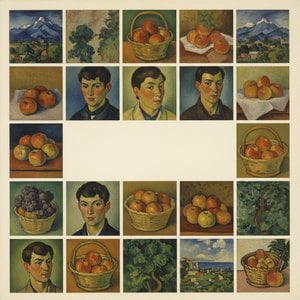
ポール・セザンヌの至高の25選。ポスト印象派を代表する画家、セザンヌの傑作と革新的な技法を紐解きます。WahooArtで高品質な複製画やインテリアアートを見つけ、芸術の世界をご自宅に。今すぐコレクションをご覧ください。

Journey through Impressionism's heart with 10 iconic paintings by Monet, Renoir & Degas. Explore light, color & the stories behind these masterpieces. Find museum-quality art reproductions and elevate your home decor on WahooArt.com.

Explore the rich history of landscape art with WahooArt. Discover renowned artists, movements like Impressionism & tonalism, and expert guidance for collecting timeless pieces. Find your perfect serene escape today!

Explore the rich history of landscape art with WahooArt. Discover renowned artists, movements like Impressionism & Romanticism, and expert guidance for collecting timeless pieces. Find your perfect serene escape today!


 プレビュー
プレビュー
 シェアする
シェアする シェアする
シェアする
 詳細を見る
詳細を見る

 ダウンロード
 似ている作品
 X線調査
X線調査 スライドショー
 統計情報
統計情報

 詳細を見る
詳細を見る









 ガラスオプションは、110cm未満のサイズでのみご利用いただけます。


