

スピーディーな制作と多彩な仕上げオプションが魅力の、ミュージアムクオリティなジークレー・キャンバスプリント。 ( 手描き複製画を注文する デジタル画像販売へ切り替え)





























作品のオリジナル比率に合わせた、当店の規定サイズからお選びください。

額縁や壁のスペースに合わせて、ご希望の幅と高さを入力してください。プリントはカットすることは可能ですが、元の画像より大きくすることはできないため、異なる比率のサイズを選択された場合は、画像の一部が欠けることになります。印刷を開始する前に、内容を確認していただくためのデジタルモックアップをお送りいたします。このページに表示されている画像は、実際のカット後の状態を示すものではありません。実際の仕上がりはモックアップにてご確認ください。
untitled (7736)
複製画サイズ一覧
Paul Cézanne's "Untitled (7736)," a captivating post-impressionist landscape, isn’t merely a depiction of a rural scene; it’s an invitation to contemplate the very essence of perception and representation. Painted around 1895-1900, during a period of intense artistic experimentation for the artist, this work embodies Cézanne's revolutionary approach to capturing reality – not through fleeting impressions like his Impressionist predecessors, but through a deliberate restructuring of form and color. The scene unfolds with a quiet dignity: a cluster of modest houses nestled amongst rolling hills, punctuated by the suggestion of trees and a winding dirt road. Yet, it’s far from a straightforward representation; Cézanne employs a masterful orchestration of planes and angles, subtly distorting familiar forms to convey an underlying sense of spatial depth and volume.
Cézanne’s technique is arguably the most defining element of this painting. He moved decisively away from the optical realism favored by earlier generations, instead focusing on the underlying geometric structure of objects. Notice how he breaks down each house into a series of interlocking rectangular forms – a deliberate simplification that allows him to capture not just *what* something looks like, but *how* it exists in space. This is evident in the way the houses are stacked upon one another, creating an illusion of receding planes and atmospheric perspective. The trees, too, are rendered with a similar geometric precision, their branches and trunks reduced to essential lines and shapes. He wasn’t interested in mimicking nature exactly; he was striving to reveal its fundamental structure, a concept that would profoundly influence the development of Cubism decades later.
While Cézanne's approach is undeniably formalistic, "Untitled (7736)" isn’t devoid of symbolic resonance. The scene evokes a sense of rustic tranquility, suggesting a connection to the land and a celebration of rural life. The presence of figures – individuals engaged in everyday activities near the houses – adds a layer of human interaction to the landscape, grounding it in a tangible reality. The dirt road itself acts as a visual pathway, inviting the viewer into the scene and prompting reflection on journeys, both literal and metaphorical. It’s a quiet tableau that speaks volumes about the simple pleasures and enduring values of rural existence.
Despite its formal rigor, “Untitled (7736)” possesses a remarkable emotional depth. The cloudy sky lends an air of melancholy and introspection to the scene, while the muted palette – dominated by earthy browns, greens, and blues – contributes to a sense of quiet contemplation. Cézanne wasn’t simply recording a visual reality; he was attempting to capture the *feeling* of being in that place at that time. The painting invites us to slow down, to observe with care, and to appreciate the subtle beauty of the natural world. It's a testament to his ability to imbue even the most commonplace subject matter with profound artistic significance. A high-quality reproduction allows one to truly immerse themselves in this evocative atmosphere, bringing a touch of Cézanne’s contemplative vision into any interior space.
「untitled (7736)」の著作権の状態について — パブリックドメイン(著作権消滅) — は、作者の没年である1906に基づいています。
「untitled (7736)」はセザンヌによるPost-Impressionismの作品であり、その描かれたテーマにはimpressionism’s fleeting light, provencal rural life”, “geometric form exploration”, “bridge to cubism”, “breaking artistic conventions”が含まれます。
セザンヌ作「untitled (7736)」の閲覧統計ページでは、公開されている閲覧統計をご覧いただけます。この作品の月間閲覧数、アーティストのなかで最も閲覧されている作品との比較、そして訪問者の地域情報などが掲載されています。


1839 - 1906 , フランス
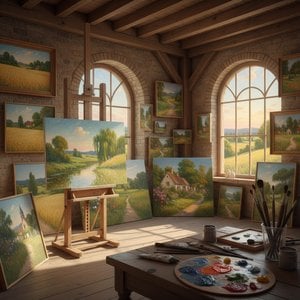
Discover the profound tranquility of rural art through an expert exploration of Impressionist landscapes. From pastoral scenes to textured oil masterpieces, learn how timeless nature-inspired artworks bring enduring elegance and serenity to sophisticated collectors.
 設置イメージを表示
 シェアする
シェアする シェアする
シェアする
 詳細を見る
詳細を見る ガイドを表示

 ダウンロード
 似ている作品
 X線調査
X線調査 スライドショーを表示
 Q&A
Q&A
 統計情報
統計情報
 詳細を表示
詳細を表示









 ガラスオプションは、110cm未満のサイズでのみご利用いただけます。


