
x


迅速な制作と多彩な仕上げオプションを備えた、ミュージアムクオリティのジークレーまたはキャンバスプリント。 ( 手描きの絵画を購入 画像を購入)





























作品のオリジナル比率に合わせた、当店の規定サイズからお選びください。

特定のフレームやスペースに合わせて、ご自身でサイズを指定することも可能です。選択されたサイズが元の画像の比率と一致しない場合、作品をトリミングするか、鏡面反射または単色での塗りつぶしによって画像を拡張いたします。制作を開始する前に、ご確認用のデジタルモックアップをお送りいたします。
画面上のプレビューには、実際のトリミングや拡張は反映されませんのでご注意ください。最終的な構図を正確に確認できるのは、モックアップのみとなります。
カスタムサイズも承っておりますが、元の比率を維持するためには、あらかじめ用意されたリストからサイズを選択することをお勧めいたします。

untitled (6213)
複製画のサイズ
In the quiet, transformative years of 1867, a young Paul Cézanne was already beginning to dismantle the boundaries of traditional representation. His work, “The Negro Scipion,” serves as a profound window into this nascent period of his career, capturing a moment where the weight of classical influence meets the burgeoning spirit of modernism. The painting presents us with Scipion, a model from Cézanne’s own studio, captured in a state of deep repose within an intimate domestic setting. While the subject appears deceptively simple—a solitary figure resting amidst the stillness of a room—there is an underlying tension that speaks to much more than mere physical rest. Through this piece, we witness the artist's early struggle to move beyond the superficiality of his era, seeking instead to anchor his subjects in a sense of permanent, sculptural reality.
To gaze upon this work is to encounter the very foundations of what would later become Post-Impressionism. At this stage, Cézanne was heavily engaged with the concepts of form and volume, moving away from the fleeting, light-drenched moments of his Impressionist contemporaries toward a more structured, almost architectural approach to the canvas. The painting is not merely an observation of a man; it is an exploration of how light can define mass and how shadow can imbue a figure with a sense of eternal presence.
Technically, “The Negro Scipion” reveals the artist’s burgeoning mastery over synthetism and geometric simplification. Rather than relying on delicate, ethereal brushwork, Cézanne employs a more deliberate, physical application of pigment. The texture of the canvas feels palpable, with thick, purposeful strokes that build up layers of color to create an illusion of depth and weight. This technique gives the figure of Scipion a monumental quality, as if he were carved from the very atmosphere surrounding him. He is not just a person in a room; he is a structural element within a carefully constructed universe.
The palette used in this early masterpiece is notably muted and earthy, dominated by tones that evoke a sense of groundedness and solemnity. This choice of color is far from accidental. By eschewing the bright, prismatic colors often associated with later Impressionism, Cézanne directs the viewer's attention to the interplay of light and shadow—the chiaroscuro effect that lends the scene its dramatic, almost melancholic gravity. The subtle transitions between light and dark create a rhythmic movement across the composition, guiding the eye through the domestic space and forcing a confrontation with the stillness of the subject.
Beyond the technical brilliance lies a deeper, more psychological layer that continues to captivate collectors and historians alike. There is an undeniable sense of introspection within the painting, a quiet contemplation of mortality and the passage of time. The way Scipion is positioned—lost in thought or perhaps lost to sleep—suggests a vulnerability that contrasts with the heavy, permanent nature of his form. This duality creates a poignant emotional impact; it is a study of the ephemeral human condition captured through an everlasting artistic lens.
For the discerning collector or interior designer, a reproduction of this work offers more than just aesthetic beauty; it brings a sense of historical weight and intellectual depth to a space. The painting’s ability to command attention through its quiet intensity makes it a perfect centerpiece for environments that value sophistication, contemplation, and the timeless allure of the masters. It is an invitation to slow down, to observe the nuances of shadow, and to reconnect with the profound beauty found in the structural essence of our world.

1839 - 1906 , フランス

Explore the transformative era of Post-Impressionism. Discover how masters like Cézanne and Matisse revolutionized color and form, moving beyond Impressionism to shape modern art history through structural innovation and expressive emotion.

Master the nuances of Impressionism vs. Post-Impressionism with our expert guide. Explore the revolutionary shift from Monet’s fleeting light to Van Gogh’s emotional depth. Discover how these iconic movements continue to inspire fine art collectors and modern interiors today.
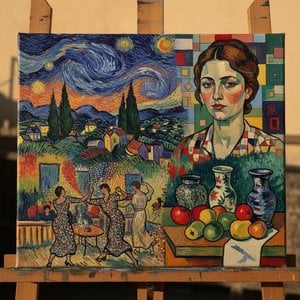
Unveil the profound revolution of Post-Impressionism. Explore how masters like Van Gogh and Cézanne utilized bold colors and emotional depth to transcend mere representation, laying the foundation for modern art. A sophisticated journey through history's most emotive brushstrokes.


最新の美術ニュース、限定オファー、そしてインテリアのアイデアをいち早くお届けします。
お客様のプロジェクトについてお聞かせください。当社の美術専門家が、お客様に合わせた3つのパーソナライズされた芸術提案をご提供いたします。
あなたにぴったりの3作品を無料で厳選いたします


 プレビュー
プレビュー
 シェアする
シェアする シェアする
シェアする
 詳細を見る
詳細を見る

 ダウンロード
 似ている作品
 X線調査
X線調査 スライドショー

 詳細を見る
詳細を見る









 ガラスオプションは、110cm未満のサイズでのみご利用いただけます。


