
 Oil On CanvasWallArtPost-Impressionism
 187219th Century
 53.0 x 40.0 cm
当社のアーティストが、お客様のご希望のサイズと額縁に合わせて、キャンバスに手描きで制作する油彩画です。 ( プリント版に切り替え デジタル画像販売へ切り替え)





























作品のオリジナル比率に合わせた、当店の規定サイズからお選びください。

特定のフレームやスペースに合わせて、ご希望のサイズをご入力いただけます。選択されたサイズが元の画像の比率と異なる場合、アートワークをトリミングするか、手描きで要素を追加して絵画を拡張いたします。デジタルモックアップ を制作し、制作開始前にご確認(承認)をいただきます。
画面上のプレビューは、実際のトリミングや拡張を正確に反映しているものではありません。最終的な構図は、モックアップによってのみ正確にご確認いただけます。
カスタムサイズもご利用いただけますが、元の比率を維持するためには、あらかじめ用意されたリストからサイズを選択することをお勧めいたします。

Self-Portrait in a Casquette, Ca E
複製画のサイズ
In the quiet intensity of Self-Portrait in a Casquette, Ca E, we encounter more than just a likeness; we meet the very moment when the fleeting light of Impressionism began to solidify into the structural permanence of Post-Impressionism. Created around 1872, this intimate oil on canvas serves as a profound window into the psyche of Paul Cézanne. The artist presents himself with a serious, contemplative expression, his eyes meeting the viewer with a weight that suggests a man deeply engaged in the labor of seeing. Clad in a dark jacket and topped with a distinctive casquette, he holds a book—a subtle nod to the intellectual rigor and the deep literary influences that fueled his revolutionary approach to the canvas.
The composition is masterfully balanced, utilizing a muted backdrop featuring a window that provides a delicate sense of depth without the need for traditional, vanishing-point perspective. This deliberate choice reflects Cézanne’s growing departure from the purely optical experiments of his contemporaries. Instead of chasing the ephemeral shimmer of sunlight, he sought to capture the essence of form. The presence of the window acts as a threshold between the internal world of the artist and the external reality he seeks to distill, creating a sense of quiet solitude that is both haunting and deeply personal.
To observe this work is to witness the birth of a new pictorial language. While many of his peers were focused on dissolving outlines into diffused light, Cézanne utilized bold, assertive brushstrokes to build texture and solidity. He employs a technique of carefully placed planes of color that create an illusion of volume and weight. This method—often referred to as color modulation—allows the artist to construct space through tonal shifts rather than mere line work. The painting possesses a certain flatness that is paradoxically full of substance, a characteristic that would later become the cornerstone of Cubism.
For the discerning collector or interior designer, this piece offers a sophisticated interplay of texture and tone. The dark, heavy tones of the jacket contrast beautifully with the more subtle, atmospheric qualities of the background, making it a versatile centerpiece for a curated space. It does not merely decorate a wall; it anchors a room with its gravity and historical significance. The tactile quality of the brushwork, even when rendered in a high-quality reproduction, invites the eye to linger on the structural integrity of the subject, offering a sense of permanence that is rare in much of the era's more transient art.
The historical weight of this portrait cannot be overstated. As a bridge between the 19th and 20th centuries, it carries the DNA of modern art history. Picasso famously referred to Cézanne as "the father of us all," and in this early work, one can see the seeds of that greatness. The painting embodies a rejection of naturalistic illusion in favor of an inner truth—a pursuit of the underlying structure of the world. It is a piece that speaks to the courage of innovation and the beauty of intellectual depth.
Integrating such a masterpiece into a contemporary collection provides more than just aesthetic pleasure; it offers a conversation starter about the evolution of human perception. Whether placed in a minimalist modern study or a classic, richly textured library, Self-Portrait in a Casquette, Ca E brings with it an aura of dignity and profound introspection. It is an invitation to look closer, to find the structure beneath the surface, and to appreciate the enduring power of a vision that refused to settle for the mere superficiality of light.

1839 - 1906 , フランス

Explore the transformative era of Post-Impressionism. Discover how masters like Cézanne and Matisse revolutionized color and form, moving beyond Impressionism to shape modern art history through structural innovation and expressive emotion.

Master the nuances of Impressionism vs. Post-Impressionism with our expert guide. Explore the revolutionary shift from Monet’s fleeting light to Van Gogh’s emotional depth. Discover how these iconic movements continue to inspire fine art collectors and modern interiors today.
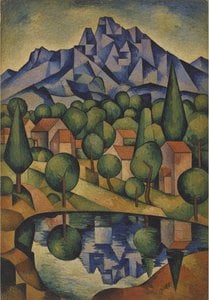
Explore the profound legacy of Paul Cézanne. Discover how his mastery of geometric forms and vibrant color bridged Impressionism and Cubism, offering timeless inspiration for fine art collectors and enthusiasts seeking to understand the foundations of modern art.

Unveil the profound revolution of Post-Impressionism. Explore how masters like Van Gogh and Cézanne utilized bold colors and emotional depth to transcend mere representation, laying the foundation for modern art. A sophisticated journey through history's most emotive brushstrokes.

Explore the vibrant evolution of Post-Impressionism. From Seurat's revolutionary Pointillism to the emotional depth of masters, discover how this movement redefined modern art history through color, structure, and unparalleled creative expression.


 プレビュー
プレビュー
 シェアする
シェアする シェアする
シェアする
 詳細を見る
詳細を見る ガイド
ガイド

 ダウンロード
 似ている作品
 X線調査
X線調査 スライドショー
 統計情報
統計情報 詳細を見る
詳細を見る









 ガラスオプションは、110cm未満のサイズでのみご利用いただけます。


