

スピーディーな制作と多彩な仕上げオプションが魅力の、ミュージアムクオリティなジークレー・キャンバスプリント。 ( 手描きの複製画を注文する デジタル画像販売へ切り替え)





























作品のオリジナル比率に合わせた、当店の規定サイズからお選びください。

特定のフレームやスペースに合わせて、ご自身でサイズを指定することも可能です。選択されたサイズが元の画像の比率と一致しない場合、作品をトリミングするか、鏡面反射または単色での塗りつぶしによって画像を拡張いたします。制作を開始する前に、ご確認用のデジタルモックアップをお送りいたします。
画面上のプレビューには、実際のトリミングや拡張は反映されませんのでご注意ください。最終的な構図を正確に確認できるのは、モックアップのみとなります。
カスタムサイズも承っておりますが、元の比率を維持するためには、あらかじめ用意されたリストからサイズを選択することをお勧めいたします。

Mont Sainte-Victoire
複製画サイズ一覧
Paul Cézanne's "Mont Sainte-Victoire" is more than just a landscape painting; it’s a pivotal work in the transition from Impressionism to Cubism, showcasing Cézanne's revolutionary approach to form and perspective. Created in 1906, this piece exemplifies his lifelong fascination with the mountain near Aix-en-Provence, France, which served as a constant subject throughout his career, particularly from the 1880s until his death.
The artwork depicts Mont Sainte-Victoire under a cloudy sky. Cézanne abandons traditional perspective techniques—like linear perspective to create depth—instead emphasizing the painted surface by bringing foreground, middle ground, and background onto a single plane. This creates a unique sense of spatial ambiguity that challenges conventional representation. The style leans towards Post-Impressionism, characterized by visible brushstrokes and an expressive use of color aimed at capturing atmosphere and light rather than precise detail. It’s not about photographic accuracy but conveying the emotional impact of the scene.
Cézanne's technique is as significant as his subject matter. He utilizes a quasi-abstract style, indicating form and space through the juxtaposition of small, colored patches of paint laid side by side. This impasto technique—where paint is applied thickly—creates a textured surface that adds depth and visual interest. Lines are used expressively to define shapes and contours, particularly in the mountain peaks and tree branches. The cool color palette – predominantly blues, greens, and browns – contributes to a serene yet slightly melancholic mood. Cézanne’s layering of oil paints builds up texture and color, creating a dynamic surface that invites close inspection.
“Mont Sainte-Victoire” was painted in the final year of Cézanne's life, a period when he was refining his distinctive style. His rejection of traditional perspective and emphasis on geometric forms profoundly influenced subsequent artistic movements, most notably Cubism. Artists like Pablo Picasso and Henri Matisse acknowledged Cézanne as a foundational figure, recognizing him as "the father of us all." This painting exemplifies Cézanne’s exploration of how to represent three-dimensional objects on a two-dimensional surface, paving the way for new approaches to pictorial representation.
Beyond its artistic significance, "Mont Sainte-Victoire" evokes powerful emotions. The vastness of the landscape inspires feelings of awe and tranquility. The diffused lighting and lack of sharp definition create a sense of solitude or contemplation, inviting viewers to reflect on their place within the natural world. Symbolically, the mountain represents permanence and stability amidst the ever-changing atmosphere, offering a timeless image of nature's enduring power.


1839 - 1906 , フランス

Explore the transformative era of Post-Impressionism. Discover how masters like Cézanne and Matisse revolutionized color and form, moving beyond Impressionism to shape modern art history through structural innovation and expressive emotion.

印象派と後期印象派の決定的な違いを、光と色彩、そして感情の変遷から紐解くマスタークラス。モネやルノワールが捉えた「一瞬の光」から、ゴッホらが追求した「内なる情熱」まで、美術史の革命を専門家が解説します。WahooArtでは、巨匠たちの息吹を感じる高品質な手描き油彩複製画をご提供。あなたの空間に、美術館級のエレガンスと本物の芸術体験をお届けします。
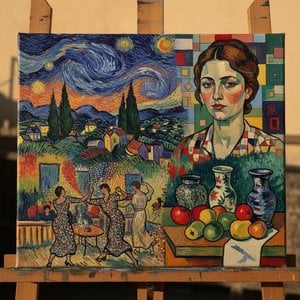
Unveil the profound revolution of Post-Impressionism. Explore how masters like Van Gogh and Cézanne utilized bold colors and emotional depth to transcend mere representation, laying the foundation for modern art. A sophisticated journey through history's most emotive brushstrokes.

Explore the vibrant evolution of Post-Impressionism. From Seurat's revolutionary Pointillism to the emotional depth of masters, discover how this movement redefined modern art history through color, structure, and unparalleled creative expression.
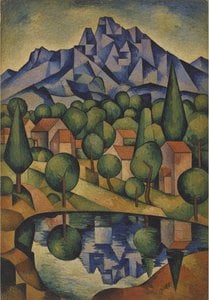
Explore the profound legacy of Paul Cézanne. Discover how his mastery of geometric forms and vibrant color bridged Impressionism and Cubism, offering timeless inspiration for fine art collectors and enthusiasts seeking to understand the foundations of modern art.

 設置イメージを確認
 送る
送る シェア
シェア
 詳細情報
詳細情報 ガイドを表示

 画像をダウンロード
 似ている作品
 X線調査
X線調査 スライドショー
 統計情報
統計情報


 続きを読む
続きを読む









 ガラスオプションは、110cm未満のサイズでのみご利用いただけます。


