

 Oil On CanvasWallArtMannerist Painting
 1523
1523 135.0 x 65.0 cm
 Kunsthistorisches Museum
スピーディーな制作と多彩な仕上げオプションが魅力の、ミュージアムクオリティなジークレー・キャンバスプリント。 ( 手描きの複製画を注文する デジタル画像販売へ切り替え)





























作品のオリジナル比率に合わせた、当店の規定サイズからお選びください。

額縁や壁のスペースに合わせて、ご希望の幅と高さを入力してください。プリントはカットすることは可能ですが、元の画像より大きくすることはできないため、異なる比率のサイズを選択された場合は、画像の一部が欠けることになります。印刷を開始する前に、内容を確認していただくためのデジタルモックアップをお送りいたします。このページに表示されている画像は、実際のカット後の状態を示すものではありません。実際の仕上がりはモックアップにてご確認ください。
Cupid
複製画サイズ一覧
The world of art rarely offers a glimpse into such profound tenderness as that presented by Parmigianino's "Cupid," painted in 1523. This exquisite work, now residing within the hallowed halls of the Kunsthistorisches Museum in Vienna, transcends mere representation; it’s an invitation to contemplate the very essence of love and desire, rendered with a masterful blend of classical grace and Mannerist sophistication. More than just a portrait, “Cupid” is a distillation of Renaissance ideals – a testament to human beauty, mythological narrative, and the artist's unparalleled ability to capture fleeting emotion.
At first glance, the painting presents a strikingly youthful Cupid, poised in an upright stance that exudes confidence and quiet contemplation. His pose, reminiscent of classical sculpture, is subtly elongated—a hallmark of Parmigianino’s Mannerist style—creating a sense of elegant distortion that elevates the figure beyond simple realism. The artist's keen eye for detail is immediately apparent: the delicate folds of his drapery, the subtle shading of his skin, and the precise rendering of his wings – all contribute to an overwhelming feeling of lifelike presence. The background, deliberately dark, serves not as a distraction but rather as a dramatic foil, intensifying the luminosity of Cupid’s form and drawing the viewer's attention directly to the central figure.
Parmigianino’s genius lies in his masterful manipulation of light and shadow – a technique known as *chiaroscuro*. He employs this dramatic contrast with exceptional skill, sculpting volume and depth onto the canvas. The use of dark tones in the background creates an atmosphere of mystery and intimacy, while strategically placed highlights accentuate Cupid's features, emphasizing his youthful beauty and serene expression. The painting’s surface is rich with texture, achieved through meticulous layering of oil paint—a technique that allows for incredible detail and a remarkable sense of realism. The artist’s brushstrokes are visible yet controlled, contributing to the overall fluidity and dynamism of the composition.
Furthermore, “Cupid” embodies the core tenets of Mannerism, a style that emerged in Florence during the High Renaissance. Unlike the balanced compositions and naturalistic depictions favored by earlier artists, Mannerist works often prioritize elegance, refinement, and stylized forms. Parmigianino’s elongated figures, asymmetrical arrangements, and subtle distortions are all characteristic features of this movement. The painting is not simply a portrait; it's an exploration of beauty through a deliberately heightened lens.
Cupid, the Roman god of love, is instantly recognizable by his winged sandals and bow and arrow – symbols inextricably linked to passion, desire, and fertility. Parmigianino’s depiction of Cupid taps into this rich mythological heritage while simultaneously imbuing the figure with a sense of quiet introspection. The infant figures at his feet—often interpreted as representing Venus and Mars—add another layer of symbolic complexity, suggesting the origins of love itself. The scene subtly alludes to Ovid's *Metamorphoses*, where Cupid accidentally shoots his mother, Venus, with an arrow, triggering her passionate love for the mortal Adonis.
The positioning of the infants, reaching towards Cupid’s leg and gazing upwards, creates a poignant tableau of vulnerability and adoration. It speaks to the transformative power of love—a force capable of shaping destinies and altering the course of human existence. The painting invites viewers to contemplate not only the beauty of love but also its potential for both joy and sorrow.
“Cupid” by Parmigianino stands as a testament to the enduring power of Renaissance art—a timeless masterpiece that continues to captivate audiences centuries after its creation. Today, WahooArt offers exquisite, hand-painted oil painting reproductions that faithfully capture the essence and beauty of this iconic work. Our skilled artists meticulously recreate every detail, from the subtle nuances of light and shadow to the delicate texture of Cupid’s drapery, ensuring a stunningly authentic representation.
Whether you are an art enthusiast, a collector seeking to enrich your collection, or an interior designer searching for a touch of Renaissance elegance, a reproduction of “Cupid” is sure to be a cherished addition to any space. Visit WahooArt.com today to bring this captivating masterpiece into your home.
パルミジャニーノ作「Cupid」のTall形式は、Living Roomに飾る際におすすめです。作品の形式と空間の調和が、複製画を配置する際の指針となります。
パルミジャニーノ作「Cupid」に描かれた情緒はElegantであり、その感情的なトーンはRomanticです。
パルミジャニーノ作「Cupid」の色彩構成は、StatementなコントラストとBalanced Harmonyな調和を併せ持っています。


1503 - 1540 , イタリア

Unveil the captivating world of Mannerism. Our expert analysis explores the transition from Renaissance harmony to the profound, elegant distortions of masters like El Greco, offering deep insights into one of art history's most influential and enigmatic eras.
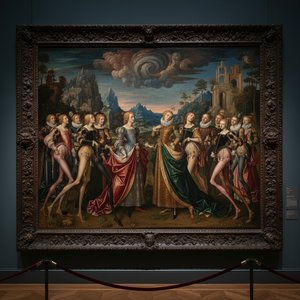
Explore the dramatic evolution of Northern Mannerism. Discover how masters like Bosch and Grünewald transitioned from Renaissance harmony to profound, elegant distortion through an expert analysis of symbolism, emotional intensity, and artistic innovation.

 設置イメージを確認
 送る
送る シェア
シェア
 詳細情報
詳細情報 ガイドを表示

 画像をダウンロード
 似ている作品
 X線調査
X線調査 スライドショー
 統計情報
統計情報 続きを読む
続きを読む









 ガラスオプションは、110cm未満のサイズでのみご利用いただけます。


