


オンラインプレビューをはるかに凌ぐ、高解像度で鮮明なデジタル画像をご購入いただけます。
各ファイルは、社内の専門家が高度なツールと熟練した手作業によるレタッチを用いて、細心の注意を払って準備されています。すべての画像において、卓越した鮮明度、正確な色彩再現性、そして繊細なディテールを保証いたします。
最終ファイルは、プロフェッショナルな編集・印刷環境ですぐにご利用いただけるよう最適化された状態で、72時間以内にメールにてお届けいたします。これは、一流のデザインスタジオ、出版社、ギャラリーから信頼されているものと同等の品質です。
WahooArt.com を選ぶことは、単に画像を手に入れることではありません。それは、プロの手によって精密に仕上げられ、満足保証が付いた高品質なデジタルアートワークを受け取ることを意味します。ご注文いただいた際に自動的に付随する内容は、以下の通りです:

ご注文から72時間以内に、高解像度のデジタル画像ファイルがメールでお手元に届きます。すぐにそのままご利用いただけます。

お客様の作品は、高度なAIツールと専門家による手作業の編集を組み合わせてプロフェッショナルに最適化されており、細部のディテール、鮮明さ、そして正確な色再現性を最大限に引き出しています。

ファイルを誤って削除したり、紛失してしまったりしましたか?ご安心ください。いつでも無料で再送いたします。

関税や手数料、配送料を気にすることなく、お気に入りのアートワークをすぐにお楽しみいただけます。デジタルダウンロードは常に免税です。

プロ仕様のツールとカラーマネジメント技術を用いることで、デジタル画像が元の色を最大限に忠実に再現することを保証いたします。

ご購入いただいたデジタル画像にご満足いただけない場合は、100日以内であれば、理由を問わず修正または100%の返金対応をさせていただきます。

ご満足いただけない場合は、デジタルファイルを受け取ってから100日以内であれば、理由を問わず全額返金いたします。

3枚購入で10%OFF - 5枚購入で15%OFF - 10枚以上購入で20%OFF。クリエイティブなプロジェクト、ギャラリー、エージェンシーに最適です。
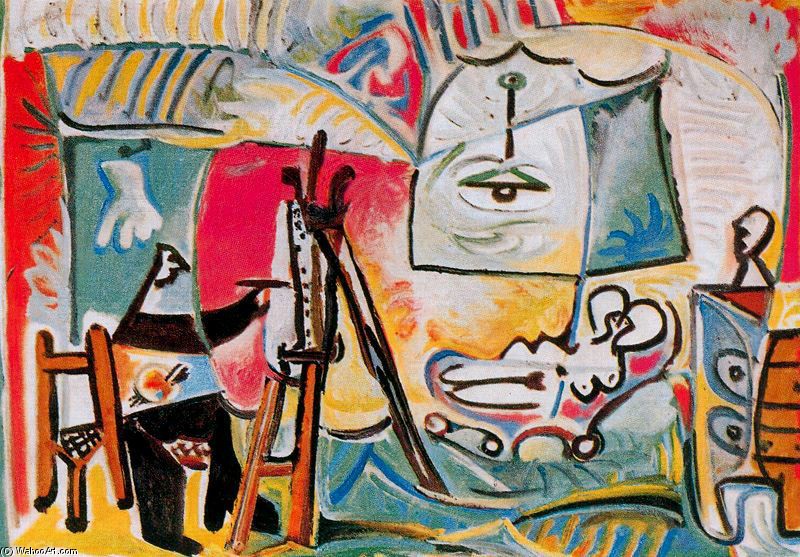
Pablo Picasso’s “The Painter and His Model,” painted in 1929-30 during his prolific Parisian period, is far more than a simple portrait; it's a meticulously constructed exploration of the relationship between artist and subject, rendered through the fractured logic of Cubism. This work, housed at The Art Institute of Chicago, offers a captivating glimpse into Picasso’s evolving artistic language and his profound interest in capturing not just appearances but also the underlying dynamics of human interaction.
The scene unfolds within a modestly sized studio – a space deliberately devoid of grandiosity, suggesting an intimate setting rather than a formal atelier. A man, presumed to be Picasso himself, sits on a chair, holding a camera or perhaps a paintbrush, his gaze directed towards the woman standing behind him. She is not presented as a passive object of observation but as an active participant in the creative process, her presence subtly challenging the traditional role of the model. The composition isn’t about capturing a single, unified image; instead, Picasso employs multiple viewpoints simultaneously, presenting fragmented perspectives of both figures. This deliberate distortion creates a sense of dynamism and movement, suggesting that reality itself is inherently complex and multifaceted.
Picasso's masterful use of Cubism is immediately apparent. The figures are broken down into geometric shapes – triangles, rectangles, and cylinders – which are then reassembled in a way that defies conventional perspective. This technique isn’t merely an aesthetic choice; it represents Picasso’s attempt to capture the essence of his subjects by analyzing them from multiple angles at once. Notice how the man's body is dissected into sharp planes, while the woman’s form is similarly fragmented, yet retains a recognizable human shape. The interplay between these geometric elements creates a visual tension that mirrors the complexities of their relationship.
The color palette is restrained – primarily consisting of muted browns, grays, and ochres – contributing to the painting's overall sense of quiet contemplation. However, subtle hints of blue and green peek through, adding depth and richness to the composition. The background, rendered in a darker tone, further emphasizes the figures and draws attention to their interaction. The careful balance between form and color is characteristic of Picasso’s mature Cubist style.
Beyond its formal qualities, “The Painter and His Model” is rich in symbolic meaning. The presence of the camera – or potential paintbrush – suggests the act of recording and documenting reality. It raises questions about the nature of representation and the role of the artist as a witness to the world. The woman’s posture—leaning slightly towards the man, her hand resting on his arm—hints at a connection that transcends mere observation. She is not simply posing for him; she appears engaged in a collaborative dialogue.
Furthermore, the eye-like shape located near the top right corner has been interpreted as a symbol of vision and perception. It could represent Picasso’s own artistic gaze, or perhaps the shared perspective of both figures. The painting, therefore, becomes a meditation on the creative process itself – a visual exploration of how ideas are formed, communicated, and ultimately captured on canvas.
“The Painter and His Model” is more than just a portrait; it’s a profound statement about the nature of art, relationships, and perception. Picasso's innovative use of Cubism, combined with his subtle symbolic gestures, creates a work that continues to resonate with viewers today. It invites us to contemplate the complexities of human interaction and the transformative power of artistic expression. Reproductions of this iconic piece offer an exceptional opportunity to bring this captivating vision into your home, adding a touch of intellectual depth and visual intrigue to any space.


1881 - 1973 , スペイン

 プレビュー
プレビュー
 プリントを購入
 シェアする
シェアする シェアする
シェアする
 詳細を見る
詳細を見る

 ダウンロード
 似ている作品
 X線調査
X線調査 スライドショー
 詳細を見る
詳細を見る


