
x


迅速な制作と多彩な仕上げオプションを備えた、ミュージアムクオリティのジークレーまたはキャンバスプリント。 ( 手描きの絵画を購入 画像を購入)





























作品のオリジナル比率に合わせた、当店の規定サイズからお選びください。

特定のフレームやスペースに合わせて、ご自身でサイズを指定することも可能です。選択されたサイズが元の画像の比率と一致しない場合、作品をトリミングするか、鏡面反射または単色での塗りつぶしによって画像を拡張いたします。制作を開始する前に、ご確認用のデジタルモックアップをお送りいたします。
画面上のプレビューには、実際のトリミングや拡張は反映されませんのでご注意ください。最終的な構図を正確に確認できるのは、モックアップのみとなります。
カスタムサイズも承っておりますが、元の比率を維持するためには、あらかじめ用意されたリストからサイズを選択することをお勧めいたします。

Maia with a Doll
複製画のサイズ
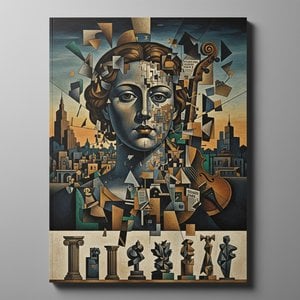
In the vast, transformative landscape of twentieth-century art, few images possess the tender yet fractured intimacy of Pablo Picasso’s Maia with a Doll. Created in 1938, this masterpiece serves as an arresting distillation of emotion and form, embodying the core tenets of Picasso’s groundbreaking Cubist style. Rather than offering a mere literal depiction of a young girl at play, the painting invites viewers into a complex dialogue about memory, innocence, and the artist’s own personal reflections on childhood. Through his masterful manipulation of oil paint on canvas, Picasso transcends simple portraiture to capture a fleeting moment of existence, rendered with a texture and color palette that feels both grounded in reality and elevated by abstraction.
The brilliance of this work lies in its rejection of traditional illusionism. Embracing the revolutionary tenets of Cubism, Picasso dismantles the subject into geometric planes, presenting multiple viewpoints simultaneously to capture the psychological essence of his daughter, Maya. The girl’s face and torso are fractured, yet they coalesce into a powerful presence that speaks to the complexity of human feeling. This technique allows the viewer to experience the subject not just as a static figure, but as a dynamic entity shaped by light, shadow, and perspective. For the discerning collector or interior designer, this piece offers a sophisticated interplay of muted blues and warm ochres, creating a sense of depth that avoids the heaviness of linear perspective, making it an ideal focal point for spaces that demand both intellectual depth and visual harmony.
To look upon Maia with a Doll is to witness a moment of deceptive serenity set against a backdrop of global turbulence. Painted in 1938, the artwork arrived during an era marked by escalating tensions that would soon plunge the world into the darkness of World War II. Picasso’s personal life was equally fraught; his marriage to Dora Maar was reaching a painful conclusion, and the artist himself wrestled with profound anxieties regarding the looming conflict in Europe. This historical undercurrent lends the painting a subtle, haunting melancholy. While the subject—a child with her doll—suggests innocence, the fragmented execution mirrors a world that was itself being torn apart.
The symbolism within the piece is as layered as its composition. The doll, similarly fractured and non-idealized, acts as a mirror to the girl’s own psychological state, representing a shared vulnerability between the child and her toy. This connection creates an emotional resonance that is deeply relatable, touching upon the universal themes of protection and loss. For those seeking to adorn their homes with art that provokes thought, this reproduction offers more than mere decoration; it provides a window into a pivotal moment in art history where the beauty of childhood meets the fractured reality of a changing world. It is a piece that commands attention through its ability to evoke both a sense of peace and a profound, lingering introspection.

1881 - 1973 , スペイン

Explore the profound evolution of Cubist still life, from Cézanne's structural foundations to the fragmented brilliance of Braque and Léger. Discover how geometric abstraction redefined reality through a sophisticated lens of form, color, and modern artistic mastery.
Master the complexities of Cubism with our expert guide. Explore the revolutionary fragmentation of Picasso and Braque, from Analytic to Synthetic styles, and learn how to evaluate these profound modernist masterpieces for your private collection.

Journey through the historical majesty of blue in fine art. From rare lapis lazuli to celestial symbolism, explore how this serene hue defines masterpieces. Expert insights for discerning collectors and designers seeking timeless elegance and prestige.

Master the complexities of Cubist composition with our expert guide. Explore analytical techniques, geometric deconstruction, and the art of simultaneous perspective to deepen your appreciation for this avant-garde movement.

Embark on a visual journey through Paul Cézanne’s 25 most iconic Post-Impressionist masterpieces. Uncover the stories, textures, and revolutionary techniques that shaped modern art. Find museum-quality reproductions for inspired decor at WahooArt.com. Discover all masterpieces on WahooArt.com.


最新の美術ニュース、限定オファー、そしてインテリアのアイデアをいち早くお届けします。
お客様のプロジェクトについてお聞かせください。当社の美術専門家が、お客様に合わせた3つのパーソナライズされた芸術提案をご提供いたします。
あなたにぴったりの3作品を無料で厳選いたします


 プレビュー
プレビュー
 シェアする
シェアする シェアする
シェアする
 詳細を見る
詳細を見る

 ダウンロード
 似ている作品
 X線調査
X線調査 スライドショー

 詳細を見る
詳細を見る









 ガラスオプションは、110cm未満のサイズでのみご利用いただけます。


