作品詳細説明
A Portrait Steeped in Rose Period Melancholy: Pablo Picasso’s Hurdy-gurdy
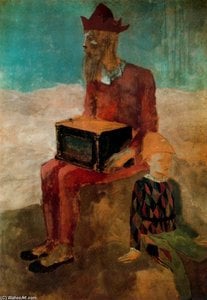
The painting “Hurdy-gurdy,” executed by Pablo Picasso in 1905, stands as a poignant emblem of the artist's formative years within the Rose Period. More than just a depiction of an individual—a man adorned in crimson attire and crowned with regal symbolism—it’s a carefully constructed tableau brimming with subtle nuances that speak volumes about Picasso’s evolving artistic vision and his engagement with prevailing cultural currents. This artwork, housed in WahooArt's collection, offers a captivating glimpse into the artist’s psyche during this pivotal moment of experimentation and introspection.
Subject Matter and Composition: An Intriguing Narrative
At first glance, “Hurdy-gurdy” presents a straightforward portrait—a man seated confidently before a box, accompanied by two figures flanking him. However, Picasso skillfully avoids simplistic representation; the subject’s gaze is averted downwards, conveying a palpable sense of sadness and contemplation. The inclusion of the hurdy-gurdy itself – an instrument known for its melancholic melodies – immediately establishes a thematic connection to the sitter's emotional state. Furthermore, the presence of two additional individuals adds layers of complexity to the scene, hinting at interpersonal relationships and perhaps suggesting a narrative beyond mere visual observation. Notably, a television screen is positioned centrally, introducing an element of modernity into this otherwise traditional genre painting—a deliberate juxtaposition that underscores Picasso’s fascination with bridging artistic conventions and contemporary realities.
Style and Technique: Embracing Symbolism Within Impressionistic Framework
Picasso's approach to “Hurdy-gurdy” aligns seamlessly with the tenets of Impressionism, albeit infused with a distinctly personal stylistic signature. The artist employs gouache on cardboard—a technique favored for its luminosity and ability to achieve rich hues—to capture the textures and nuances of light and shadow. While adhering to Impressionistic principles regarding color palettes and brushstrokes, Picasso transcends mere replication; he utilizes expressive distortions and simplified forms to convey emotion rather than literal accuracy. The deliberate flattening of perspective contributes to an overall sense of stillness and introspection, mirroring the sitter’s internal preoccupation. The artist's masterful manipulation of color—particularly the dominant crimson—amplifies the painting’s emotional impact, symbolizing passion, nobility, and perhaps even vulnerability.
Historical Context: Echoes of Catalan Identity and Artistic Innovation
Created during Picasso’s Rose Period, “Hurdy-gurdy” reflects the artist’s burgeoning interest in Catalan identity and his exploration of themes related to suffering and compassion—subjects prevalent within Catalan art and literature at the time. This period witnessed Picasso grappling with personal loss following the death of his mother and experiencing profound artistic breakthroughs as he transitioned from Naturalism to Cubism. The painting serves as a testament to this transformative journey, foreshadowing the revolutionary stylistic innovations that would characterize Picasso’s subsequent oeuvre. It stands alongside other works produced during this era—such as “The Old Guitarist”—demonstrating Picasso's unwavering commitment to portraying human emotion with unflinching honesty and artistic daring.
Emotional Impact: A Window Into Picasso’s Soul
Ultimately, “Hurdy-gurdy” transcends its formal elements to deliver a powerful emotional resonance. The melancholic gaze of the sitter, coupled with the instrument’s mournful timbre, evokes feelings of sorrow and introspection—themes that resonate deeply within Picasso's artistic explorations. More than just an image, it is a conduit for conveying profound psychological depth, inviting viewers to contemplate questions of identity, loss, and human experience. This artwork exemplifies Picasso’s ability to transform visual representation into a vehicle for emotional expression—a characteristic that would define his enduring legacy as one of the most influential artists of the 20th century.