
オンラインプレビューをはるかに凌ぐ、高解像度で鮮明なデジタル画像をご購入いただけます。
各ファイルは、社内の専門家が高度なツールと熟練した手作業によるレタッチを用いて、細心の注意を払って準備されています。すべての画像において、卓越した鮮明度、正確な色彩再現性、そして繊細なディテールを保証いたします。
最終ファイルは、プロフェッショナルな編集・印刷環境ですぐにご利用いただけるよう最適化された状態で、72時間以内にメールにてお届けいたします。これは、一流のデザインスタジオ、出版社、ギャラリーから信頼されているものと同等の品質です。
個人での鑑賞、印刷、クリエイティブなプロジェクト用に、高解像度ファイルをダウンロードできます。 ( プリント版に切り替え 手描きの絵画を購入)
WahooArt.com を選ぶことは、単に画像を手に入れることではありません。それは、プロの手によって精密に仕上げられ、満足保証が付いた高品質なデジタルアートワークを受け取ることを意味します。ご注文いただいた際に自動的に付随する内容は、以下の通りです:

ご注文から72時間以内に、高解像度のデジタル画像ファイルがメールでお手元に届きます。すぐにそのままご利用いただけます。

お客様の作品は、高度なAIツールと専門家による手作業の編集を組み合わせてプロフェッショナルに最適化されており、細部のディテール、鮮明さ、そして正確な色再現性を最大限に引き出しています。

ファイルを誤って削除したり、紛失してしまったりしましたか?ご安心ください。いつでも無料で再送いたします。

関税や手数料、配送料を気にすることなく、お気に入りのアートワークをすぐにお楽しみいただけます。デジタルダウンロードは常に免税です。

プロ仕様のツールとカラーマネジメント技術を用いることで、デジタル画像が元の色を最大限に忠実に再現することを保証いたします。

ご購入いただいたデジタル画像にご満足いただけない場合は、100日以内であれば、理由を問わず修正または100%の返金対応をさせていただきます。

ご満足いただけない場合は、デジタルファイルを受け取ってから100日以内であれば、理由を問わず全額返金いたします。

3枚購入で10%OFF - 5枚購入で15%OFF - 10枚以上購入で20%OFF。クリエイティブなプロジェクト、ギャラリー、エージェンシーに最適です。
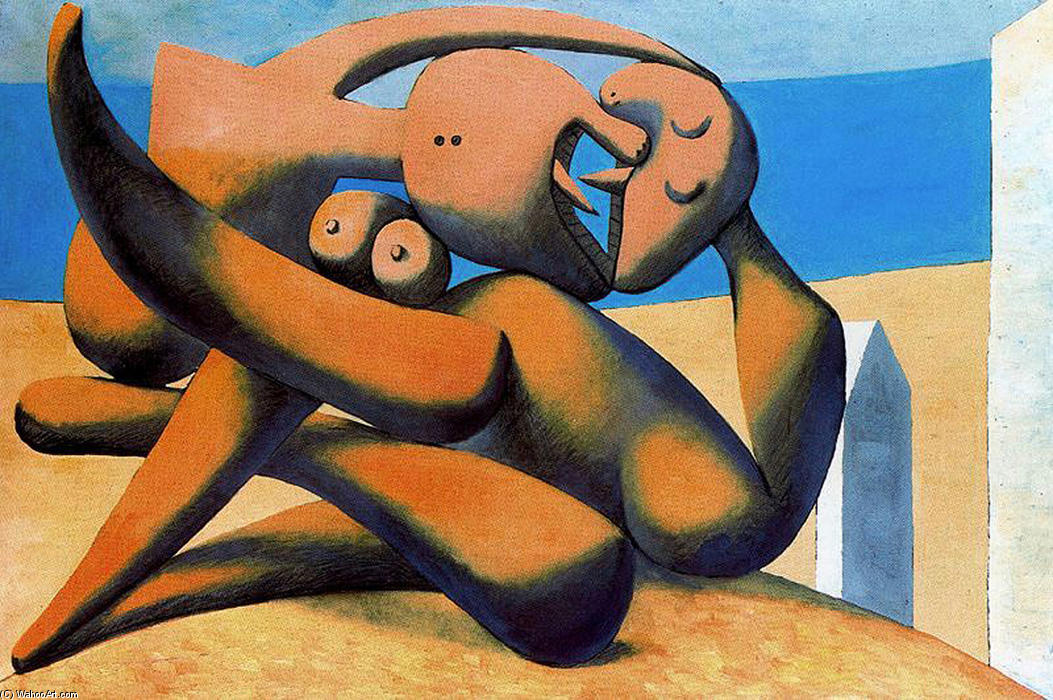
Pablo Picasso's "Figures at the Seaside," painted in 1931, isn’t merely a depiction of a beach scene; it’s a profound meditation on human connection, isolation, and the unsettling undercurrents of the modern world. This work, rendered in oil on canvas, exemplifies Picasso’s evolving Cubist sensibilities while simultaneously retaining a haunting emotional resonance that transcends stylistic categorization. The painting immediately draws the viewer into a carefully constructed tableau – two nude figures, ambiguously male and female, occupy the foreground, their bodies intertwined yet separated by an almost impenetrable distance. They are not embracing in a conventional sense; rather, they seem to be caught in a silent, weighty exchange, their gazes averted, creating a palpable atmosphere of melancholy and unspoken tension.
Picasso’s masterful use of fractured forms and flattened perspective is central to the painting's impact. The figures are not presented with anatomical accuracy but rather as geometric shapes – blocks of color and angular lines that suggest volume and presence without resorting to traditional representation. This deliberate distortion mirrors the fragmentation of modern life, where individuals often feel disconnected despite being physically proximate. The background, a hazy expanse of sand and sea, further contributes to this sense of disorientation, blurring the boundaries between reality and dream.
To fully appreciate “Figures at the Seaside,” it’s crucial to understand the historical context in which it was created. 1931 marked a period of significant political and social upheaval across Europe, with rising tensions leading up to the imminent outbreak of World War II. Picasso himself was living in Paris during this time, navigating a complex personal life and grappling with the anxieties of his era. The painting can be interpreted as a reflection of these broader societal concerns – a visual representation of the loneliness and uncertainty that permeated the collective consciousness.
Furthermore, the work emerged from Picasso’s exploration of Surrealist ideas, though he resisted being strictly categorized within the movement. He was deeply influenced by the works of Giorgio de Chirico, whose paintings often featured enigmatic figures in desolate landscapes, evoking a sense of unease and psychological depth. “Figures at the Seaside” shares this unsettling quality, inviting viewers to contemplate the hidden emotions beneath the surface of seemingly ordinary scenes.
The symbolism within "Figures at the Seaside" is deliberately ambiguous, encouraging multiple interpretations. The intertwined bodies suggest a potential connection, yet their averted gazes and the spatial distance between them highlight a fundamental lack of communication. Some art historians believe that the figures represent Picasso himself and his muse, Fernande Olivier, whose relationship was often fraught with tension and emotional complexity. Others see them as archetypal representations of humanity – individuals struggling to connect in an increasingly impersonal world.
The presence of several smaller, partially obscured figures scattered throughout the scene adds another layer of intrigue. These secondary characters seem to be caught in their own private dramas, further emphasizing the theme of isolation and detachment. The single, solitary figure on the beach in the background could represent a lost soul, yearning for connection but unable to bridge the gap between himself and others.
“Figures at the Seaside” remains a powerfully evocative work of art, captivating viewers with its haunting beauty and profound emotional depth. Picasso’s innovative use of Cubist techniques, combined with his masterful command of color and composition, creates an image that is both visually arresting and psychologically complex. It's a testament to the artist's ability to capture the essence of human experience – the longing for connection, the pain of isolation, and the unsettling realities of modern life.
Reproductions of this iconic painting offer a remarkable opportunity to bring Picasso’s vision into any space, inviting contemplation and sparking dialogue. The enduring appeal of “Figures at the Seaside” lies in its ability to resonate with viewers on a deeply personal level, reminding us of our shared humanity and the universal challenges of navigating an increasingly fragmented world.


1881 - 1973 , スペイン

 プレビュー
プレビュー
 シェアする
シェアする シェアする
シェアする
 詳細を見る
詳細を見る

 ダウンロード
 似ている作品
 X線調査
X線調査 スライドショー
 統計情報
統計情報

 詳細を見る
詳細を見る


