
迅速な制作と多彩な仕上げオプションを備えた、ミュージアムクオリティのジークレーまたはキャンバスプリント。 ( 手描きの絵画を購入 デジタル画像販売へ切り替え)





























作品のオリジナル比率に合わせた、当店の規定サイズからお選びください。

特定のフレームやスペースに合わせて、ご自身でサイズを指定することも可能です。選択されたサイズが元の画像の比率と一致しない場合、作品をトリミングするか、鏡面反射または単色での塗りつぶしによって画像を拡張いたします。制作を開始する前に、ご確認用のデジタルモックアップをお送りいたします。
画面上のプレビューには、実際のトリミングや拡張は反映されませんのでご注意ください。最終的な構図を正確に確認できるのは、モックアップのみとなります。
カスタムサイズも承っておりますが、元の比率を維持するためには、あらかじめ用意されたリストからサイズを選択することをお勧めいたします。

Escudilla verde y tomates
複製画のサイズ
“Escudilla Verde y Tomates,” also known as “Green Bowl and Tomatoes,” is a captivating painting created by Pablo Picasso in 1947. This artwork showcases his unique Cubism style that revolutionized modern art.
Cubism is a revolutionary art movement that emerged in the early 20th century, characterized by its fragmented and abstract depiction of objects. The movement was co-founded by Pablo Picasso and Georges Braque, who sought to break away from traditional perspective and create a new visual language.
For more information on Cubism, visit Cubism | Musée Picasso Paris.
In this painting, Picasso depicts a green bowl filled with tomatoes on a tabletop. The composition is divided into geometric shapes that represent the various elements in the scene. By breaking down the objects into their basic forms and reassembling them in an abstract manner, Picasso creates a sense of depth and movement within the artwork.
The use of vibrant colors adds to the overall impact of the painting, with the green bowl standing out against the muted background.
Painted during Picasso’s prolific period following World War I, “Escudilla Verde y Tomates” reflects the anxieties and uncertainties of the time. Cubism emerged as a reaction to Impressionism and Post-Impressionism, rejecting illusionistic representation in favor of exploring multiple viewpoints simultaneously.
The painting's simplicity belies its intellectual complexity—a deliberate choice by Picasso to challenge conventional artistic norms and engage viewers in a dialogue about perception and reality.
While seemingly straightforward, the bowl and tomatoes hold symbolic significance. The green hue evokes freshness and vitality, representing nourishment and growth – themes prevalent in Picasso’s oeuvre during this era. Simultaneously, the fragmented forms convey a sense of instability and disruption, mirroring the turbulent political landscape of Europe.
“Escudilla Verde y Tomates” remains an enduring testament to Picasso's artistic vision—a bold exploration of form and color that continues to inspire admiration for its innovative approach and profound emotional resonance.

1881 - 1973 , スペイン
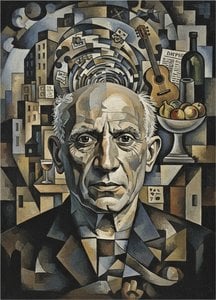
Explore the profound evolution of Cubism through an expert analysis of Pablo Picasso's revolutionary works. From Analytical to Synthetic Cubism, discover the techniques that redefined modern art and learn how to curate these iconic masterpieces for your private collection.


 プレビュー
プレビュー
 シェアする
シェアする シェアする
シェアする
 詳細を見る
詳細を見る ガイド
ガイド

 ダウンロード
 似ている作品
 X線調査
X線調査 スライドショー
 統計情報
統計情報

 詳細を見る
詳細を見る









 ガラスオプションは、110cm未満のサイズでのみご利用いただけます。


