

 Contemporary
 2011
2011 79.0 x 78.0 cm
このページに掲載されている作品は著作権法によって保護されており、当社の許可なく同一の複製物を制作または販売することは法律で禁じられています。この保護は、以下のような国際条約に基づき執行されます。 ベルヌ条約 および、以下の条項に定められたものを含む各国の法律により、 米国著作権法 第17編。
この手法は、著作権で保護された作品の複製や複写を伴わないため、著作権法に完全に準拠しています。これは単なる模倣ではなく、創造的な再解釈です。元の作品からインスピレーションを受けつつも、それとは異なる、全く新しい絵画を生み出すものです。
スピーディーな制作と多彩な仕上げオプションが魅力の、ミュージアムクオリティなジークレー・キャンバスプリント。 ( 手描きの複製画を注文する デジタル画像販売へ切り替え)
作品のオリジナル比率に合わせた、当店の規定サイズからお選びください。

額縁や壁のスペースに合わせて、ご希望の幅と高さを入力してください。プリントはカットすることは可能ですが、元の画像より大きくすることはできないため、異なる比率のサイズを選択された場合は、画像の一部が欠けることになります。印刷を開始する前に、内容を確認していただくためのデジタルモックアップをお送りいたします。このページに表示されている画像は、実際のカット後の状態を示すものではありません。実際の仕上がりはモックアップにてご確認ください。
Open Phone Booth
複製画サイズ一覧
「Open Phone Booth」の原画のサイズは79 x 78 cmです。原画の寸法は、複製画のサイズを選ぶ際の参考としてお役立ていただけます。
Nilbar Güreş作「Open Phone Booth」 の色彩分析は、Statement なコントラストと Balanced Harmony な調和を記録しています。
「Open Phone Booth」の形式はPanoramicです。これは、複製画を飾る場所を検討する際に役立ちます。

Born in the vibrant, layered city of Istanbul in 1977, Nilbar Güreş’s artistic journey is inextricably linked to her Turkish and Kurdish heritage. Her work, now celebrated internationally from Vienna to Sydney, isn't merely about depicting scenes; it’s a deeply considered exploration of female identity within the complex interplay of cultural traditions, public spaces, and private realms. Güreş’s practice defies easy categorization, seamlessly blending photography, video, performance, textile art, and mixed media collage – each element contributing to a rich tapestry of meaning.
Güreş's early life in Istanbul profoundly shaped her artistic vision. Studying at Mimar Sinan University of Fine Arts and later the Academy of Fine Arts in Vienna provided her with a rigorous grounding in traditional painting techniques while simultaneously exposing her to European avant-garde approaches. This dual influence is evident throughout her work, creating a unique dialogue between Eastern and Western aesthetics. Her decision to settle in Vienna has been crucial, offering a space for reflection and experimentation within a multicultural environment that continues to inform her creative process.
A defining characteristic of Güreş’s art is her masterful use of textiles. She doesn't simply employ fabric as a medium; she imbues it with layers of symbolism, referencing traditional Turkish and Kurdish crafts while simultaneously challenging their conventional roles. Quilts, carpets, and embroidered pieces become vehicles for exploring themes of domesticity, memory, and the often-overlooked experiences of women within these cultural contexts. Her work frequently subverts expectations, presenting familiar motifs in unexpected ways – a seemingly simple tablecloth might conceal a powerful commentary on social injustice or gender dynamics.
Güreş’s photographic works are equally compelling. She often employs staged portraits that blur the lines between documentary and fiction, inviting viewers to question their assumptions about identity and representation. Her use of color is deliberate and evocative, ranging from muted earth tones to bold, saturated hues, each carefully chosen to enhance the emotional impact of her images. The recurring motif of the female figure – frequently depicted in moments of quiet contemplation or engaged in everyday activities – speaks to a desire to elevate the experiences of women within both personal and societal narratives.
Güreş’s work has garnered significant international recognition, culminating in participation in prestigious events such as the 20th Biennale of Sydney (2016), the SeMa Biennale Mediacity Seoul (2014), and the Berlin Biennial (2010). These platforms have provided crucial visibility for her unique artistic vision. Her work has been exhibited at venues including the Van Abbemuseum in Eindhoven, the ARTER gallery in Istanbul, and numerous museums and galleries across Europe and North America.
Notable solo exhibitions include “Open Phone Booth” (2023), a striking textile diptych exploring identity and social injustice through intricate embroidery; "Wilde Belästigung" (2021), a surreal oil painting blending natural and abstract elements, and “Unknown Sports” (2009), which powerfully depicted women engaged in unconventional activities within domestic settings. These exhibitions consistently demonstrate her ability to create works that are both visually arresting and intellectually stimulating.
At the heart of Güreş’s artistic practice lies a persistent interrogation of identity – particularly as it intersects with gender, culture, and location. Her work frequently addresses the experiences of Muslim women in Europe, navigating issues of representation, belonging, and social expectations. She doesn't offer simplistic narratives; instead, she presents nuanced portraits that reveal the complexities of lived experience. Her exploration extends to the relationship between women and their homes, public spaces, and the broader cultural landscape, prompting viewers to consider how these environments shape individual identities.
Güreş’s work is not merely a reflection of her own experiences but also a critical engagement with broader social and political issues. Through her art, she challenges conventional notions of femininity, questions established power structures, and advocates for greater visibility and understanding of marginalized voices. Her ongoing commitment to exploring these themes ensures that her work remains relevant and impactful in the contemporary art world.

1977 - , Turkey

Explore the profound impact of Tenebrism in Baroque art. Discover how masters like Caravaggio used dramatic shadows to evoke emotion, and learn the technical secrets behind this captivating style of light and darkness.

Elevate your space with bespoke Gothic masterpieces. Using advanced AI and master oil painters, WahooArt transforms your photos into dark, Renaissance-style fine art. Experience museum-quality craftsmanship, personalized commissions, and a timeless legacy for your home.

Embark on a sophisticated journey through the tactile realm of textile art. Unveil the historical evolution from utilitarian craft to museum-grade masterpieces, exploring the intricate textures and legendary artists that redefine the boundaries of fine art.
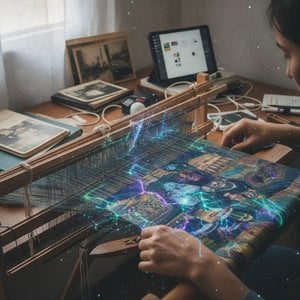
Elevate your home with WahooArt's bespoke AI-textured art. Transform cherished photos into hand-painted textile masterpieces through a seamless fusion of cutting-edge technology and classical craftsmanship. Discover timeless, luxury heirlooms designed to preserve your personal legacy.

 設置イメージを確認
 送る
送る シェア
シェア
 詳細情報
詳細情報 ガイドを表示

 画像をダウンロード
 似ている作品
 X線調査
X線調査 スライドショー
 Q&A
Q&A 統計情報
統計情報 続きを読む
続きを読む






































 ガラスオプションは、110cm未満のサイズでのみご利用いただけます。


