

当社のアーティストが、お客様のご希望のサイズと額縁に合わせて、キャンバスに手描きで制作する油彩画です。 ( プリント版に切り替え デジタル画像販売へ切り替え)





























作品のオリジナル比率に合わせた、当店の規定サイズからお選びください。

特定のフレームやスペースに合わせて、ご希望のサイズをご入力いただけます。選択されたサイズが元の画像の比率と異なる場合、アートワークをトリミングするか、手描きで要素を追加して絵画を拡張いたします。デジタルモックアップ を制作し、制作開始前にご確認(承認)をいただきます。
画面上のプレビューは、実際のトリミングや拡張を正確に反映しているものではありません。最終的な構図は、モックアップによってのみ正確にご確認いただけます。
カスタムサイズもご利用いただけますが、元の比率を維持するためには、あらかじめ用意されたリストからサイズを選択することをお勧めいたします。

Sleeping Venus, surprised by Satyr
複製画サイズ一覧
In the quietude of a lush, verdant forest, a scene of profound vulnerability and sudden movement unfolds within Nicolas Poussin’s 1626 masterpiece, Sleeping Venus, Surprised by Satyr. This captivating canvas serves as more than just a mythological depiction; it is an invitation into a carefully constructed narrative where the serenity of divine slumber meets the playful intrusion of primal instinct. As the goddess of love and beauty rests amidst the soft foliage, her peaceful state is abruptly interrupted by the presence of Silenus, a mischievous satyr whose arrival shatters the stillness. This juxtaposition creates a dramatic tension that has captivated viewers for centuries, offering a window into the delicate balance between idyllic peace and the untamed forces of nature.
The painting stands as a testament to the enduring power of classical ideals translated through the lens of Baroque artistry. Poussin, a master of the French Baroque style, utilizes a pyramidal composition to guide the viewer’s eye upward toward the luminous form of Venus. This structural choice does not merely organize the figures; it elevates the goddess, imbuing her with a sense of purity and divine grace that contrasts sharply with the earthy, mischievous energy of the satyr. For the discerning collector or interior designer, this work offers a sophisticated focal point, bringing a sense of classical grandeur and intellectual depth to any curated space.
To gaze upon this work is to witness Poussin’s extraordinary command over chiaroscuro. The artist employs dramatic contrasts between light and shadow to sculpt the physical forms of the figures, lending them a palpable weight and presence. Through the meticulous layering of pigments, he achieves an astonishing realism that breathes life into the skin of Venus and the rugged textures of the forest floor. His technique reflects his deep immersion in the Roman art scene, where he perfected the use of quadratura—an illusionistic approach that creates a sense of depth far beyond the physical boundaries of the canvas.
There is a rhythmic quality to Poussin’s brushwork, heavily influenced by the Venetian masters like Titian. While his later works would become known for their rigorous order and clarity, this early Roman period piece retains a certain sensuousness and fluid movement. The way light filters through the canopy to touch the sleeping goddess creates an atmosphere that is both ethereal and grounded. This masterful manipulation of light and shadow does not just illuminate the scene; it directs the emotional pulse of the painting, oscillating between the soft glow of innocence and the encropping shadows of disruption.
Beyond its technical brilliance, the painting is a rich tapestry of mythological allusion and symbolic meaning. Venus, in her slumber, represents the archetype of vulnerability and the untouched beauty of the soul. In contrast, the satyrs embody the untamed, often chaotic, impulses of human desire. This tension between the divine and the animalistic was a central fascination of the 17th-century artistic consciousness, reflecting a period caught between the structured morality of the era and the burgeoning interest in poésie érotique.
For those seeking to adorn their homes with art that inspires conversation and reflection, this reproduction offers an unparalleled opportunity. It is a piece that speaks to the complexity of the human experience—the way beauty can be interrupted, and how nature itself holds both peace and passion. Owning a high-quality reproduction of such a monumental work allows one to bring a fragment of classical history into the modern era, providing a timeless elegance that resonates with anyone who finds beauty in the intersection of myth, light, and human emotion.

1594 - 1665 , フランス

Explore the profound elegance of Baroque Classicism. Discover how masters fused dramatic chiaroscuro with structured order to redefine art history through light, shadow, and emotional grandeur.
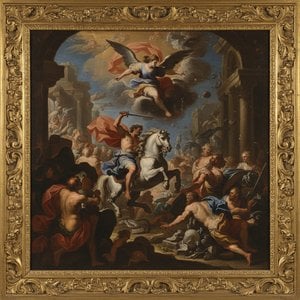
Explore the breathtaking power of Baroque art. Delve into the dramatic interplay of light, shadow, and motion through the works of masters like Caravaggio. Discover how the era's intense emotional realism continues to inspire collectors and connoisseurs of classical grandeur.

 設置イメージを確認
 送る
送る シェア
シェア
 詳細情報
詳細情報 ガイドを表示

 画像をダウンロード
 似ている作品
 X線調査
X線調査 スライドショー
 統計情報
統計情報

 続きを読む
続きを読む









 ガラスオプションは、110cm未満のサイズでのみご利用いただけます。


