
x































作品のオリジナル比率に合わせた、当店の規定サイズからお選びください。

特定のフレームやスペースに合わせて、ご希望のサイズをご入力いただけます。選択されたサイズが元の画像の比率と異なる場合、アートワークをトリミングするか、手描きで要素を追加して絵画を拡張いたします。デジタルモックアップ を制作し、制作開始前にご確認(承認)をいただきます。
画面上のプレビューは、実際のトリミングや拡張を正確に反映しているものではありません。最終的な構図は、モックアップによってのみ正確にご確認いただけます。
カスタムサイズもご利用いただけますが、元の比率を維持するためには、あらかじめ用意されたリストからサイズを選択することをお勧めいたします。

Selene and Endymion
複製画のサイズ
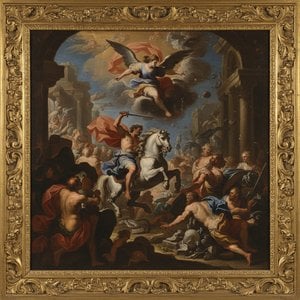
Nicolas Poussin, one of the most renowned artists of the French Baroque period, created a captivating painting titled Selene and Endymion in 1630. This beautiful piece is now housed at the Detroit Institute of Arts, showcasing Poussin's exceptional skill in capturing mythological scenes with elegance and poise.
The painting depicts a scene from Greek mythology, where Selene, the goddess of the moon, falls deeply in love with Endymion, a mortal known for his extraordinary beauty. According to legend, Zeus granted Endymion eternal youth but placed him into an eternal sleep. Each night, Selene would visit her beloved Endymion, and their union resulted in 50 daughters.
Poussin's composition is a masterpiece of balance and harmony. The painting features Selene and Endymion at the center, surrounded by other figures from the mythological story. The artist skillfully uses a rich color palette to create depth and emotion in the scene. The heavy blue curtains of night are opened to reveal the chariot of the sun, symbolizing the dawn of a new day. This deliberate juxtaposition underscores Poussin’s masterful command of visual storytelling—a hallmark of his style.
Poussin's work was heavily influenced by classical Greek and Roman art, which is evident in his use of mythological subjects. His style, characterized by stately majesty, brilliant drawing skills, and sure composition, reflects the French Baroque period. He meticulously rendered idealized forms—a technique rooted in Renaissance humanist ideals—creating images that aspire to moral grandeur. Poussin’s influence can be seen in later artists such as Jean-Auguste-Dominique Ingres and Jacques-Louis David.
Selene and Endymion is a significant piece in art history, showcasing Poussin's unique approach to mythological subjects. The painting has been the subject of various interpretations by art historians due to its singular composition and symbolism. Scholars debate whether it represents an allegory for the soul’s journey toward enlightenment or simply a celebration of beauty and love—a testament to Poussin’s ability to evoke profound emotion through carefully crafted visual elements.
For those interested in exploring more of Poussin's works or other masterpieces from the French Baroque period, Nicolas Poussin: Theseus Finding His Father's Arms and Discovering the Detroit Institute of Arts are excellent resources.


1594 - 1665 , フランス

Embark on a sophisticated journey through the eternal allure of mythological art. Discover how master painters breathe life into ancient legends, from Greek deities to Baroque masterpieces, and learn to curate these timeless narratives within your own exquisite art collection.
Explore the breathtaking power of Baroque art. Delve into the dramatic interplay of light, shadow, and motion through the works of masters like Caravaggio. Discover how the era's intense emotional realism continues to inspire collectors and connoisseurs of classical grandeur.

Explore the profound elegance of Baroque Classicism. Discover how masters fused dramatic chiaroscuro with structured order to redefine art history through light, shadow, and emotional grandeur.

Explore the breathtaking drama of the Baroque era. From the mastery of chiaroscuro to epic mythological narratives, discover a definitive guide to art's most powerful period of light, shadow, and emotion for the true classical art enthusiast.


最新の美術ニュース、限定オファー、そしてインテリアのアイデアをいち早くお届けします。
お客様のプロジェクトについてお聞かせください。当社の美術専門家が、お客様に合わせた3つのパーソナライズされた芸術提案をご提供いたします。
あなたにぴったりの3作品を無料で厳選いたします


 プレビュー
プレビュー
 プリントを購入
 シェアする
シェアする シェアする
シェアする
 詳細を見る
詳細を見る

 ダウンロード
 似ている作品
 X線調査
X線調査 スライドショー


 詳細を見る
詳細を見る









 ガラスオプションは、110cm未満のサイズでのみご利用いただけます。


